


 Francais
 Deutsch
 Italiano
Refine Your Search
+"United States USA" +1918 stock footage and images
- Showing 37 to 42 of 232 results more
more Hide
Hide
Early years and Governorship of Calvin Coolidge, the thirtieth President of the United States.
A pictorial history of episodes in the life of Calvin Coolidge, the thirtieth President of the United States of America. President Calvin Coolidge. The simple farmhouse at Plymouth Notch, Vermont where Coolidge was born on 4th July, 1872. He works at his farmhouse, cuts hay, and chops wood. The Coolidge family outside their Northampton home in Massachusetts. Coolidge with his wife Grace Coolidge in a garden and at a seashore. Coolidge is elected the Governor of Massachusetts in 1918. People with the U.S. flags during the event. The new Boston police force built up by Coolidge marches on the streets. The policemen stand at attention in rows during the ceremony. A large crowd gathered to greet President Coolidge at the 300th anniversary celebration of the Pilgrims' landing in Plymouth. People wave the U.S. flags and hail the Governor. Calvin Coolidge with Grace Coolidge.
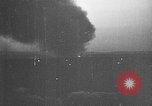
Views of ammunition depot allegedly sabotaged by Germans within the United States during World War I.
The United States of America in 1917. Scenes of Lyndhurst, New Jersey after January 11, 1917 explosion in the Canadian Car and Foundry Company in Kingsland. Suspected cause of explosion was sabotage, allegedly committed by Germans during World War I. Smoke from buildings on fire at night after an ammunition depot explodes. Flames rise high from the buildings. Widespread destruction. Debris on a railroad track the next day. People pick through devastated buildings and barren area flattened by blast. Views of crater filled with artillery shells after the explosion. Damaged window panes of buildings and a railroad car at D.L.&W (Delaware, Lackawanna & Western) Railroad Shops building at Kingsland (later Lyndhurst). DL&W railroad train car 605 parked. Railroad Shops with broken glass everywhere from explosions. Men point to shell that is embedded in the side of a railroad car. View of artillery shell lodged in a door. Next scene is from a different time and place, in Perth Amboy, in October of 1918 after an explosion at the T.A. Gillespie Shell Loading Plant made many families homeless. was called the Morgan Depot Explosion. Homeless women, children, and men sit in a town common area. The refugees eat. U.S. Army soldiers patrolling on Smith Street in Perth Amboy in front of stores damaged in the explosion. Entrance to Michaels & Co. shop among damaged stores on Smith Street.

People listen to the song 'God Bless America' sung by singer Kate Smith in the United States.
An American feature film 'This is The Army' depicts a performance by singer Kate Smith at the 21st anniversary of the armistice of World War I. Animated map shows Europe with fire in Poland. A man in the radio studio announces the name of Kate Smith on the stage, and noting the 21 anniversary of Armistice Day. A studio audience is present and applauds. Kate Smith introduces "God Bless America" as a new song, and then sings the song "God Bless America" with in-studio orchestra accompaniment. People watch the performance. An old man listens to the song, standing in front of his shop 'The Bugle Call.' He dusts a console radio with a feather duster and then goes inside and removes a bugle from a case labeled, ' Yip! Yip! Yaphank! 1918 ' At the Twardofsky business across the street, a man puts a small American flag into a basket as his father listens to the song on a small radio on the counter. People listen to the song in their houses and buildings. In a family living room: A couple seated in their living room listen to their console radio. A man, likely their son, seated at his desk listens to the song while studying. A woman looks at the photograph of a soldier, named Blake. Blake is then depicted listening to the same Kate Smith performance over a radio while stationed at Hickam Field in Hawaii. Characters Jerry Jones and Johnny Jones, played by actors George Murphy and Ronald Reagan are seen at the Jones and Jones production office. They listen to the radio. The character played by Ronald Reagan reads Variety Magazine.
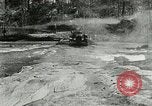
Life and times of Henry Ford and the Model T, with events from 1904 through 1936 (not always in chronological order).
Mix of scenes covering Henry Ford and his Model T cars, Model Ts travel through a stream and along rutted roads and through snow. Ford Model Ts equipped with special wheels travel on the rails along a railroad trestle. One drives slowly along a large pipeline. Views inside Ford auto factory of assembly line operations. Car hoods being pressed into shape. Car bodies on assembly line. Engine blocks moving on conveyer. Car bodies being placed on chassis. Henry Ford walking along garden path at his home, Fairlane, in Dearborn Michigan. Glimpse of Henry Ford joking with Scottish comedian, Harry Lauder, in 1914. Henry ford tinkering with an old steam engine, and later, driving one of his tractors. Ford in his office conferring with employees. Family gathering as Edsel Ford is about to embark on a transcontinental trip with Model T Ford cars, on May 5, 1924. The Fords doing country dances together. Henry Ford camping with Thomas Edison, Harvey Firestone, and John Burroughs (later seen driving a 1918 Ford Model T). Views of the men (who called themselves the "Four Vagabonds," as they dine under a tent and use a large Lazy Susan table. Ford speaking directly into Edison's right ear (he was hard of hearing) while Firestone looks on, amused. Edsel Ford with his father outdoors, and in the Ford factory. Father and son sitting by the Quadricycle with a 1936 white Ford sedan behind them. Portrait of Henry Ford. Luxury limousine at a mansion. It has no right side door for the chauffeur, and a right hand steering wheel (British built?) Woman enters and luxurious interior is described. Chauffeur enters at left door and slides across seat to right-side steering wheel. Lincoln chauffeured limousine passes and parks in front of a Model T. May 1927, men assemble the body onto the 15 millionth Model T car, and it drives away with Henry Ford as passenger. Old Ford cars brought into plant where they are seen being crushed and scrapped, and their steel recycled into new cars.
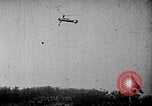
Kellett KD-1 autogiro hovers above U.S. troops on maneuvers, moving on horse drawn vehicles in the United States.
Kellett KD-1 autogyro (rotary wing aircraft) in flight over U.S. Army maneuvers in the United States. Mounted troops and a horse drawn caisson move across open terrain. Troops in 1918-style uniforms move on horse drawn vehicles. Kellett autogiro in flight. View of military maneuvers. Troops load and fire French 75 artillery pieces. Shells burst in area near damaged farm building.
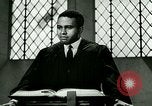
African American soldiers serving in various combat positions during World War II
At the beginning an African American pastor is seen speaking to his congregation during World War II. Scene shifts to Morton Field,where the "Tuskegee Airmen" were trained. They are seen receiving their pilot's wings in a graduation ceremony. A band plays. North American T-6 training aircraft are parked in the background. Next, the pilots in flight gear, and wearing seat-pack parachutes, walk toward Curtiss P-40 fighter airplanes parked on a flight line. A pair of P-40s take off. Two groups of four planes, each, is seen in formation high above. Closeup of a Tuskagee Airman pilot at the controls of his airplane, in flight. Several views of their P-40 aircraft in various formations flying above clouds. Scene shifts to a snowy Northern location where Army troops board jeeps and trucks and maneuver through the snow. A large battery of M1918 155mm howitzers is lined up in the snow. The soldiers fire them simultaneously on an officer's command. Scene shifts to a desert setting, where African American soldiers are seen closeup, in turrets of tanks. Others who are gathered on a field run to their respective tanks, that begin moving out. Views of M3 Stuart Light Tanks in training maneuvers over terrain where explosives are being detonated. African American Army engineers building a pontoon bridge across a river. Army quartermaster vehicles moving troops and supplies along dirt roads. A soldier silhouetted against light sky signals to others who are installing telephone and telegraph lines on poles. Mounted cavalrymen on maneuvers. Half track M3 Gun Motor Carriage tank destroyers operating on a snowy field. Closeup of one with an African American Officer manning a heavy machine gun. Numerous M3 tank destroyers firing their guns as they move across a training field. Anti-aircraft gun crews racing to their respective gun emplacements, in the snow, as a large barrage balloon is sent aloft behind them. An African American crew manning a 37mm anti-aircraft gun. The gun sight is raised in front of the primary gunner. The position is sandbagged. Infantrymen, crawling through sandy terrain in a training course as live machine gun fire is directed above them. Glimpse of troops running through water and starting to scale a bluff. (World War II; WW II; World War 2; World War Two)