


 Francais
 Deutsch
 Italiano
Refine Your Search
+"United States USA" +1942 stock footage and images
- Showing 151 to 156 of 520 results more
more Hide
Hide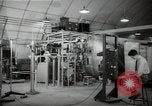
Research laboratory with heavy moveable walls of shielding brick around Steel tank structure
Research laboratory. Connections made through wires in the machine. Bulbs lighted in the plant. Equipment in the plant. A man observes through an instrument. Notable feature is heavy moveable walls of shielding brick, suggesting presence of radiation sources in the laboratory.
Career of Air Force General Henry (Hap) Arnold. The world War II years.
General Henry Arnold dispenses with his prepared remarks and gives impromptu speech about air power. General Arnold at the Casablanca conferences, seen with President Roosevelt and General Marshall and other Allied military leaders. British bombers departing on nighttime bombing raids. A submarine surfacing. Newspaper headlines report German torpedoing of the ships, SS Robin Moor and SS Sessa. B-24 Liberator bombers taxiing before takeoff. B-24 aircraft seen in flight on antisubmarine missions. View of German submarine surfacing. View from inside cockpit of B-24 flying low with camera pointing toward ocean below. View from aircraft flying low over submarine. Explosion in water. Aerial view of B-24 in flight and view of explosions in water as seen from aircraft in flight. General Arnold consulting with General Joseph Stilwell and Claire Chennault. They walk in front of line of P-40 Flying Tiger aircraft with tiger teeth painted on their noses. Snow-covered Himalaya Mountains shown as narrator discusses "airlift over the hump" in World War 2.
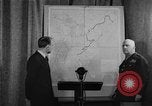
General Hugh Drum and James M. Landis, Civil Defense Chief, announce Proclamation restricting movements of civilians in U.S.
World War II restrictions on movements of civilians in the Eastern United States, are referenced by U.S. Army Lieutenant General Hugh Aloysius Drum, Commander of the Eastern Defense Command, and Mr. James M. Landis, Director of the U.S. Office of Civil Defense. They look at a large map showing the U.S. Eastern states and coast, from Maine to Florida. General Drum discusses Public Proclamation number 4 issued by the War Department, and urges citizens to read it. (It is posted in U.S. Post Offices and describes restrictions on the movements of citizens near war plants and beaches.) General Drum speaks of a uniform system of controls needed for U.S. Civil Defense. James M. Landis, Director of the Office of Civilian Defense, adds his comments about the importance of Civil Defense measures.
General Alexander Vandegrift, Commander, 1st Marine Division, praises all services for the victory at Guadalcanal, in WW II.
Major General Vandegrift, Commander of the First Marine Division, praises members of all services, including civilians, for their contributions to victory during the battle of Guadalcanal. He remarks that American civilian workers, Army, Marines and Navy exhibited loyalty and sacrifice for their country and the victory was a result of team work. (World War II period).

Farmer uses tractor for sowing and harvesting crop on the farm in United States (WW2)
Agricultural progress motivated by the demands of World War II in United States. Cattle graze on the farm. Cattle at the waterway. Houses and trees. Farmer works in a farm. Tractor moves on the farm. Men and women work. Farmer harvests the crop with the help of a tractor.
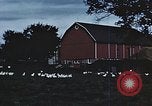
World War 2 war material production and farmers increase production of wheat, corn, and vegetable oil crops in the U.S.
Agricultural progress motivated by the demands of World War II, in the United States. Houses and trees on a farm. Chickens roam in front. Night time battle scenes during World War 2 with smoke, bombs, and tracers. Men work in war material and munitions factories for the manufacturing and production of war tools and equipment. Molten steel poured in molds. A sign, "Defense Plant. Part of the Aresenal of Democracy." Cattle graze on the farm. Recruited and Mobilized United States soldiers march on streets of a town in America. Farmer supervises a grain processing machine in a field. Farmer works on a red Allis-Chalmers tractor. Wheat combine harvester in a field. Corn being harvested in a field. A soybean field and a farmer holds up a soybean plan. A rotating display shows harvested oils and their uses such as heavy soy oil for brake linings, soy flake flour, soy cake coatings and uses in auto parts. Tractor with attachment being used to harvest soybeans.Farmer on tractor on the farm. 'Lake County Oil Mill' written on an oil tank in Tiptonville Tennessee. Rotating display of bottled and canned linseed oil products including oil and paints for painting war equipment. Farmer on tractor harvesting flax seed for linseed oil. Close view of farmer's hands holding flax plants. Production of peanut oil. Farmers hand holding a bunch of peanut plants. Display of peanuts and peanut oil. Tractor driven on peanut farm. Workers harvest peanuts. Farmer on tractor drives on field of castor bean plants. Rotating display shows products made from oils including insecticides, plastics, fibers. Farmers hands holding a bunch of cotton. Worker in field picking cotton. Farmer shows a new variety of longer staple cotton and stretches out the fibers which can be used for parachute cords.