


 Francais
 Deutsch
 Italiano
Refine Your Search
+"United States USA" +1942 stock footage and images
- Showing 19 to 24 of 520 results more
more Hide
Hide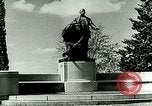
Contributions of African Americans in various fields in the United States.
(See also clip 65675078146 from different film transfer). Famous African American men and women citizens in the United States. Clip opens with of Booker T. Washington at Tuskegee University. Scene in a laboratory with African American scientist and inventor George Washington Carver, as an elderly man, working with another scientist in the laboratory. African American judge of New York city court. African American explorer Matthew Henson is seen looking at a globe (he was with Admiral Peary planting the American flag at the North Pole in 1909), and an unnamed African American surgeon at work in an operating room in New York. Next scene shows famous "father of the blues" musician and composer W.C. Handy (William Christoper Handy) smiling. Next is seen the financier and publisher of the Amsterdam News, Dr. C.B. Powell (Clilan Powell) greeting three uniformed African American women during a World War 2 war bond drive, and handing them a check (close up is shown) for 25,000 dollars, dated January 4, 1942, for the war bond drive. It is from the account of the Victory Mutual Life Insurance Company which Dr. Powell also owned. The check is signed by C.B Powell and Philip M.H. Savory (Dr. Savory was co-owner of the New York Amsterdam News). The next scene shows Elise Johnson McDougald, better known as Gertrude Elise Ayer, who was the first black full-time public school principal after the consolidation of New York City schools in 1898. She was also a noted woman writer during the Harlem Renaissance. She is seated in her office at her desk, likely in P.S. 119 in Harlem, since this is approximately year 1945 and she was at P.S 119 at that time. Her name plaque is visible on the front center of the desk. Principal Ayer smiles as a woman delivers a document to her. Next is seen the African American historian, author, and professor, Lawrence D. Reddick, serving in his role as the curator of the Schomburg Collection of African American Literature. In an art studio is seen the famous African American sculptor and painter Charles Alston, at work on a sculpture. Next scene shows the famous African American contralto singer, Marian Anderson, receiving a bouquet of flowers and smiling after a performance. This transitions to a view of African American orchestra conductor Dean Dixon leading an orchestra in a performance of Beethoven's 9th Symphony. Several views of different sections of the orchestra performing under Dixon's direction. Clip closes with brief shots of campuses of several historically black colleges and universities in the United States like Howard University, Hampton, Tuskegee, Fisk, Prairie View. An American college football game underway at the stadium of one of the colleges.
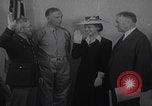
Oveta Culp Hobby is sworn in as Director of the United States Women’s Army Auxiliary Corps (WW2)
Oveta Culp Hobby is sworn into the Army with the rank of Director of the United States Women’s Army Auxiliary Corps during World War II. The organization would later be called the Women's Army Corps (WAC). Major General Myron C. Kramer administers oath of office to Oveta Culp Hobby. General George C. Marshall stands between Kramer and Hobby as he witnesses the ceremony. United States Secretary of War Henry Stimson also witnesses the event. Hobby stands with her arm raised under oath. Hobby shakes hands with Stimson, Marshall, and Kramer after the oath taking. Oveta Culp Hobby makes short statement, noting that, "This new corps is the 1942 expression of the patriotism and courage that the women of America have always demonstrated in every national crisis." Hobby continues, “In a total war, there is a total responsibility of all citizens regardless of sex, race, or creed. Every woman must do her part. The Women’s Army Auxiliary Corps offers an opportunity for every woman eligible under the law to do her part.”
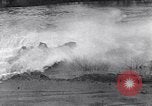
Ford motor Company GPA amphibious jeeps are demonstrated and tested by the U.S. Army during World War II
Several Ford Motor Company GPA amphibious jeeps driven by U.S. Army soldiers, cause big splashes as they drive into a river during a demonstration and test.in World War 2. They are a sample of so-called "Seeps" or "Sea Jeeps," assembled at the company's River Rouge complex, near Detroit, Michigan, from 1942-1943. View from behind a soldier driving one of them. Various views of the Sea Jeeps navigating singly and in groups and formations in the water. The soldiers in them are dressed in battle gear with weapons and steel helmets. One by one, the Sea Jeeps are seen driving out of the river up onto the river bank. Scene shifts to an area with military trucks and other vehicles parked. Three Army soldiers on motorcycles lead a long line of Sea Jeeps filled with soldiers through that area and along a highway

Story of Manhattan Project. Plutonium generated and separated at University of California. Manhattan project undertaken.
Story Camp Hanford during the Manhattan Project in World War II. Scenes of Dr. Glenn Seaborg and colleagues: Arthur Wall, Edward McMillan, and Emilio Segre, who generated and isolated Plutonium at University of California in 1941 A sign on a container reads 'First Pure 94 (239) isolated from chain reaction source'. A model of the atomic pile under the stadium at the University of Chicago, where Enrico Fermi, an Italian physicist, demonstrated controlled nuclear fission, on December 2, 1942. A map shows various sites chosen for Manhattan Engineer's District. Views of desert in Southeast Washington State. The Columbia River, for cooling. Electrical towers for power supply. An aerial view of project buildings in Hanford. Construction workers selected for the project in Hanford. Construction sites. Trailer houses for the workers. An aerial view of the plant ready for operation. Inserted view of Camp Hanford abandoned, in later years.
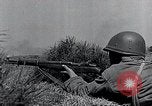
Role of American women in the military; WACS, nurses, and other military roles for women in World War 1 and World War 2
The role of women in the armed forces in the United States. A U.S. Army sniper fires a 1903 Springfield rifle on the Korean front during the Korean War. A woman in the Women's Army Corps (WAC) inspecting such a rifle in the U.S. Several Patton Tanks moving up a hilly road in Korean War. A WAC testing the turret of a Patton tank. U.S. Army women at desks as they work with Army men in an office. Picture depicts Molly Pitcher, wife of a fallen U.S. Revolutionary War artilleryman. Depiction of George Washington at desk. Depiction of Clara Barton, an American nurse with a wounded soldier. Reenactment of Clara Barton working with another women. A man holds the flag of the American red cross. Actual footage of a Wright Brothers aircraft in flight. Women in long dresses pushing an early model of car. A group of American soldiers in World War I running on a battlefield.. U.S. Army troops wearing gas masks and firing rifles from trench in World War I. American women war production workers assembling belts of machine gun bullets during World War I in a munitions factory in the United States. A nurse tending a wounded soldier. A woman nurse helping place a wounded soldiers into an ambulance in Europe, in World War I. Nurses in an operating theater in a hospital during World War I. Women march in victory parade at end of World War I. Women's suffrage demonstration by suffragists (sometimes called suffragettes) in front of the White House and then women and men entering a polling place to vote around time of of 19th amendment giving women the right to vote in 1920. Aviatrix Amelia Earhart climbing down from an airplane. Swimmer Gertrude Ederle on an award stand. U.S. Navy Vought SB2U-2 planes in flight as they drop bombs. Scene of Pearl Harbor attack by Japanese during World War 2. Army nurses look out from deck of ship in World War II. Soldiers fire artillery. View of mountains and scenes of combat on islands in the Pacific during WWII. General Mark Clark awards nurse Silver Star medal. Repatriated Army nurses, who were prisoners, are loaded onto an aircraft by means of a fork lift. In 1942, President Franklin D. Roosevelt signs legislation establishing the Women's Army Auxiliary Corps (WAAC). Secretary of State George Marshall and others witness the signing. Depiction of Godess Athena. Women volunteering for WAAC move in a line carrying bags. American women in military uniform marching. WAAC volunteers being processed. Women receive physical exams and receive inoculations. WAAC personnel being trained: working on X rays, in medical pharmacy laboratories, food service, and radio work. Women on board warships in World War 2.
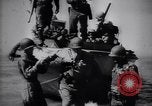
Early life of General George S Patton, and Patton in Africa during World War II.
'The Big Picture' episode narrated by Ronald Reagan depicts the life of U.S. General George S Patton, Jr. Opening scene shows General George S. Patton, Jr. stepping from a landing craft in France, during World War 2. He stands by the side of a road and waves, as elements of his 3rd Army pass in tanks. Patton in a jeep moving with his troops. General Patton pointing with a baton, in North Africa. View of a world globe being circled by a satellite. A baby picture of Patton (called "Georgie"). Patton seen as a boy, fencing, as a cadet at the Virginia Military Institute, and as a cadet at the U.S. Military Academy, West Point. A smiling Patton at West Point. Members of the first football team for soldiers established by Patton. Renault tanks of the 1st Tank Battalion moving with AEF soldiers in World War I. Tank commander George Patton standing in front of a Renault tank. Group picture of American soldiers and tanks, at the Tank School, in Fort Meade, Maryland, after World War I. Closeup of Dwight D. Eisenhower and George S. Patton, in the group. Patton and his wife, Beatrice Banning Ayer, in Old West costumes, for a party, where he displays a pistol in his belt, and in costumes for another party, where they dress as a knight and his lady on horseback. American recruits and draftees being issued uniforms in World War 2. Lieutenant General George S. Patton, Jr. commanding forces for the invasion of North Africa, in November, 1942. U.S. Navy warships fire their guns in advance of an amphibious landing. Landing craft heading toward shore. U.S. troops coming ashore at Casablanca, French Morocco. General Patton accompanied by French officers. Glimpse of U.S. President Franklin D. Roosevelt and British Prime Minister Winston Churchill at their conference in Casablanca in 1943. Patton riding in an armored car with three-star flag displayed. Artillery firing in battle of Tunisia. Lt. Gen. Patton and others observing operations. British General, Sir Harold Alexander, steps from a light airplane to meet with General Patton in North Africa. They converse. General Patton in March 1943 with binoculars observing battle, with Major General Terry Allen on his right, and Brigadier General Theodore Roosevelt Jr. to the right of Allen. They are viewing from a ridge by the village of El Guettar, as allies engage German troops and armor from the 10th Panzer Division. M3 Lee tanks moving in the desert. Knocked out tanks of the German 10th Panzer Division, including German Panzer IV tanks, in the aftermath of the Battle of El Guettar. General Patton coming aboard an American warship, and then standing with an Italian officer and a U.S. Major General. Allied naval bombardment at night. Patton observing though binoculars. Allied warships bombarding Sicily. Allied amphibious forces heading ashore in landing craft. Troops moving ashore. Closeup of troops in a landing craft. Glimpse of Patton in a landing craft. Troops walking across floating dock from a landing ship. U.S. flag flying in sand at beachhead. Landing ships in background. General Patton stepping ashore from small boat, and conversing onshore with a Brigadier General and some troops.