


 Francais
 Deutsch
 Italiano
Refine Your Search
+"United States USA" +1944 stock footage and images
- Showing 205 to 210 of 489 results more
more Hide
Hide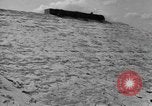
A demonstration about creating a gap in a 30 degree sloping wall with the help of bar charges in the United States.
A demonstration shows bar charges being placed and exploded against a wall in the United States. The face of a 30 degree sloping masonry wall. 24 packs of bar charges are placed on the face of the wall. An explosion occurs and smoke rises. The explosion results in an 18 feet wide gap. A U.S. Army tank passes through the gap. 24 packs of bar charges are placed at the center of the masonry wall. An explosion occurs and billows of smoke rise. A 16 feet wide gap is created and a U.S. Army tank passes through the gap.
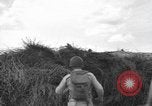
A demonstration about creating gaps in various walls and obstacles with the help of bar charges in the United States.
A demonstration shows bar charges being placed and exploded against a wall in the United States. Soldiers place bar charges on a Japanese stump wall. 24 packs of bar charges are placed on the wall for detonation. An explosion takes place and smoke rises. The explosion results in a 12 feet wide gap in the wall and tanks pass through the gap. The bar charges are placed on a five feet high Japanese log wall. An explosion occurs and a 15 feet and 3 inches wide gap is created. A U.S. Army tank passes through the gap. 24 packs of bar charges are placed on a Japanese wall and an explosion occurs. Smoke rises due to the explosion. A U.S. Army tank passes through the 16 feet wide gap created in the wall. The soldiers near the bar charges. They place the charges under water for a detonation. A steel obstacle. The bar charges are placed at the joint of a member of a steel fence for a detonation. (World War II period).
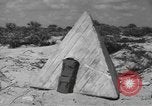
A demonstration about creating gaps in a log wall, a masonry wall and a concrete wall with the help of bar charges in the U.S.
A demonstration shows bar charges being placed and exploded against a wall in the United States. The bar charges are placed against concrete anti vehicular obstacles. Vertically placed bar charges against an obstacle. The bar charges are placed against a log wall, a masonry wall and a concrete wall for detonations. Soldiers place C-2 and other charges with a thickness of 8 inches against the concrete wall. Explosives being detonated and smoke rises. The soldiers carry the charges. An explosion occurs and billows of smoke rise up. A tank passes through the gap created as a result of the explosion. M1, M2 and M3 demolition blocks being used for the purpose. (World War II period).
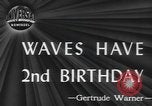
WAVES pass in review on the occasion of their second anniversary at the Hunter College in New York, United States.
U.S. Navy WAVES (Women Accepted for Voluntary Emergency Service) celebrate their second anniversary in the United States. WAVES at a corn farm in Cedar Falls, Iowa as they detassle corn plants. The WAVES wearing U.S. Navy caps. They eat corn on the cob. At the Hunter College in New York : The WAVES parade as the Mayor of New York Fiorello H. La Guardia and officers review the parade. The WAVES carry the American flag as they march.
Railroad trains contribute to war efforts in the United States, during World War II.
Railroads in the United States during World War 2. Freight cars pulled by EMD FT ABBA diesel electric engine on railroad tracks. A steam engine pulls freight train through the mountainous countryside. A river flows at the bottom of a valley. An engineer at the throttle.
The guillotine amputation of U.S. soldiers wounded during combat operations of World War II.
Amputation of U.S. soldiers in U.S. who were wounded during World War II. Shows feet of patient affected with trench foot resulted in gangrene. Leg of a patient after being hit by a shell fragment. Amputated limb of a patient. Doctors examine a case of gangrene. Doctors take a look at patient's report at a desk. Doctor writes on reports and hands it over to another doctor. Surgeons perform operation on a patient. Surgeons conduct amputation of limb. Amputated limb being dusted. Amputee raises his leg on bed. X-ray of an amputated limb.