


 Francais
 Deutsch
 Italiano
Refine Your Search
+"United States USA" +1944 stock footage and images
- Showing 271 to 276 of 489 results more
more Hide
Hide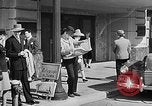
A soldier is arrested by MPs for being AWOL in the United States.
A training film on functions of military policemen (MP) in a town patrolling in the United States, during World War 2. Soldiers who are 'Absent Without Official Leave' (AWOL) are searched by the MPs. A soldier in civilian clothes reads a newspaper near a pole. The MPs watch him. They suspect the man to be a soldier and inform the nearest civilian policeman. They talk to the man. If there is evidence that he is a soldier, he could be arrested. The man runs away. The MPs catch him. They arrest him and deliver in custody. They also search him for weapons. They fill information on the arrest card. The man's name, serial number, organization to which he belongs and any evidence found against him is noted on the card. The MPs can use police radio to contact the MP headquarters. An officer seated at a desk. A man from the headquarters arrives to take the prisoner with him. The prisoner and the policeman board MP van. They arrive at the headquarters. Processing of the prisoner. The processing includes completing the records. He is listed on criminal record. A man writes information about him. Further searches are made with care. A desk sergeant seated at a desk. The MPs stand in line. An officer instructs them. The MPs patrol a street. An MP talks over a phone. The duty of the MPs is to keep fellow members of the armed forces safe. Reenacted scene of a fight or brawl taking place in a bar (for which MPs would be needed to restore peace). View of a training ground and a large group of U.S. Army soldiers marching and passing in review with American flags and unit flags held high.
USS Wakefield is painted, cleaned, mail is loaded aboard it and troops embark upon it before it leaves a port of the U.S (WW2)
A U.S. Coast Guard report shows the 'story of a transport' depicting activities of Coast Guard troops and officers aboard USS Wakefield in the United States during World War II. Ships at a sea near port of the United States. Truck, supplies, aircraft and other equipment are lowered on to a ship by a crane. A sign board outside the office of a captain reads "US Coast Guard, Captain of Port". The captain and another officer work on a map at a table in his office. USS Wakefield anchored at the port. The U.S. flag on the ship. The ship is painted and cleaned. Bags of mail are loaded aboard the ship. Army officers in an office discuss at a table. Troops carrying luggage board the ship for transport to the war front. The ship is unanchored. It departs from New York harbor. Shadow of an airship on water. The ship underway at sea. A CG ( Coast Guard ) officer looks through binoculars. A crewman turns a wheel. Coast Guard troops and officers work in the ship's engine room and radio room.
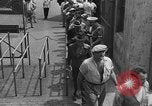
MPs inspect workers and monitor loading of cargo at a U.S. port during World War II
Activities of the U.S. Army Military Police in the United States during World War 2. Workers walk in lines and are being checked by Military Police (MPs) as they enter a port. An MP monitors loading of cargo at the port. An MP standing and traffic in the background.
Gunners fire 50 caliber guns on a OQ-2A radio controlled drone for anti aircraft target practice in the United States.
Aerial gunnery by 50 caliber guns on target aircraft in the United States. Men place target aircraft on catapult. The launching of the target aircraft. Radio control apparatus used to control target aircraft. A row of tanks. The gunners fire at target aircraft. Target aircraft tracer bullets close to aircraft. Several shots of tanks firing at aircraft and various shots of target aircraft being shot at. The gunners operating 50 caliber gun. (World War II period).
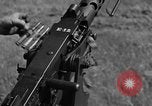
Gunners fire 50 caliber guns on radio controlled aircraft and the aircraft recovered by parachute in the United States.
Aerial gunnery by 50 caliber guns on target aircraft for anti aircraft target practicing in the United States. The gunners operating 50 caliber gun. The target aircraft in flight. The gunner fire guns. The recovery of target aircraft by parachute. Men load the target aircraft on a jeep. (World War II period).
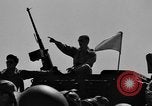
Gunners clean guns and convoy of motorized equipment leave bivouac area in the United States.
Aerial gunnery for anti-aircraft target practicing in the United States during World War II. A gun crewman points to his left. A white flag stands beside the crewman. A group of gunners cleaning their guns. Men fill a wooden box with shells. Tank crewmen climb into an armored vehicle. Men get into M3 half-tracks. The Commander gives the signal from a half-track. A driver drives a motorized vehicle. View of the road as seen inside an armored vehicle. Motorized equipment drives away in a dusty road. The convoy leave bivouac area.