


 Francais
 Deutsch
 Italiano
Refine Your Search
+"Washington DC USA" +1965 stock footage and images
- Showing 31 to 33 of 33 results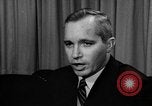
Sargent Shriver talks about broadening the scope for volunteers as Frank Reynolds interviews him in Washington.
Robert Sargent Shriver is interviewed by Frank Reynolds in Washington. Television journalist Frank Reynolds interviews Robert Sargent Shriver Jr. , Director of the Peace Corps. A world map on a wall in the background. Sargent Shriver talks about broadening scope for volunteers. He tells that the volunteers can learn different cultures and languages. Sargent Shriver talks about progress reports. Frank Reynolds questions about capitalism or communism in various countries. Sargent Shriver replies that the Peace Corps does not make any change in the culture of any country.
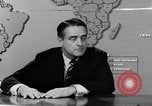
During an interview Shriver tells about qualities required in criminals if they volunteer for the Peace Corps in Washington.
Robert Sargent Shriver is interviewed by Frank Reynolds in Washington. Television journalist Frank Reynolds interviews Robert Sargent Shriver Jr. , Director of the Peace Corps. A world map on a wall in the background. Sargent Shriver is questioned whether he wants to admit people having criminal records as volunteers of the Peace Corps. He replies affirmatively. Sargent Shriver answers that he does not have problem to admit people with criminal records, but they should have spirit, internal motivation and personal commitment for life and actions.
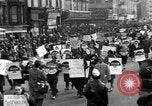
U.S. President Lyndon B. Johnson addresses a Joint Session of Congress on Voting Rights legislation for African Americans, in Washington DC
President Lyndon B. Johnson's voting rights address to Congress in Washington D.C., United States. Very brief segment showing civil rights march and demonstration on a city street with demonstrators carrying placards. President Johnson speaks about progress made through democratic process in the nation. He further speaks about pressures on President of United States. He talks about guaranteeing the right to vote for African Americans. President Johnson describes the voting rights act and how it will work. Crowd applauds. President Johnson shakes hands with speakers and talks to them. President Johnson walks through a crowd.