


 Francais
 Deutsch
 Italiano
Refine Your Search
1941 hong kong stock footage and images
- Showing 283 to 288 of 1627 results more
more Hide
Hide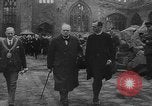
Dignitaries and civilians at the funeral ceremony of former British Prime Minister Sir Winston Churchill in England.
Death and funeral ceremony of former British Prime Minister Sir Winston Churchill in England. In footage from the past, Churchill is seen walking with his aides using a walking stick. Also Churchill with former United States President Franklin D Roosevelt beside him, singing during a religious service aboard the HMS Prince of Wales on August 10, 1941. View of the clergy, dignitaries and civilians during the funeral ceremony of Winston Churchill at St. Pauls Cathedral in London, England.
Japan expands its military presence and influence in the Pacific before World War II. U.S. employs air power early in the war.
Opening scene shows Emperor Hirohito of Japan dressed in military uniform, astride a white horse, riding along a path, followed by military officers. (Narrator cites Japanese declaration of war against the U.S. and Britain on December 7, 1941.) Japanese soldiers in two groups engage in local war games against each other. Animated map shows Japan and the expansion of her influence and military presence throughout the Pacific. Aerial view through scattered clouds, of Japanese fleet of warships. Aerial view of American warplanes in formation through scattered clouds. Closeup from cockpit of a U.S. A-20 Havoc aircraft, showing its left engine and prop and a second A-20 flying to its left in close formation. Swerving wake of a Japanese warship engaged in evasive maneuvers on surface of the sea, below. Several scenes of U.S. aircraft strafing Japanese warships. Aerial view from a U.S. B-25, flying above Japanese ships, of another B-25, with its bomb bay doors open as it launches a torpedo. Japanese ship is struck, explodes, and sinks stern first. Glimpse of more Japanese ships in a convoy.
Images of signed affidavits by U.S. military personnel verifying authenticity of images of German Concentration camp scenes
Camera shows close up of two certificates of affidavit signed by Lieutenant Colonel George Stevens and Lieutenant Kellogg. The first affidavit by U.S. Army Signal Corps Colonel Stevens cites Stevens' work from 1 March 1945 to 8 May 1945 photographing concentration camps and prison camps liberated by Allied forces. It is read aloud by George Stevens (or by a narrator reading the text of the affadavit). The second affidavit, signed by U.S. Navy Lieutenant E.R. Kellogg, and witnessed by Captain John Ford, is also read aloud. It cites Kellogg's expertise in motion picture and photographic techniques through his employment with Twentieth Century Fox Studios in California from 1929 to 1941. He attests that he has thoroughly examined the concentration camp liberation films of the Army Signal Corps and found them to be unaltered, genuine, and true copies of the originals in the U.S. Army Signal Corps vaults. A map shows the location of concentration camps in Germany and other parts of occupied Europe under Nazi control. (World War II period).
Italy invades Greece in Greco-Italian War of 1940; Premier Metaxas reviews troops in Greece
Italy invades Greece during the Greco-Italian War of 1940-1941, also during World War II. Two Italian Savoia-Marchetti SM.79 Sparviero aircraft in formation flight and dropping bombs over Greece. Bombs impact and smoke rises up. Italian tanks roll and troops advance. A military truck. Italian Army soldiers load shells in an artillery and fire it. Greek Premier Ioannis Metaxas reviews an honor guard in Greece. Greek soldiers march in review. Scottish soldiers in skirts also march at the parade. Italian soldiers in Sidi Barrani, Egypt. Soldiers fight and advance across a field.
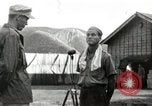
An American prisoner talks about the harsh treatment at a Japanese prison camp in Honshu, Japan during World War II.
American prisoners of war being interviewed at a Japanese prison camp in Honshu, Japan after World War II. A U.S. officer interviews a prisoner who has been liberated from a Japanese prison camp. The prisoner says that his name is James Robertson. He says that he is from St. Louis and was born in Chicago, United States. He speaks that he came to fight against the Japanese on April 22, 1941. He states that he was captured by the Japanese on May 6, 1942 in Corregidor, Philippines. He narrates an incident to prove that they were tortured at the prison camps. He also states how hot tea was poured on the legs of a prisoner.
The Americans surrender in the Battle of Corregidor and General Homma takes over the Philippines during World War II.
An orientation film titled ' Westward is Bataan' about Japanese capture of the Philippines and the Americans surrender during World War II. Scenes of destruction from the Japanese attack on Pearl Harbor in Hawaii, United States on December 7, 1941. U.S. ships being strafed and explosions occur. Excerpts from Japanese newsreel showing surrender of U.S. forces at Corregidor. United States soldiers in Corregidor, Philippines. U.S. Army General Jonathan Wainwright meets Japanese officers to surrender during the Battle of Corregidor. Japanese soldiers near Heam Battery on May 6, 1942. Japanese soldiers remove the American flag from a pole to raise the Japanese flag after the surrender. People celebrate Japanese victory in Tokyo, Japan. In Manila people gather along the streets as they wave the Japanese flags to welcome Japanese General Masaharu Homma. General Homma enters a building. Japanese soldiers parade as they carry the remains of the soldiers who lost their lives during the Battle of Corregidor. The boxes carrying the remains of the dead Japanese soldiers being handed over to Japanese women at a ceremony.