


 Francais
 Deutsch
 Italiano
Refine Your Search
1941 hong kong stock footage and images
- Showing 313 to 318 of 1627 results more
more Hide
Hide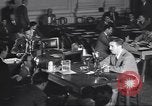
Walt Disney Studios owner Walt Disney testifies against communism at hearings of House Committee on Un-American Activities.
Owner of Walt Disney Studios Walt Elias Disney at hearings of House Committee on Un-American Activities (HUAC) in the United States. Walt Disney owner Walt Elias Disney speaks about Walt Disney pictures distribution in Russia. He further states that pictures were bought by Russians but they turned them back saying they did not want them as they did not suit their purposes. Walt Disney also speaks about organizer and leader Herbert Sorrell when he called for a strike against Disney Studios in 1941 and his connection with Communist Party.
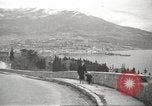
Russian woman and a child walk along mountain road leading to Lavidia Palace, Yalta during World War II.
Views of Yalta city, Ukrainian Soviet Socialist Republic during World War II. Russian woman and a child walk along mountain road to Lavidia Palace where Yalta Conference will take place. They stop at Russian pipe soda fountain for drink. A Russian man points to Russian signs, one sign indicates the advance of Nazi German forces into Soviet Union in 1941, the other dated 1945 shows their retreat.
Mission and operations of the U.S. Army Service Forces during World War II
Film opens with an explosion at Pearl Harbor, Hawaii, December 7, 1941, during the Japanese attack in World War 2. The USS Arizona sinking. Newspaper headline reading "U.S. Declares War." Relief map globe of the world. Narrator speaks about accomplishments of the U.S. Army Service Forces since the Pearl Harbor attack. Glimpse of two M4 DV early Sherman tanks moving on a road. The famous Uncle Sam recruiting poster. Huge number of massed U.S. Army troops marching toward the camera lined 16 abreast. Army supply service personnel inspecting providers of all manner of supplies needed to feed, clothe, and equip the U.S. Army. Brief views of supply operations underway involving food and fuels. An Army truck and a P-38 lightning airplane (under wraps) being loaded aboard a ship. A warehouse stacked from floor to ceiling with military supplies. Forklifts moving in the aisles. Group of officers sitting around a table. Some wear shoulder patch of Army Service Forces on their uniforms. The processing of millions of volunteers and draftees for military service. Men in recruitment office being guided by staff. Lines of new recruits undergoing physical exams and then arriving in civilian clothes, with their baggage, at a training center. Barracks being constructed at a training camp or base in the United States. Camera pans across a large completed military camp. Soldiers forming up in front of barracks. Sign reads "Dispensary, Recruit Reception Center." Recruits lined up and receiving vaccinations against tropical and other diseases according to the regions to which they are being sent. An Army Sergeant assessing recruit qualifications for various military assignments. New recruits eating in a camp dining hall and also in a chow line at an outdoor field mess. Views of industrial workers picking up tools and assembling military equipment in war plants. A coal burning electric generating plant with 8 smoke stacks. A furnace with hot steel visible. An Army agent and an industrialist or business man signing contract documents. Glimpses of women war production workers placing items on a conveyer; guns being assembled by men in an armory; railroad train carrying freight across rugged U.S. territory; ocean-going ships ready for loading; cargo stacked up at ports; numerous 55 gallon drums ready for loading; rope slings of cargo being loaded for shipment; numerous army trucks ready for shipment to Allies, under "Lend Lease;" a nurse checking medical supplies for shipment; Many U.S. Army M3 tanks ready for shipment. Views of British forces engaged in the North African campaign, before the U.S. entry in World War 2. U.S. soldiers marching along a Camp road past a sign reading: "Headquarters, 725th Railway Operating Battalion" (Located in New Orleans). Rapid glimpses of various supplies, equipment, etc. being loaded for shipment abroad. Women war production workers in plants. Men in outdoor yards filling long lines of jerry cans. Close up views of clock hands moving, and gears of clock working. U.S. Army soldiers shooting automatic weapons (including tracer rounds) at a firing range.
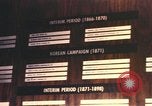
Hall of Heroes at the Pentagon showing hero names from Korean Campaign to the Vietnam War
View of the Hall of Heroes at the Pentagon, in the United States, during the Vietnam War. Names of the war heroes in the hall. Nameplates of the war heroes of each historical conflict on the wall. Names of the soldiers and officers who served the best in the wars. Names under the nameplates reading: 'Interim Period (1866-1870)', 'Korean Campaign (1871)', 'Interim Period (1871-1898)'. Other nameplates read: 'War with Spain (1898)', 'Philippine insurrection (1899-1913)', 'China Relief Expedition-Boxer Rebellion (1900)'. Several other conflicts mentioned in the hall. Other nameplates read: 'World War I (1917-1918)', 'Haitian Campaign (1919-1920), 'Second Nicaraguan Campaign (1925)', 'Word War II (1941-1945) and 'Vietnam (1964-Present).
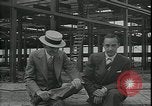
Henry Ford and Edsel Ford at Ford Motor Company Willow Run bomber production facility, and workers sign a new B-24 off the line
World War 2 bomber aircraft production by the Ford Motor Company in the United States at the Willow Run plant between Ypsilanti and Belleville Michigan. Henry Ford and Edsel Ford sitting on a wall, conversing. A building under construction in the background. A sign on the building reads: 'United States National Defense Willow Run Airplane Plant, Dedicated June 16, 1941. Designed and erected for Bomber Production by Ford Motor Company, Henry Ford Founder-Edsel Ford President'. A United States Army Air Force B-24 Liberator bomber flying over a field. A group of workers posing outside the plant with a new bomber. The group includes Henry Ford II and Army Officers. Henry Ford II signing his name on the side of the last bomber built at Willow Run Several other people signing. Women workers signing. A crowd around the bomber. Aerial views of the plant.
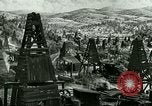
African American soldiers serving in wars, especially World War I; Memorials to African American United States soldiers.
A film on contributions of African American soldiers in various wars, but mostly focusing on World War I era. African American workers at an oil field with oil derricks talk to each other. Depiction of African Americans serving in the Spanish-American War and advancing towards a battlefield. African American man speaks about his experience of the war. Scenes of excavation and construction of the Panama Canal. Huge earth moving equipment at work and a man triggers an explosive detonation during the dig. A U.S. Navy ship underway in the newly completed Panama Canal. World War I scene of a U.S. Army unit including African American soldiers marching through a town in France, in formation, with a military band leading the march. African American soldiers of the 813th Pioneer Regiment near Marseilles France work to build a railroad. Also scenes with soldiers from the 332nd Labor Battalion, and the 808th Pioneer Regiment clearing an area near Verdun. African American soldiers of the 8th Illinois infantry (later the 370th infantry) running with the rifles as they mobilize for battle in France. African American soldiers of 371st Regiment and 372nd regiment crossing battlefield during World War I. Members of the 369th regiment in battle. Railroad guns and heavy artillery firing during World War I. American soldiers leaping from a trench and running across no mans land during battle. African American soldiers of the 369th infantry ("Harlem Hellfighters") receiving awards, medals, and citations at an awards ceremony in France during World War 1. Henry Johnson and other African Americna soldiers marching in New York City victory parade soon after the armistice ending World War I. Graves of soldiers at Arlington Cemetery as seen from a moving vehicle. Images of grave markers for several African American soldiers and officers. Two African American soldiers approaching the All Wars Memorial to Colored Soldiers and Sailors, in Philadelphia, Pennsylvania. Close-up view of the memorial and plaque on the memorial. Several other memorials in the U.S. showing African American soldiers. View of a facsimile of the 371st Infantry Regiment, 93rd Division (colored) memorial in France, near the towns of Ardeuil and Séchault. Dramatized depiction of the memorial being destroyed by the invading German Army on June 15, 1941. African American preacher speaks in a church.