


 Francais
 Deutsch
 Italiano
Refine Your Search
2nd-Rangers-D-Day stock footage and images
- Showing 7969 to 7974 of 13612 results more
more Hide
Hide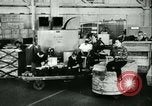
U.S. Army Signal Corps communication material and equipment is produced and distributed in World War II.
The role and contribution of the U.S. Army Signal Corps in combat and war, especially during World War 2. Workers organize and prepare signal communication material and equipment for transportation. Men transfer the items including wooden cartons, cables, signaling units in trolleys. Workers load the material into trucks. Shuttle ships in docks. Signal communication supplies for U.S. and Allied troops in the European Theater loaded onto the ships. The shuttle ships make their way under security in heavy seas. A Nazi U-boat wolf pack in the water during the early stages of World War II. torpedoes launched and U.S. ships are attacked bu the German submarines, smoke due to the explosions. U.S. sailors on board and jumping from burning ships into water.German wolfpack submarine fleet in a harbor. German Kriegsmarine sailors lower German Neger torpedo-carrying craft (sometimes called Human Torpedo) into the water. A U.S. B-25 bomber aircraft in flight locates a German submarine. The radio operator gives the exact location and the submarine is attacked. View from within cockpit as bomb sight is fixed on German submarine target. View of bomb doors open and bombs away from B-25 aircraft. Explosion in water is seen and the submarine is hit. Dramatized scene from inside of submarine as it is rocked by explosion and fills with water.
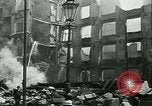
British response to Nazi air raids in Battle of Britain, and use of American radar in the European Theater during World War II.
The role and contribution of the U.S. Army Signal Corps in combat and war. Opening scenes show bomb damage due to German Luftwaffe blitzkrieg air raids (The Blitz) in Southern Counties of London earlier during Battle of Britain in World War 2. Firemen and rescue workers try to extinguish the fires with water hoses. The rescue workers conduct operations amidst bomb damaged buildings and rubble. Severely damaged buildings. Rubble strewn all over the streets in England. A Food Flying Squad van makes its way on the streets. Food distributed from the van. A British man walks amidst the rubble. Relief work in progress. Buckets of food and water lying at camps. Displaced civilian people eat and drink. London civilian residents evacuate numerous areas. Evacuees walk across a bridge. Big Ben seen in the background. Allied bombers in flight. Royal Air Force de Havilland Mosquito aircraft track and shoot down enemy aircraft. The dogfights result in mid air explosions. Two soldiers operate a U.S. radar designed to direct antiaircraft fire in combat area. The radar tracks a target moving up to 600 miles an hour. The soldiers track down aerial targets, the gun directors make adjustments and the antiaircraft guns are fired at buzz bombs. Enemy V-1 Flying bombs are hit and downed before they can reach the coastline. German V-1 rockets are tracked over England by radar and shot down. An V-1 is hit. It descends to the ground and explodes. France: A downed V-1 flying bomb is examined. The wreckage of a V-1 in a field. Soldiers and civilians near the wrecked V-1 Flying Bomb
Mission of Joint Assault Signal Companies during amphibious assaults in World War II
Montage of military footage assembled to describe Joint Assault Signal Companies, in World War 2. Some inserts are inconsistent and anachronistic. Scenes of U.S. amphibious assault on a Japanese-held island in the Pacific theater. Camera focuses on small fast-moving assault boat carrying Army and Navy personnel of a Joint Assault Signal Company. A Japanese Aichi B7A Ryusei "Grace" aircraft flying low over the water in background. U.S. troops leaving an LST (Landing Ship Tank) and wading ashore. Some pushing a jeep through the surf. Members of a Joint Assault Signal Company running ashore with a spool of communications cable. Others carrying small arms climb out of an assault boat. Signal company soldiers laying communications cable as they move through jungle. Sailor aboard a U.S. warship ostensibly communicating with the signal company via light blinker. Naval gunfire bombarding enemy positions. Narrator's mention of air support is followed by anachronistic insert of U.S. Army B-10 bombers in formation flight; of bombardier in nose; and views of bombs falling. Next, a formation of B-25 Mitchell bombers is seen in flight and bombs falling. Back in the jungle, signal company men string wire on palm tree. Field artillery firing. Soldiers hunkered down in a shell hole. Signal company soldier using SCR-300-A Radio set.
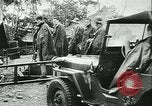
U.S. soldiers watch a film at a foxhole theater and films made for workers by the Signal Corps during World War II.
The role and contribution of the U.S. Army Signal Corps in combat and war. Army Pictorial Service films including screen magazines and GI movies are delivered to war fronts in all Theaters during World War 2. An officer arrives in a jeep with the films. Officers and soldiers around tents at the base. Soldiers in camouflage rain coats and hats seated at a foxhole theater. The soldiers watch the latest Joan McCraken Broadway hit Bloomer Girl. Scenes from the film. US: Pictures shown to workers depict the use of products manufactured by them at the war fronts. A poster reads 'B-52 Super Bombers, Bell Aircraft'. Men working inside the Bell Aircraft Corporation plant in NY. Huge machinery, equipment and aircraft parts being manufactured. Workers near stands piled with equipment and parts. A foreign version of the films made for Chinese allies. A U.S. officer talks to soldiers. The film dubbed in Chineese.
Army Signal Corps receive and send messages via various methods in World War II; Pentagon signal center operations.
The role and contribution of the U.S. Army Signal Corps in combat during World War 2. Submarine cables laid down by the Signal Corps. Soldiers operate field army communication equipment for communication within and between units. Soldiers talk over the radio in a military jeep. American soldiers employ communication equipment seated at a table in a camp. A U.S. Army Signal Officer goes through documents. An officer receives a message in Washington DC. The message is relayed from the State Department to the Signal Center in the Pentagon building. Exterior views of the Pentagon building circa 1943 or 1944. Inside the Army Communications Signal Center in the Pentagon, technicians work using various communication equipment. They receive messages punched on tape as the tapes emerge from machines. Workers encoding and decoding secret and confidential messages that run the war. Workers at the 'Traffic Control, Army Command and Administrative System'. Paper messages seen gliding across a track near the ceiling above a signboard. A man inserts and removes cables from switchboard slots. The plans are then passed on in code through a maze of antennas all over the world. An animated map depicts the sending of these messages by radio multi-channels, radio teletypes, and manual radios to the front lines. A vast network of Army communication system from Washington DC to the rest of the world to carry a message around the world in three and a half minutes.
The role of Signal Corps during the Philippines Campaign of World War II.
The role and contribution of the U.S. Army Signal Corps in the Pacific Theater of Operations during World War 2. A beach on the Philippine island of Mindanao. U.S. aircraft in flight over the coastline. Signal Officer Lieutenant Leon Tinnell works at the Signal Headquarters. He talks on the radio receiver. He radios a message to U.S. Army General Douglas MacArthur's headquarters reporting on movement of Japanese troops. U.S. aircraft take off for a mission against the Japanese troops. They drop bombs on Japanese ships. Smoke from fire due to the explosions. A U.S. submarine near a battleship at sea. U.S. Navy sailors aboard the ship and the submarine. Wounded and sick officers and soldiers including Lt. Tinnell are transferred from the submarine onto the ship. Soldiers carry a comrade on a stretcher. Landing crafts approach an island in the Philippines. General MacArthur and Allied troops land at Leyte Island on October 20, 1944. They leave the crafts off shore and wade through the water towards the beach. Signal Corps officers record the event as General MacArthur and the others make their way inland.
CRITICALPAST.COM: About Us | Contact Us | FAQs - How to Order | License Agreement | My Account | My Lightboxes | Shopping Cart | Advanced Search | Featured Collections | Website Terms & Conditions | Privacy Policy ©2026 CriticalPast LLC.
License Agreement |
Terms & Conditions |
Privacy Policy
©2026 CriticalPast LLC.