


 Francais
 Deutsch
 Italiano
Refine Your Search
Adak Alaska USA 1943 stock footage and images
- Showing 523 to 528 of 27381 results more
more Hide
Hide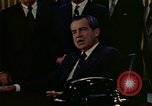
U.S. President Richard Nixon signs S-1081 Trans-Alaska Pipeline Bill at the Oval Office in the White House, Washington DC.
U.S. President Richard Nixon signs S-1081 Trans-Alaska Pipeline Bill at the Oval Office in the White House, Washington DC. Secretaries and other officials stand by President while he talks to them. Nixon signs the bill and speaks to his assistants. Some of his assistants smile on his comments.
U.S. troops leave for Alaska in a ship named 'St. Mihiel' from Seattle, Washington.
U.S. troops leave for Alaska from Seattle, Washington during World War II. U.S. soldiers and officers at a port. The soldiers embark onto a ship named 'St. Mihiel'. Troops and equipment aboard the ship. Soldiers aboard the ship wave. Women and children at the port also wave back.
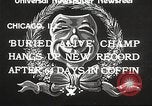
Alaska gold miner Jack Loreen remains "buried alive" underground for record-setting 64 days and one hour in Chicago, Illinois
Stunt by Alaska gold miner Jack Loreen, as he remains "buried alive" in a coffin underground for 64 days and one hour in Chicago, Illinois. A crowd seated around a grave with a sign which reads 'Here Lies Jack Loreen'. A man starts to dig the grave to retrieve Loreen. Jack Loreen as seen from a see-through air shaft. The man digs deeper. A coffin is hoisted out of the grave. The crowd surrounds Jack Loreen as he emerges from the coffin. Jack Loreen poses with his family including wife and children.
Walrus caught from the coasts of Alaska in San Diego United States.
A walrus caught from the coasts of Alaska weighing 400 pounds in San Diego United States. Man with milk bottle milking walrus. Walrus crawls towards the shower to cool down its body temperature. Man showers water over walrus body with the help of a water shower.
Army Signal Corps receive and send messages via various methods in World War II; Pentagon signal center operations.
The role and contribution of the U.S. Army Signal Corps in combat during World War 2. Submarine cables laid down by the Signal Corps. Soldiers operate field army communication equipment for communication within and between units. Soldiers talk over the radio in a military jeep. American soldiers employ communication equipment seated at a table in a camp. A U.S. Army Signal Officer goes through documents. An officer receives a message in Washington DC. The message is relayed from the State Department to the Signal Center in the Pentagon building. Exterior views of the Pentagon building circa 1943 or 1944. Inside the Army Communications Signal Center in the Pentagon, technicians work using various communication equipment. They receive messages punched on tape as the tapes emerge from machines. Workers encoding and decoding secret and confidential messages that run the war. Workers at the 'Traffic Control, Army Command and Administrative System'. Paper messages seen gliding across a track near the ceiling above a signboard. A man inserts and removes cables from switchboard slots. The plans are then passed on in code through a maze of antennas all over the world. An animated map depicts the sending of these messages by radio multi-channels, radio teletypes, and manual radios to the front lines. A vast network of Army communication system from Washington DC to the rest of the world to carry a message around the world in three and a half minutes.
Destroyer Escort USS Frament, DE 677, is built and launched. Destroyer Escorts fitted out, readied for shakedown cruise
U.S. Destroyer Escort USS Brennan, DE-13,underway. U.S. navy crew aboard the ship. View at shipbuilding area of Bethlehem Steel in Quincy, Massachusetts. Keel is laid and shipbuilders busy on day 60 of construction of DE-677, the USS Frament. Scenes of construction. Welding steel plate. DE-677 is christened USS Frament and launched on June 28, 1943. Destroyer Escorts at pier, being fitted out. New ship's crew assembled on pier and boards for shakedown cruise. Supplies and munitions loaded on board the ship, including ammunition, depth charges, and torpedoes ("tin fish").
CRITICALPAST.COM: About Us | Contact Us | FAQs - How to Order | License Agreement | My Account | My Lightboxes | Shopping Cart | Advanced Search | Featured Collections | Website Terms & Conditions | Privacy Policy ©2026 CriticalPast LLC.
License Agreement |
Terms & Conditions |
Privacy Policy
©2026 CriticalPast LLC.