


 Francais
 Deutsch
 Italiano

Refine Your Search
B-24-Burma stock footage and images
- Showing 907 to 912 of 3692 results more
 Hide
Color Sound
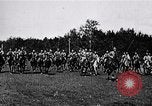
Scenes of combat and destruction in World War I. Russian refugees and soldiers retreating from stricken areas.
Referring to Russian operations against German forces in World War 1, Slate reads: "Disaster rapidly followed disaster. The German armies advanced and whole provinces had to be evacuated after 24 hours notice." The film continues with a montage of World War 1 scenes. Mounted British lancers charging across a field. A German gun crew standing by a camouflaged 7.7cm Feldkanone 16 artillery piece. Artillery shell exploding ahead and close to camera during battle. French soldiers charging out of their trench, into no-man's land. Gas shells exploding and gas drifting across a wooded area occupied by Russian soldiers and artillery, some of whom stand silhouetted without gas masks during attack. A hand grenade being thrown by a Scottish soldier. Russian civilians crossing railroad tracks and watching conflagrations from an artillery barrage on buildings in background. Closeups of buildings burning and destroyed by German shelling. Russian refugees leaving area of destroyed and burning buildings.The group includes several Russian soldiers. One, an ambulatory wounded, using an improvised cane, is assisted by a Russian officer and a woman nurse. The ground is partly snow-covered. View of smoke from fire sweeping over a railway line and station. Russian soldiers along with civilians heading away from the embattled areas.
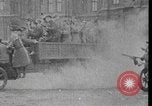
Bolshevik Red Guards lead takeover of Government buildings in Petrograd during Russian revolution, in World War I
Scenes of October revolution in Petrograd, Russia, during World War 1. Bolshevik Red Guards forces, waving red flags, charge across a square in military vehicles, followed by numerous others running to take over government buildings. on 24 October 1917.
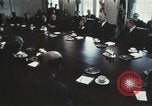
U.S. President Richard Nixon at a meeting with Attorneys General in the Cabinet Room of the White House.
U.S. President Richard M. Nixon at a meeting with 24 U.S. Attorneys General in the Cabinet Room at the White House, Washington DC. President Nixon seated in center of table with Attorney's General. President Nixon, U.S. Attorney General John N. Mitchell and various other attorneys general.
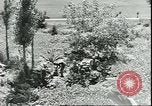
U.S. 25th Infantry Division and South Korean troops battle North Korean troops near Taejon, Korea during the Korean War.
U.S. troops battle North Koreans in Taejon, Korea during the Korean War. U.S. 25th Infantry Division troops fire howitzers, bazookas and other artillery weapons at North Korean positions. U.S. tanks fire at enemy positions. Smoke rises from enemy positions on hills. A U.S. aircraft bombs enemy positions. U.S. troops cover a bridge with rifle and machine gun fire to help the last units to cross a river near Yongdon. Men in a jeep fire guns as it goes across a bridge. United Nations flag flies from a pole at U.S. 24th Division Regimental Command Post in Chinju. North Korean prisoners are rounded up at the command post as South Korean troops move up to aid the defense. Trucks tow camouflage artillery guns up a hill. 25th Division infantrymen advance and recover their vehicles.

Wrecked equipment and damaged houses as a result of a tornado in Westby, Wisconsin.
Aftermath of a tornado in Westby, Wisconsin. Wrecked structures on the ground as men search through the rubble. Damaged cars due to the tornado that killed 24 people. A sign outside a shop reads 'Rudce's drug store open'. Damaged houses. Debris spread outside the demolished buildings. Demolished roof of a house.
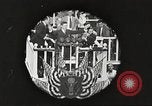
Scenes of the 1924 Democratic National Convention held in Madison Square Garden, New York City
1924 Democratic National Convention, at Madison Square Garden in New York City from June 24 to July 9, 1924. The alphabetical process of nominating candidates begins with Alabama and Forney is seen Johnston, putting Senator Oscar Underwood's name into consideration. View of men at the podium. Bernard Baruch, a supporter of William McAdoo, is seen standing in background. View of the crowded Madison Square Garden, filled with delegates. Some carry a banner reading: "Wilson 1916 for McAdoo 1924." The various State delegations are identified by signs with their State names on them. Kentucky, Massachusetts, and Hawaii (U.S. territory) are seen. As the camera pans the gathering, many more State signs are seen. Outside , in Madison Square Park, a loudspeaker is set up on a truck and a crowd is gathered to listen to events. Back inside Franklin D. Roosevelt, Al Smith's campaign manager, is seen giving a speech nominating Smith for President. Supporters hold up Posters displaying Smith's picture. Closeups of some of the banners. Ticker tape being thrown to celebrate the end of the convention, which ended on July 9th after the 103rd vote finally carried for compromise candidate, John W. Davis of West Virginia. Governor Charles W. Bryan of Nebraska was selected as the vice-presidential nominee.
CRITICALPAST.COM: About Us | Contact Us | FAQs - How to Order | License Agreement | My Account | My Lightboxes | Shopping Cart | Advanced Search | Featured Collections | Website Terms & Conditions | Privacy Policy ©2026 CriticalPast LLC.
License Agreement |
Terms & Conditions |
Privacy Policy
©2026 CriticalPast LLC.