


 Francais
 Deutsch
 Italiano

Refine Your Search
B-24-Burma stock footage and images
- Showing 2839 to 2844 of 3692 results more
 Hide
Color Sound

Evacuation of the most critically wounded soldiers captured by the Reds in Dien Bien Phu.
B-26C takes off. Planes drop bombs in the conflict area. The bombers are followed by C-47 planes marked with crosses and loaded with food and medical supplies for the wounded in the hospitals. Pilot talks on the radio. Men attach supplies to parachutes and drop them from the plane. Air planes flying to evacuate the most critically wounded fighting men captured by the Reds at Dien Bien Phu. People watch as a Sikorsky H-34 helicopter lands. Taking the wounded people on the stretchers to safety in Hanoi. Soldiers and medical personnel help transfer the wounded from the helicopter to hospital tents. Patients receive treatment at the hospital.

French soldiers firing rifle grenades from a trench during World War I
A group of French soldiers with rifles equipped to fire grenades. From a position low in a trench, they fire V-B rifle grenades.
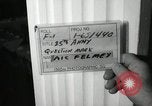
Retired Officers' Luncheon at Bolling AFB celebrating the 35th Anniversary of the 1929 record endurance flight of the Fokker C-2 Question Mark.
Film opens showing a display case in the Bolling Air Force Base Officer's Club, containing a model of the Atlantic-Fokker C-2A aircraft flown by pilots of the U.S. Army Air Corps, in January, 1929 when they set an endurance record of more than 150 hours sustained flight. Below it is a Wright J-5 Whirlwind R-790 engine that powered the flight. Next a large poster is shown commemorating the 35th anniversary of the feat (1929 to 1964). It contains photos of highlights from that event. Next, the retired officers pass the display of model and engine as they descend stairs and enter dining room. Most are in civilian clothes. But several attendees are active duty officers in uniform. Major Sidney Kubesch, pilot on record-breaking B-58 flight from Tokyo-to-London, pauses to stand and look at the display case. General Nathan Twining; General Ira Eaker seen briefly at the display case. At end of clip, General Carl Spaatz stands alone, looking at the display.
Retired veteran aviators share Luncheon at Bolling AFB celebrating Air Force record-setting flights in 1929 and 1963.
A large group of retired Air Force officers are seen seated at a number of tables during a luncheon celebrating the 35th anniversary of the 1929 endurance record setting flight of the Fokker C-2A aircraft named "Question Mark." The event is in the Bolling Air Force Base Officers' Club. Closeup of General Carl Spaatz, addressing the group from a podium. Colonel Harry Halverson and aviation mechanic, Sergeant Roy Hooe, who both flew on the Question Mark, are listening, along with Major Sidney J. Kubesch (who,in October 1963, was aircraft commander on the B-58 bomber that set a speed record, flying 8,028 miles from Tokyo to London in 8 hours, 35 minutes and 20.4 seconds). Lieutenant General Ira Eaker addresses the group next. Closeup of him and of General Spaatz tilting his head to hear. The audience applauding. Sergeant Roy Hooe then addresses the group. The clip ends as the luncheon ends and the participants socialize.

Pillots in front of O-38 airplane in Rockwell field, California. Instruments and cockpit explained.
Group of instructors and students stand in front of O-38 airplane in Rockwell field, California. Pilot and student board the plane. Cockpit of O-38 shows controls and instruments panel. O-38 instrument panel shows artificial horizon, altimeter and ball-bank indicator. Closeup of the Sperry artificial horizon instrument. A chart of Artificial Horizon shows how the instrument operates. A Directional Gyro in the hands of a pilot. This is marked as a 'Turn indicator A.C. type B-2' Chart shows how the directional Gyro operates. Sensitive Altimeter in hands of a pilot. A rate of climb indicator in the hands of a pilot.
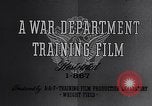
Operations of the air defense team in United States, during World War II.
The operations of the air defense team in United States. A B-26 aircraft flies over a snow-covered area. Views of American domestic sites that need antiaircraft protection. View of Southern Manhattan Island, showing skyscrapers. Views of factories, mills, canals, bridges, steel mills, refineries, industrial sites, and a major Dam. Warships passing through a canal. Soldiers man antiaircraft gun in New York City, with view of skyscraper buildings in background. Barrage balloons fly in the sky. Soldiers stand near barricades and 37mm antiaircraft artillery . Short range radar in the field to detect and locate the position of enemy aircraft. Soldier sits and watches the radar. Men and women in Air Defense Area Operations Center. They coordinate fighters, antiaircraft artillery, barrage balloons, radar, and searchlights. They discuss and detect the positions of the enemy. An area controller talks on the telephone. Men and women locate enemy aircraft on a map. Soldiers stand near antiaircraft artillery.
CRITICALPAST.COM: About Us | Contact Us | FAQs - How to Order | License Agreement | My Account | My Lightboxes | Shopping Cart | Advanced Search | Featured Collections | Website Terms & Conditions | Privacy Policy ©2026 CriticalPast LLC.
License Agreement |
Terms & Conditions |
Privacy Policy
©2026 CriticalPast LLC.