


 Francais
 Deutsch
 Italiano
Refine Your Search
Bolinas Beach California USA 1934 stock footage and images
- Showing 8665 to 8670 of 26867 results more
more Hide
Hide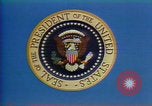
U.S. President Ronald Reagan delivers a New Year's greeting to the people of the Soviet Union
American President Ronald Reagan is seen in the the Roosevelt Room of the White House in Washington, DC, from where He delivers a New Year's greeting to the people of the Soviet Union. He is seated in front of a fireplace mantle decorated with holly. A large poinsettia plant sits in front of the fireplace. The American flag is displayed to his right. The President describes the ways typical American families celebrate Christmas, Hanukkah, and the New Year. He mentions the U.S.Presidential election scheduled for next year (1988). Reagan notes that he and General Secretary Gorbachev signed the Intermediate Nuclear Forces Treaty, last month and hope to meet again, in a few months, in Moscow. He alludes to Soviet and American representatives in Geneva discussing a 50 percent reduction in strategic nuclear weapons suggests they may have a treaty ready to sign in Spring. President Reagan notes that America and the Soviet Union have the opportunity to develop a defensive shield against ballistic missiles (also called SDI or Star Wars), and that the U.S. intends to pursue the possibility that technology offers. In other matters, the President speaks of expanding contacts and communications between our two countries. He mentions Human rights and human dignity. He expresses concern about senseless conflicts in a number of regions. He closes by wishing the Soviet people a Happy New Year. (Note: President Reagan's message was recorded on December 23, 1987, in the White House and broadcast on January 1, 1988.)
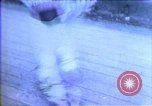
Americans during various dance performances and protests in the United States during the roaring 1920s.
The life of Americans in the 1920s. Women dance the Charleston. A man dances the Charleston with a woman. Musicians play in the background. Patrons of Steeplechase Park, in Coney Island, on a spinning wheel. Clown steer a woman to where her dress gets blown up from a hidden air jet. Women on the boardwalk in batihing suits and being arrested by police. A man lifts up a woman during the dance performance. A sketch shows women applying make up. Several scenes showing the gap between the people who could accept the modern ideas and those who couldn't. Clarence Darrow and William Jennings Bryan. Views of Steelmaking at steel factory plants. A scene with the Ku Klux Klan, or KKK. People protesting the trial of Sacco and Vanzetti, accused anarchists. Various banners during the protests.
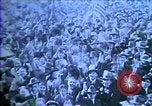
Strikes in various cities, formation of the Communist Parties, and disorder in the U.S. and Soviet Union after World War I.
The aftermath of the World War I. People of America celebrate the end of the war. Soldiers aboard a ship as they return back to America. Several scenes of America before war. A parade. Sketch depicts the era during the presidency of Thomas Woodrow Wilson. Soldiers on the battlefield fight and fire artillery. A parade in America. Sketches depict the willingness of Woodrow Wilson to join the league of nations and America's refusal to join it. Woman of America casts her vote. Sketches depict the financial status of the Americans and the inflation after the war. Steel workers on strike. The policeman go on a strike in Boston. Sketch depicts the unsafe cities of United States. Picture of John Calvin Coolidge, Governor of Massachusetts. The governor inspects new police force after the strike is called off. Sketches of the revolution in Russia. Papers shows the various communist revolutions. Several sketches show the formation of communist party in America. A bomb packet reads name of John Davison Rockefeller, an American industrialist. Explosion occurs in a wagon. People injured and loss of property due to explosion. Police arrests the suspects. Sketches of the various strikes and disorders in America. Sketches of the immigrants to the United States. An official checks the immigrants. The U.S. Senator Warren Gamaliel Harding addresses the people. Harding with Thomas Woodrow Wilson in a car . Sketches compare the two Presidents.
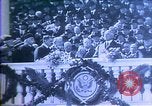
Warren Harding assumes office of the President and changes in the life of American people from the early to modern times.
The life of people during 1920s in the United States. Sketch of Warren Gamaliel Harding taking oath of office of the President of U.S. Sketches of the U.S. President Warren G. Harding. People in the factories. Sketches of the people in the various towns of America. The President addresses the people. Horse drawn wagons on the streets. Modern cars on the street. Women in houses as they perform various activities. Sketches depict the revolution brought about due to the invention of cars. People enjoy at various occasions in a car. Cars on streets. People listen to radio. Sketches depicts the motion pictures of the times. A family posing for a picture, each with one leg kicked out. Sketches of American writers like Fitzgerald and Hemingway who chose to live abroad. Footage of Moulin Rouge night club in Paris France and neon lights of other Paris night clubs seen at night. Women dance on a Paris night club stage. Sketches of famous writers and their view of modern America. Brief scene of people at Coney Island Amusement Park in New York sliding down a slide and riding on the "Human Pool Table" ride.
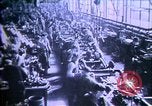
U.S. President Warren Harding dies. Calvin Coolidge becomes President. Good times in America and Hyperinflation in Germany
America and Europe during post World War 1 period of 1920s Sketches: American workers in factories. The U.S. President Warren Gamaliel Harding converses with a friend. President with other officials signs a paper. President Harding dies and the Nation mourns. Pallbearers carry coffin of the President. Sketches depict the various scandals under the Harding administration, including the Tea Pot Dome scandal. Vice President John Calvin Coolidge becomes President. Several sketches of the President . Sketches of rich people in America. People in a car. Automobiles driven out of a Ford factory. Sketch of the workers building a road. Various labor saving electrical devices. Sketches depict a housewife relaxing and people becoming better off economically. Ordinary people gamble on the stock market. Various pictures of American farmers suffering, as demand for food falls in the wake of World War 1. Economic and financial crises affect Germany. Hyperinflation and riots occur in Germany. The unrest gives rise to future leaders like Adolf Hitler in Germany and Benito Mussolini, in Italy.
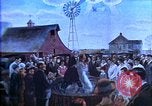
The Scopes trial and the Sacco-Vanzetti trial in the U.S.
Court trials in the United States after World War I. Sketches: The Scopes trial. A science teacher John Thomas Scope. Picture of the evolution of man. Defense attorney, Clarence Seward Darrow supports the theory of evolution. Prosecutor, William Jennings Bryan bases his position on the Bible. A person with a poster. People gathered outside the court room for the trial. Sketches: the court room session. People protesting. In separate matter. Accused anarchists, Ferdinando Nicola Sacco and Bartolomeo Vanzetti, two Italian Americans, on trial in Massachusetts for the 1920 armed robbery and murder of two pay-clerks. People protest against the trial. Policemen bring in the accused, to be tried. A huge crowd gathered to protest against the trial.
CRITICALPAST.COM: About Us | Contact Us | FAQs - How to Order | License Agreement | My Account | My Lightboxes | Shopping Cart | Advanced Search | Featured Collections | Website Terms & Conditions | Privacy Policy ©2026 CriticalPast LLC.
License Agreement |
Terms & Conditions |
Privacy Policy
©2026 CriticalPast LLC.