


 Francais
 Deutsch
 Italiano
Refine Your Search
Budapest Hungary 1916 stock footage and images
- Showing 229 to 234 of 876 results more
more Hide
Hide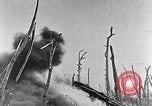
Extract from film "The Somme" depicts German troops in trench warfare against South African Brigade in Battle of the Somme, World War I.
Scenes from British feature film "The Somme" made in 1927, about the Battle of the Somme in World War 1. Part of it depicts events involving the South African Brigade in the battle. The extract opens with shells bursting all along No Man's Land among fragments of trees. Explosions and smoke everywhere. On July 18, 1916, Nine German Battalions deploy to drive the South African Brigade from the Delville Wood. Several soldiers of the Brigade seen entrenched in a sand-bagged position as a German shell explodes only yards from them. German soldiers advance through the broken trees and brush, while under fire by British gunners using Vickers machine guns. Some German soldiers falling and others seeking cover in abandoned trench. A line of South African troops firing their rifles from a trench, as several German soldiers reach them and are shot dead just feet away. A British soldier is shot while climbing out of a trench containing several fallen comrades. Other British (or South African) troops scrambling to find a safer place. One crawling across the ground. A British gunner firing a Lewis gun. German troops starting to go over-the-top, from their trench. British soldiers advancing. German gunner firing Maxim gun from fortified position, as shells burst in the distant background. A horizontal line of British troops advancing toward the German position. Some are cut down by the machine gun fire. German gunner firing a captured British Vickers machine gun. British soldiers hunkered down in a deep shell hole behind a ridge. They use their trenching tools to dig in deeper. Several German shells burst in the air. Two British soldiers watch as a tank approaches through the smoke. Large numbers of British troops attack downhill through smoke and haze. German soldiers preparing to defend an occupied structure, as more British troops charge forward. Post-battle view of the area, with fallen soldiers marked by rifles stuck in the ground with helmets on them. (Note: The tanks shown in this film are models Mark V which did not enter service until 1918.)
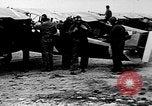
Recruiting and training American fliers for World War I. Support from President Wilson and Secretary of War, Newton Baker
In 1916,The Lafayette Escadrille, a group of American airmen who fought for France before American entry into World War I, with Indian chief's head in war paint and headdress painted on fuselage of their Nieuport aircraft. Newspaper headline reads 'United States and Germany at war'. in 1917, American civilian recruits responding to World War One: training with wooden guns, marching in uniform, and moulding practice bombs of plaster. Airmen train with real Lewis machine guns. Pilots who completed training are issued leather flying coats, helmets and goggles. Pilots make preflight checks by testing tautness of wing struts and cables. Crew takes off in a DH-4 airplane and drops practice bombs. Explosions on the ground. Pilots receive orders for advance training overseas. American troops march and drill. Supporter of airpower, Secretary of War, Newton Baker, speaking on podium, with General John J. Pershing sitting behind him. President Woodrow Wilson, another aviation supporter, signs a document at his desk. Red Cross women distribute refreshments to American troops as they deploy overseas. View of the Ocean Liner, SS Leviathan, converted to a troop ship, and camouflaged. American soldiers seen in French village square. View of Army barracks and muddy streets. Outdoor gunnery practice, using model airplanes. Experienced pilots demonstrating control stick techniques. Pilots taking off, in flight, and landing in Sopwith Camel airplanes. A nosed-over Sopwith Camel airplane with pilot unhurt, in cockpit.
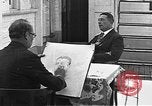
Count Felix Von Luckner visits Los Angeles on "Peace Tour," in 1927
Count Felix Von Luckner visits Los Angeles, California, while on a "Peace tour," in July, 1927. He is famous for his exploits while in command of SMS Seeadler (Sea Eagle) in 1916-1917, during World War 1. He sits, posing while and artist sketches his likeness. Next, he is seen on the deck of the sailing ship, Vaterland, with his Swedish wife, Countess Ingeborg. They hold two dachshund dogs. The Count, in mufti, accompanied by Captain, Julius Lauterbach, strolls the deck of the Vaterland "inspecting" the crew. Camera shifts to closeup of the masts and rigging of the Vaterland, and then down to her hull. Von Luckner on the bridge commanding the Vaterland, which begins to move slowly. Starboard view of the Vaterland, with 4 main masts bare and only flying jib, inner jib, and Fore Topmast Staysail set. View on deck of the Vaterland, where Von Luckner, his wife, and Lauterbach watch U.S. Navy ships of the American Battle fleet, as they pass them. They pass a U.S. Dreadnought battleship. View from land as the Vaterland passes Los Angeles Harbor Light, aka Angels Gate Light, at San Pedro Breakwater in Los Angeles Harbor.
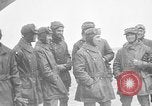
U.S. 1st Aero Squadron supports Punitive Expedition into Mexico
U.S. aviators of the 1st Aero Squadron pose in front of a Curtiss JN-3 airplane their base in Columbus, New Mexico, in 1916. The rest of their aircraft are lined up, parked, side by side. Scene shifts abruptly to views of camp below, from an airplane flying above it. Pilot is seen in open cockpit.
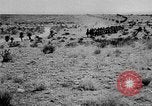
U.S. Army units enter Mexico in pursuit of Pancho Villa during Punitive Expedition
U.S. Army Cavalry moving across desert terrain in Mexico, during the Punitive Expedition against Pancho Villa. They proceed single file down a hill followed by pack horses carrying supplies. Closeup of the (only) Jeffery Armored Car Number One. (Built for evaluation, in 1916. It is armed with four .30 cal Benet-Mercie machine rifles and had two fully revolving turrets.) Here it is deployed in the Mexican desert. View of it coming along a dirt road, down a hill. Next, armed cavalrymen are seen running to their horses, mounting up and riding in loose formation. They are then seen in formations making a cavalry charge. A wagon train of covered wagons carries supplies across a bridge. Several views of such supplies in wagon trains raising dust as they proceed along dirt roads.
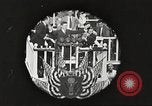
Scenes of the 1924 Democratic National Convention held in Madison Square Garden, New York City
1924 Democratic National Convention, at Madison Square Garden in New York City from June 24 to July 9, 1924. The alphabetical process of nominating candidates begins with Alabama and Forney is seen Johnston, putting Senator Oscar Underwood's name into consideration. View of men at the podium. Bernard Baruch, a supporter of William McAdoo, is seen standing in background. View of the crowded Madison Square Garden, filled with delegates. Some carry a banner reading: "Wilson 1916 for McAdoo 1924." The various State delegations are identified by signs with their State names on them. Kentucky, Massachusetts, and Hawaii (U.S. territory) are seen. As the camera pans the gathering, many more State signs are seen. Outside , in Madison Square Park, a loudspeaker is set up on a truck and a crowd is gathered to listen to events. Back inside Franklin D. Roosevelt, Al Smith's campaign manager, is seen giving a speech nominating Smith for President. Supporters hold up Posters displaying Smith's picture. Closeups of some of the banners. Ticker tape being thrown to celebrate the end of the convention, which ended on July 9th after the 103rd vote finally carried for compromise candidate, John W. Davis of West Virginia. Governor Charles W. Bryan of Nebraska was selected as the vice-presidential nominee.