


 Francais
 Deutsch
 Italiano
Refine Your Search
Budapest Hungary 1916 stock footage and images
- Showing 223 to 228 of 876 results more
more Hide
Hide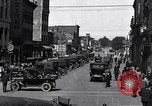
Pedestrian and vehicular traffic on the streets of Detroit, Michigan.
Pedestrian and street car traffic at intersection of a street in Detroit, Michigan (1920). View of road with hairpin curves (1916). Views of City Street with pedestrians, buses and automobile traffic in Detroit, Michigan (1929). Heavy automobile traffic on Miller Road in Detroit, Michigan (1929).
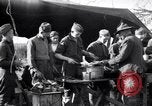
American soldiers served food at a field kitchen in France.
American troops served food at a field kitchen in France during World War I. Troops form chow-line and get their food. Scene shifts to a rustic wooden building serving as a local Headquarters. The date, "1916" is displayed in the wood on the porch roof overhang. Sentries at the entrance, salute officers as they exit the building. An American and two French officers are looking at a map and conferring in front of the building. More join the discussion. A closeup shows an aviator in flying garb, pointing with his arm as he holds and refers to the map. An American field grade officer in a side cap is listening intently. A French officer in steel helmet is behind him.
U.S. President Wilson gets reelected as Americans prepare for war during World War I
Events during World War 1. Sketches : In November 1916 newspaper shows Wilson reelected as a president. Cartoon depict the people of America supporting the Wilson's policy of peace. Several sketches of Thomas Woodrow Wilson after winning the election. Second inaugural of President Wilson at the United States capitol in Washington D.C. The German High Command in Berlin. Posters show the hardships of German citizens due to Allied blockade. Germany announces unrestrained submarine warfare against all vessels. Posters of the Germans destroying the American ships. The New York times reports German demarche to Japan and Mexico for support to Germany. Sketch depicts Germany Secretary of foreign affairs, Arthur Zimmermann seeks these alliances. Theodore Roosevelt addresses people. Several sketches of Woodrow Wilson. On April 2nd 1917 President Woodrow Wilson obtains declaration of war against Germany, from congress. American enters the conflict. U.S. Soldiers carry weapons in the battle field. sketches of several American officials. People work in factories to produce war materiel. A person with posters promoting Liberty bonds. A blindfolded person draws numbers from a bowl for civilian conscription. Citizens entering military service. People in a railroad train and others stand outside. People holding baggage walk in a group. A doctor checks the mouth of a recruit. Army recruit getting a haircut. Soldier stands holding guns. Soldiers practice firing artillery. Soldiers march. American recruits practice on wooden guns. Several sketches of the allied armies.
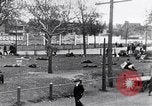
Homeless people and scenes of destruction after T. A. Gillespie Company Shell Loading Plant explosion
Displaced homeless people and refugees gather in grassy area near a railroad station, following explosion of the World War I shell loading facility. The T. A. Gillespie Company Shell Loading Plant explosion, sometimes called the Morgan Depot Explosion, occurred in October 4, 1918. The plant was one of the largest munitions facilities in the world at the time. Damage was extensive in the South Amboy and Sayreville area. Clip shows a refugee family posing together, sitting in the grass. Many billboard signs are on nearby fences and a grass and sidewalk area beside railroad tracks. The Perth Amboy Railroad Depot (train station) building on Smith Street is seen behind them (this building has since been moved to Lewis Street). With Martial Law imposed, the next scene shows a Coast Guard or Navy sailor on patrol to keep law and order and prevent looting in front of destroyed shopping area stores on Smith Street in Perth Amboy, including the Reynolds Brothers store (Reynolds Bros), at 134 Smith Street (also 136 Smith Street and 138 Smith Street), where the windows are blown out and debris are seen inside the store. The explosion of the Gillespie plant was one of three similar events in the New York-New Jersey area during World War 1: The Black Tom Explosion in 1916, the Kingsland Explosion in 1917, and then the Morgan Depot Explosion in 1918.
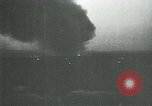
Destruction from 1917 Kingsland Explosion; and aftermath of 1918 Gillespie Shell Loading plant explosion in World War I
Scenes in Lyndhurst, New Jersey after explosion in the Canadian Car and Foundry Company in Kingsland (in Meadowlands of New Jersey) during World War 1. The company built shells for shipment to Russia in World War I. Over 500,000 shells were destroyed in the blast and fire, bombarding the surrounding areas in Kingsland - Lyndhurst. Black smoke rising in the distance, at night, seen from the coast. Close views of industrial buildings and homes on fire. Night views of homes and buildings engulfed in flames. People walk through smoking wreckage afterwards and pick through debris. Devastation covers area flattened by explosion and fire. Twisted railroad tracks covered by debris. A pile of munitions shells in a heap in the burned out shell of a building. View of the D.L.&W (Delaware, Lackawanna & Western) Railroad Shops building at Kingsland (now Lyndhurst), with DL&W train car 605 parked in front. Railroad Shops building is pitted with holes and broken glass from 3-inch shell bombardment. Two men inspect a damaged railroad car with broken glass and a 3-inch shell embedded in the side of the car. A heavily damaged residential house with holes and blown-out windows, and a shell embedded in the front door. Citizens pick through wreckage in front of a building where only cement pilings remain. Scene shifts to Perth Amboy area, October 1918. View of displaced families made homeless by the T.A. Gillespie Shell Loading Plant explosion (Morgan Depot Explosion; largest munitions factory in the world). Refugees sit in a town square. Men, women, and children among the refugees. An Army soldier and Navy sailor seen near refugees as they eat and drink. View of Smith Street in Perth Amboy with shops damaged by the blast. Under Martial Law, U.S. Army troops patrol with rifles to prevent looting. Pedestrians and a streetcar pass. Sign along sidewalk for entrance to Michaels & Co. at 178 Smith Street. (Suspected cause of incidents: Gillespie - worker error; Kingsland - sabotage as in the 1916 Black Tom explosion.)
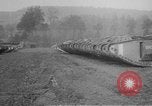
British tanks In France during World War 1.
Line of many WWI British Mk IV tanks, 1917. At least one is a "Baggage" (Supply) tank. From 1916: British Mk I "Male" tank with 6-pounder gun moves forward. Brief shot of Mk I "Female" (machine-gun) tank with anti-grenade mesh on roof. (World War i; World War 1; WWI; WW1)