


 Francais
 Deutsch
 Italiano
Refine Your Search
D-Day stock footage and images
- Showing 2119 to 2124 of 4856 results more
more Hide
Hide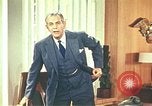
Construction of the DEW Line system of early warning radar sites
Narrator, actor Raymond Massey, sitting at a desk, covered with models of intercepter missiles, discusses the role played by the American Telephone and Telegraph Company and its subsidiaries, Bell telephone, and Western Electric, in creating the communications undergirding the North American Air Defense System. Scene shifts to arctic and view of a Dew Line site in the snow. A Pacific Western DC-3 airplane lands on snow runway, and a ship moves through icy waters, both carrying personnel and equipment for construction of the polar early warning system. A tractor hauls cargo for the project over snowy terrain. Supplies being air-dropped from a commercial C-82 Packet aircraft. Aerial view of a depot filled with supples for the DEW line project. Carpenters and other construction workers employed on the project in severe cold and windy conditions. A man making his way toward a wooden building, during a blizzard. Men installing tall steel towers at a DEW line site on a sunny day in summer. Exterior panels being placed on the geodesic dome covering a DEW line radar antenna.
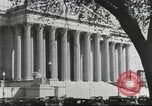
A map locates the flood affected areas in Ohio and the high and low pressure areas in the Ohio river during floods of 1937.
View of the United States National Archives Building (700 Pennsylvania Avenue, NW Washington, DC 20408-0001) in March 1936. in Washington, DC. Washington DC escapes damage from the great Potomac River flood. Next scenes cover damage caused due to a flood in Ohio, United States in January 1937. View of a weathervane in stiff winds. The level of the Ohio river rises. The flooded tributaries of the river. A map locates the flood affected areas. It depicts the high and low pressure areas. Map depicts heavy rains continuing for 20 days from January 6 to January 26, totaling 16 to 20 inches in the affected area.
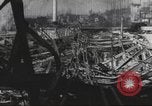
1937 Ohio Valley flood scenes, with major loss of property and life in the United States.
Damage caused by 1937 flood in the Ohio Valley area of the United States. A heavy loss of property due to a flood. Supplies being unloaded from trucks for the people. People being rescued from the areas affected by flood. Men aboard boats moving through buildings on the edge of the Ohio River that are submerged in water. Men moving a wooden casket. Destroyed houses and buildings in the areas. Flooded streets. A weather vane blowing briskly in wind. Narrator details how the weather bureau forecasts the weather and offers the information to help prevent losses from such disasters. Automatic typing machine records weather instrument readings. View of newspapers being printed at a printing press. A radio tower. People gather near injured flood victims. People lined up on the street to get supplies. Scenes of floodwaters below Memphis where flooding was effectively contained. Water rushing under the then new Bonnet Carre spillway of Lake Pontchartrain near New Orleans. Man opens a book published in Lisbon in 1605, now in the Library of Congress, written by Gabriel Lobo Lasso de la Vega, reporting on the exploration team of De Soto on leaf 300 of the book. De Soto's group, in 1543, reported on the flood they saw below current day Memphis, extending over 20 leagues of land, covering the tops of trees, but not overrunning the homes of the Native Americans who build shelter atop high poles. A view of submerged homes in the 1937 flood are shown as the narrator laments that more modern people did worse than the Native American Indians.
Destroyed buildings and wrecked vehicles in the flooded streets of Johnstown Pennsylvania due to 1936 flood.
Damage due to massive flood in March 1936 in Johnstown Pennsylvania, known as the Saint Patrick's Day Flood. People gather on the streets in the flood affected areas. The destroyed buildings in the area. Names visible on some shops and buildings including Hendler Hotel, Valley Drug Co., Exide, Alderman, Penn Traffic Co. The wrecked vehicles in the flooded street. People viewing the damage. The debris on the street. The streets submerged in water. Buildings along the sides of the streets. Mountains in the background. Men clearing rubble with shovels. People viewing debris while standing on the steps of a building. A stopped street car or trolley car with flood debris on top of it.
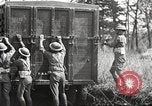
The 6thCavalry Division troops riding across rough terrain at Fort Oglethorpe,Georgia,in World war II
The 6th Cavalry Division at Fort Oglethorpe in Georgia, during early days of World War 2. Soldiers stand near a van. The soldiers open the doors of the van and unload the horses. The soldiers mount the horses and ride them across a rough terrain. The horses pull jeeps across a stream. Trees in the background. Artillery being pulled by the jeeps.
Children cry due to starvation in Europe after World War II.
A film on the reconstruction of Europe after World War II. A man holds a crippled child. Children crying outside a building. Newspapers headlines read: 'Truman for 2-day starvation diet' and 'Self Rations Asked in Food Crisis'. People walk on the street. Soldiers march in formation. Infants lying in hospital beds. They cry due to starvation.
CRITICALPAST.COM: About Us | Contact Us | FAQs - How to Order | License Agreement | My Account | My Lightboxes | Shopping Cart | Advanced Search | Featured Collections | Website Terms & Conditions | Privacy Policy ©2026 CriticalPast LLC.
License Agreement |
Terms & Conditions |
Privacy Policy
©2026 CriticalPast LLC.