


 Francais
 Deutsch
 Italiano
Refine Your Search
D-Day stock footage and images
- Showing 367 to 372 of 4857 results more
more Hide
Hide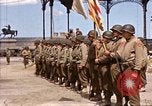
Presentation ceremony of French tricolor flag to Mayor of Cherbourg after Allied Invasion of Europe in World War II
Allied troops in Cherbourg after the Normandy Landings on D-Day in World War 2 . The first official ceremony in France after the Invasion of France. Allied soldiers lined up. A statue in the background. Dignitaries outside a building. U.S. General Joseph Collins presents the French tricolor flag to the Mayor of Cherbourg. Soldiers of the 7th Corps in clean uniforms for the ceremony. French people on the street. Colonel of the Signal Corps with war correspondents including Scripps-Howard Newspapers' Ernie Pyle, Burt Brandt, Cecil Cons, and John Leglinsee
U.S. Signal Corps officers and soldiers use mine detectors, modern radars, and meteorological equipment during World War II.
The role and contribution of the U.S. Army Signal Corps in combat and war. U.S. shuttle ships loaded with signal communication supplies for U.S. and Allied troops in the European Theater make their way in the Atlantic ocean. The Squier Laboratory at Camp Alfred Vail in Fort Monmouth, New Jersey. A technician works on signal communication equipment in the laboratory. U.S. soldiers use mine detectors in the European Theater during World War II. The mine detectors detect metallic, non-metallic mines, wooden box mines, and mines in glass containers. Artillery soldiers bury large microphones into the ground in advance zones. The microphones relay back information on enemy artillery. Soldiers receive the information on radio sets. U.S. aircraft on a training flight simulating real combat situation: The aircraft lost in heavy rain and rough weather, looking for the location of Boston. The pilot switches on a modern advanced radar. The radar waves pierce thick clouds, are reflected by Earth's surface and display an image on the scope. The image shows the clear location of Boston harbor directly under the aircraft. U.S. bombers attack over the Channel coast on D-Day (6 June, 1944). U.S. soldiers employ meteorological equipment for long range weather forecast in the European Theater during World War II. Soldiers release a hydrogen balloon into the sky. Another soldier uses an apparatus to take readings of atmospheric conditions behind enemy lines. An aircraft drops an automatic weather station called SCM-18-TI by parachute into enemy territory. The timed mechanism sends out weather data in codes. The interior of the automatic weather station lying open in a field.
U.S. Signal Corps employ the Eureka/Rebecca transponder system during the American airborne landings in Normandy, France.
The role and contribution of the U.S. Army Signal Corps in combat and war. Parachute drop-markers with radio signals guide an airborne operation in the European Theater. U.S. airborne troops board a U.S. Army Air Forces Douglas C-47 Skytrain or Dakota transport aircraft. A woman soldier greets the paratroopers as they prepare to board the aircraft. The paratroopers jump out and descend towards the ground. The paratroopers are furnished with markers for every dropping point. A paratrooper with a radio beacon hooked onto his belt. The beacon is the ground section of the Eureka/Rebecca transponder system. The paratrooper fixes the Eureka extension including the cable and the receiver transmitter. Animation depicts the working of the Eureka-Rebeca system. An aircraft unloads paratroopers over Normandy in France during World War II. Allied troops, landing crafts, landing ships arrive at Normandy on D-Day (6 June 1944). Soldiers wade through the water towards the shore and advance inland across the beach during Allied invasion of France.
Signal Corps weekly film reports sent to Photographic Center and used in training films for U.S. troops during World War II.
The role and contribution of the U.S. Army Signal Corps in combat and war. Amphibious landings of the first wave of Allied troops including Signal Corps Units in Normandy, France on D Day during World War 2. The Joint Assault Signal Companies (a Signal Corps Unit that accompanies the soldiers on every beach landing) go ashore in Normandy. Soldiers in landing crafts approach the beach. Landing crafts anchored along the shore line. A U.S. flag on the beach. Crafts approach the beach. U.S. Army Signal Corps combat photographers using motion picture cameras to film the battle that ensues on the beach and in the fields. Gun fire and explosions in the battlefield, filmed by combat cameraman. Allied aircraft in flight. Airmen load weekly film reports of the war in all Theaters made by Signal Corps officers from a van into an aircraft. The films are sent to the Photographic Center in New York. A soldier assembles the films. Technicians organize and arrange the films. They place the film reels onto racks. The film content is used to make training and orientation films for the U.S. troops. Troops watch the films in order to cut down the training period, and stay informed about the order of event in other Theaters of Operation. The films include 'Why We Fight' and 'The Fighting Men' series. Clips and recordings from these films.
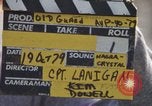
U.S. 3rd Infantry Regiment soldiers lead a military funeral procession for General Jacob Devers at Fort Myer in Virginia.
United States Army 3rd Infantry Regiment also known as 'Old Guard' during the funeral of General Jacob Devers at Fort Myer in Virginia, United States. Members of the 3rd Infantry Regiment on horseback. A riderless horse with a riding boot placed in a backwards position in the stirrup. Officials lined up outside the Fort Myer Old Post Chapel as soldier pallbearers carry a flag draped casket out of the chapel. Pallbearers place the casket on the caisson carriage. Honor guard lined up. Soldiers of the 3rd Infantry Regiment march in the military funeral procession. Deavers was commander of the 6th Army Group in Europe during World War II. Following D-Day, Devers was the first U.S. military officer to reach the Rhine River.
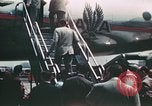
Former war correspondents reach London in an American Overseas aircraft from New York, United States.
An American Overseas Airlines aircraft leaves the United States from New York. It is on a multi-leg journey carrying 45 former War Correspondents back to Europe for celebrations commemorating the 5th anniversary of the D-Day Invasion of World War II. Former war correspondents board the aircraft. Aircraft in flight over a cloud cover. Officials get off the aircraft. A man refuels the aircraft. Officials again board the aircraft. Aircraft in flight over a cloud cover. Double decker buses on the streets of London. The former war correspondents talk and smile on the streets of London.
CRITICALPAST.COM: About Us | Contact Us | FAQs - How to Order | License Agreement | My Account | My Lightboxes | Shopping Cart | Advanced Search | Featured Collections | Website Terms & Conditions | Privacy Policy ©2026 CriticalPast LLC.
License Agreement |
Terms & Conditions |
Privacy Policy
©2026 CriticalPast LLC.