


 Francais
 Deutsch
 Italiano
Refine Your Search
Dayton Ohio USA 1947 stock footage and images
- Showing 61 to 66 of 25558 results more
more Hide
Hide
Railroad train derailment and destruction in Xenia Ohio due to a tornado during April 1974 super outbreak across 13 states
Ominous clouds in sky during Super Outbreak of tornadoes in April 1974 that hit regions in many states, including Illinois, Indiana, Michigan, Ohio, Kentucky, Tennessee, Alabama, Mississippi, Georgia, North Carolina, Virginia, West Virginia, and New York; and the Canadian province of Ontario. Xenia Ohio city manager Bob Stewart seen talking to his wife. A man checks storm on radar during a tornado in United States. A man rolls a machine to other room. During recording, a man shows areas that come in tornado's range. Sheriff dispatcher gives warning to all police and sheriff personnel about the sighted tornado in Montgomery County. Dick Burroughs on phone at Miami Valley Disaster Services in Dayton Ohio. A freigh train entering Xenia, Ohio just as tornado, scene via a student's 8mm camera comes into view and bears down on Xenia Ohio. Tornado hits the city of Xenia. Reenactment as city manager's wife takes call from him warning of tornado and she heads for basement cover. U.S. Air Force dispatches emergency medical convoy from grounds of base hospital at Wright Patterson Field. View of medical staff from the base mobilizing with ambulances and heavy construction battalion. Box 21, an emergency group responds to siren. People gather and discuss their plan include Military Personnel. A man explains situation. Rescuers save victims from tornado and take away dead bodies to temporary morgues.
National Air Olympics in Dayton where aircraft Piper J-3 Cub lands on top of moving car.
National Air Olympics in Dayton, Ohio. Shows biplanes stunting and crowd looking on. Aircraft Piper J-3 Cub landing on top of auto.

A new aerial camera launched in Dayton, Ohio.
Aerial camera. A trolley loaded with an aerial camera pulls up near a plane and flight crew along with Lieutenant O S Reading lifts the cover off the camera. Camera loaded into the aircraft. An aerial picture taken from the camera covering 600 square miles at 25,000 feet.
USAAF F-61 flying through thunderstorm clouds and pilots discuss thunderstorm test flight in Ohio,United States.
The Thunderstorm Project in Ohio, United States. The U.S. Army Air Forces F-61 Black Widow flying through thunderstorm clouds. The instrument panel in the F-61. The F-61 in flight. A pilot at the controls of F-61 flying through thunderstorm clouds. A large radar antenna revolving on a top of a tall tower. An officer operates a radar instrument board. An officer drawing weather maps. The F-61 flying through thunderstorm clouds. The F-61 in flight. The pilot at the controls of F-61 flying through thunderstorm clouds. The F-61 landing. The enlisted man operating controls in a GCA (Ground Control Approach) truck. The F-61 lands. GCA trucks in the foreground. A calendar. An officer seated at a desk and reads the Dayton Journal newspaper with headline "Pilotless Plane Spans Atlantic". The F-61s stationary at a ramp. A pilot stands in front of an aircraft. The F-61 taxis on a ramp. The pilot and the crew walk from the F-61. The civilians cataloging motion picture films. They sit at projectors and run films for review. Cans of films stacked in background. The F-61 pilots sit around a table and discuss thunderstorm test flight with the civilian authority. A formation of F-61s in flight. A formation of U.S. Air Forces F-80 Shooting Stars.
Use of artificial lightning equipment in Project Thunderstorm, and radar operations supporting project and its aircraft
Tug tows Northrop F-15 Reporter into hangar in Minneapolis, Minnesota to be instrumented for Project Thunderstorm. Various scenes of electrical equipment used in making man-made lightning, including a generator made up of hundreds of transformers, and a connected massive generator for producing high voltage. A large oscillograph is shown along with a smaller oscillograph designed for airborne use. A scientist is seen inside the giant generator. Artificial lightning tests are made on canopy of the F-15 occupied by a scientist, and the canopy remains intact following lightning strike. Lightning rods are attached to lightning-vulnerable nose, tail fin, and wing tip locations of the Project Thunderstorm aircraft. Pilot climbs into canopy of F-15. Airborne F-15 project aircraft seen in flight headed toward area of dark clouds. In Ohio at Clinton County Army Air Field, a project officer (AAF Captain) describes how search procedures of the pilot, weather observer, and radar observer are coordinated and key locations of radar and cooperating facilities at Jamestown and the Clinton County Army Airfield. Large radar antenna revolving on top of large tower, scanning for signs of thunderstorms. Radar antenna scanning vertically, near Quonset huts. Command center inside a quonset hut with project personnel at radar scopes and thunderstorm and aircraft positions plotted on large plexiglass screens. Technician adjust motion picture camera that photographs radar scopes every four seconds. Operator at vertical measuring instrument, showing reflected returns from targets, on July 18, 1947. View of operator at plan position indicator radar scope showing weather returns on June 6, 1947. Ground Control Approach (GCA) truck located near end of airfield to guide landings of Thunderstorm aircraft. Radio operators sitting at radar scopes inside the GCA unit. P-61 makes GCA approach and landing in good weather, to maintain skills needed when weather is bad. Briefing officer at blackboard cites radio channels to be used for various purposes. View of AAF aircrews in audience.
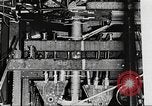
B-36 aircraft with the stress and ruptures of the parts as it undergoes structural changes at Wright Patterson AFB, Dayton.
Structural tests of U.S. Air Force B-36 Peacemaker bomber aircraft at Wright Patterson Air Force Base in Dayton, Ohio. Various stations of B-36 with the stress and ruptures of the parts. Parts of the aircraft after conducting the landing gear tests. Wing section of B-36. Weights on wing of B-36, and showing the moment that a rupture occurs in the wing section. B-36 takes off from a runway.
CRITICALPAST.COM: About Us | Contact Us | FAQs - How to Order | License Agreement | My Account | My Lightboxes | Shopping Cart | Advanced Search | Featured Collections | Website Terms & Conditions | Privacy Policy ©2026 CriticalPast LLC.
License Agreement |
Terms & Conditions |
Privacy Policy
©2026 CriticalPast LLC.