


 Francais
 Deutsch
 Italiano
Refine Your Search
Dayton Ohio USA 1947 stock footage and images
- Showing 529 to 534 of 25558 results more
more Hide
Hide
U.S. Ballistic Missile Submarine, USS Ohio, launches a missile while submerged.
U.S. Ballistic Missile Submarine, USS Ohio (SSBN-726) launches a missile while submerged. Missile emerges from the submarine hull and rushes upwards in cloud of bubbles. Aerial view from above shows circle, on ocean surface, formed by air bubbles. Slow motion images show missile emerging from surface, engulfed in a mountain of water and foam that completely obscures subsequent images. Another view shows missile breaking surface and streaking skyward with trail of flame behind. It penetrates cloud layer and continues out of sight.
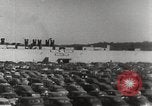
The new (circa 1951) GE jet engine plant at Lockland, Ohio. Engines being assembled. Various aircraft using GE engines
Views of the new (1951) GE jet engine assembly plant at Lockland Ohio. Animated description and U.S. map showing numerous suppliers across the country that contribute parts for the jet engines assembled at the GE Lockland plant.Views inside the plant, with engines being assembled. GE staff members, including chief engineer, Donald F. Warner, are seen in the plant. Various U.S. jet warplanes taking off, including: Hughes XF-91; North American F-86D Sabrejet ; Martin XB-51; North American B-45 Tornado; Boeing B-47 Stratojet bomber; and Convair B-36.
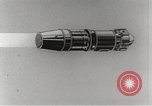
General Electric plant and operations at Lockland, Ohio. Advances in jet propulsion. Jet airplanes of the early 1950s.
Animated illustration of rapid improvements in GE jet engine designs. Views of the GE plant at Lockland, Ohio. Interior of a jet passenger liner airplane, as envisioned in 1951. View of flight attendant or stewardess in uniform, delivering tray of food to a passenger in the cabin of a passenger aircraft in flight. View of Dr. Sanford A. Moss, standing in front of the Collier Trophy, looking at his award certificate, in 1941. The trophy was awarded to him and the U.S. Army Air Corps for development of the aircraft engine supercharger. Discussion of Atomic Energy Commission, U.S. Air Force, General Electric and Convair ideas about building an atomic powered airplane. Views of the GE gas turbine laboratory. Montage of jet aircraft of the early 1950s. Among those seen are: Convair SF-92 delta wing fighter plane; The Chase XCG-20A 4-engine cargo plane; North American F-86 sabrejet; Grumman F9F panther; F-89 Scorpion; and B-36 bomber, plus several unidentified experimental aircraft. Several scenes of B-47s in rocket assisted takeoffs.

CCC workers restore Georgia's Santo Domingo State Park, renovate house of Alexander Stevens, and restore Schoenbrunn in Ohio.
Conservation Work in the United States during the Great Depression. CCC (Civilian Conservation Corps) renovate the house of Alexander Stevens, Vice President of the Confederacy, in Crawfordville, Georgia. View of the house with a statue of Alexander Stevens in front. The slave quarters near the house. View shifts to the oyster shell walls at Georgia's Santo Domingo State Park. The Government CCC program restores the park. Young men workers of the CCC march in front of restored cabins at Schoenbrunn springs area near New Philadelphia, Ohio.
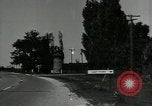
Service men and civilians compete during NRA shooting events at Camp Perry, Ohio, and at Fort Belvoir, Virginia, United States.
A film about uses and importance of weapons since old times in the United States. Camp Perry in Ohio. Military Trophies and civilian National Rifle Association (NRA) trophies for world series in marksmanship placed on a table. Service personnel and civilians at Camp Perry. Insignia on the back of the shirt of a participant. A 5th Infantry Division insignia on the back of a man. National Small Arms School instructors brief civilians and personnel in operation and firing of M-1 rifles. Participants fire rifles at a range during a competition. U.S. Army Chief of Staff General Matthew B. Ridgway presents trophies to winners of the competition at a ceremony in Washington DC. Scene changes to show a group of boys, all members of the Fairlington Junior Rifle Club in Arlington County, Virginia. The boys (and one girl also seen) wear shooting jackets with various patches commemorating NRA and other events. Boys seated on the ground. The boys and girls take prone position and fire rifles at a range at Fort Belvoir, Virginia, during an outing, supported by the U.S. Army. One boy wears a confederate soldier kepi style hat. Some of the children use their own rifles, modified for lighter weight. They cross the range together to look at targets. An instructor helps a boy. A boy loads a rifle and fires it. He looks through binoculars to check the accuracy of his shot. Sergent Stuart Queen at a desk as he speaks.

Workers make and assemble robot bomb parts and undertake bomb testing in Dearborn, Michigan and Toledo, Ohio
American robot bombs, America's answer to the German V-1 buzzbomb, being prepared in Dearborn, Michigan during World War 2. War production workers in armament factory weld bomb casing at Ford robot bomb factory. The workers move long tube like bombs with jet engines. They are known by nickname "Flying Chimney". The flying bombs on wheels. Men with ear protection in a testing area as the engines are fired during testing. Buildings in the background. Flame shooting from the jet engines. Workers including some women assemble the bombs at a plant in Toledo, Ohio, where wings and warheads are also built. A woman war production worker lying inside the body of a robot bomb and working on its assembly. The bombs take off from a launch pad in a gully at an Army Air Force test site. A booster cuts loose from the American Robot Bomb and hits water at a distance as the buzz bomb flies through the air, with an estimate 200 mile range. The bombs in flight. The booster hits water.
CRITICALPAST.COM: About Us | Contact Us | FAQs - How to Order | License Agreement | My Account | My Lightboxes | Shopping Cart | Advanced Search | Featured Collections | Website Terms & Conditions | Privacy Policy ©2026 CriticalPast LLC.
License Agreement |
Terms & Conditions |
Privacy Policy
©2026 CriticalPast LLC.