


 Francais
 Deutsch
 Italiano
Refine Your Search
Dayton Ohio USA 1947 stock footage and images
- Showing 535 to 540 of 25558 results more
more Hide
Hide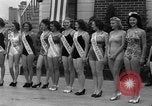
Miss Ohio Marilyn Meseke wins Miss America contest and poses wearing a sash in the United States.
Marilyn Meseke wins 1938 Miss America. The contestants wearing costumes lined up during the pageant at the Steel Pier (1000 Boardwalk, Atlantic City, New Jersey, U.S.) in Atlantic City, New Jersey. Miss Ohio Marilyn Meseke wins. Marilyn with Miss America crown. The winner poses with a sash.

Sights including Chesapeake and Ohio (C&O) Canal, Mount Vernon and Christ Church in Washington DC.
Film on Sesquicentennial of Washington DC, released in 1950. Film segments created for presentation by Treasury Department at meeting on April 25, 1929. A portrait of the first President of the United States George Washington. Animated maps of the original 13 colonies and the 10 square mile Federal District of Columbia. View of the Chesapeake and Ohio (C&O) Canal. George Washington's landmark plantation home, Mount Vernon. Christ Church in Alexandria. Old houses on a street and a hill in Georgetown. Sketch of Suter's Tavern. Animated map shows the L'Enfant development plan and the location of principal buildings. The first section of the U.S. Capitol built on Jenkins Hill. The U.S. Capitol building designed by William Thornton and Benjamin Henry Latrobe. Sketch of the White House designed by James Hoban. Sketch of Capitol Building in 1827 with dome constructed by Charles Bullfinch.
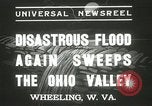
The area submerged in water due to the flooding of Ohio river in Wheeling, West Virginia.
Damage in Wheeling, West Virginia due to the floods in Ohio river. Aerial view of the area affected by flood. Houses along the sides of a flooded street. Trees submerged in water. People aboard small boats moving through the water. Women and children stand outside a house and lookout at the water outside the house.

Ohio Senator and Presidential candidate Warren Harding surrounded by people on boardwalk in Atlantic City.
Ohio Senator Warren Harding walks along the Boardwalk in Atlantic City New Jersey. Footage is dated 1920, likely during the run up to the 1920 presidential election in which Harding was elected President. He is interrupted by a young girl while taking a walk on the boardwalk. Then many children surround Mr. Harding to shake his hand and greet him.
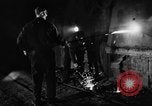
Steel production covers open hearth furnace, ingot molding, and hot strip milling.
Examines the steel industry in Youngstown, Ohio during World War II. Focuses on the steel production including the open hearth furnace and hot strip mill. Workers Mike Ubinski and Earl Strong remove a molten sample from an open hearth furnace and quench it in water. They then hammer the sample to prepare it for analysis. Earl Strong playing bass in the Youngstown Orchestra. The conductor is Michael Ficocelli, who is also time keeper at the steel mill. Shot of old man playing the violin. At the steel mill, the open hearth furnace is tapped. A 'pit gang,' several worker, throw alloy metal into the pit furnace from above. The 100 ton ladle containing molten steel is moved by crane and poured into ingot molds. A worker pulls another molten test sample from the ingots for testing. Ingots on train move from open hearth furnace to the ingot mill. Hot ingots being rolled by machine into slabs. Workers George Bannin and Clarence Ginny manipulate controls for machinery that rolls ingots into slabs. Worker Fred Ingram controls machinery that cuts steel slab using hydraulic sheers. Union workers gathered at a conference table as union leader Fred Ingram leads them in discussion. Hot strip mill where steels slabs are rolled into steel sheets. Sheet of hot steel moves down conveyor to end of mill. Steel workers leaving the steel plant at end of their shift. Exterior views of steel plant in Youngstown, Ohio.
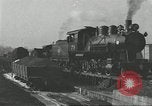
A Detroit, Toledo and Ironton Railroad train operating along its main line in Ohio
Steam locomotive, number 79, of the Detroit, Toledo, and Ironton Railway on a slightly elevated track, next to a coal car.in a train yard. Worker is examining and possibly oiling parts of engine drive. Scene shifts to interior of locomotive maintenance shop where men work on a train car parked next to a locomotive. Scene shifts, again, to view from rear of moving train as it traverses route along the valley floor, from vicinity of Spargursville (AKA Spargurs) to Bainbridge, including bridges over Sulphur Creek , Alexander Hollow Rd, and both bridges over Paint Creek between the two towns. The train passes a tender connected to some sort steam driven machine (probably a pile driver as they are working on trestles). Also shown are box cars converted into bunk houses used by the work crew, which appear to be parked at Storms, only 6.9 miles from Summit, where the work is likely being undertaken. . The film ends at the Bainbridge train station. (Note: regarding the reference to work going on at Summit. Although not seen in this sequence, the track there was so steep that trains had to be broken down and moved up a few cars, at a time, to the top, where the train was then reassembled before proceeding.)
CRITICALPAST.COM: About Us | Contact Us | FAQs - How to Order | License Agreement | My Account | My Lightboxes | Shopping Cart | Advanced Search | Featured Collections | Website Terms & Conditions | Privacy Policy ©2026 CriticalPast LLC.
License Agreement |
Terms & Conditions |
Privacy Policy
©2026 CriticalPast LLC.