


 Francais
 Deutsch
 Italiano
Refine Your Search
Elizabeth New Jersey 1952 stock footage and images
- Showing 5611 to 5616 of 8468 results more
more Hide
Hide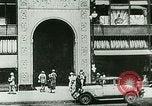
The U.S. National stock market craze during the "Roaring 20's" before the stock market crash.
An office entrance in Tacoma, Washington. Sign at door reads: "A.R. Blair & Co. Importers." A man smokes and reads the Tacoma Daily Ledger newspaper in his office. He reads the page with New York Stock Exchange (NYSE) prices for Thursday, August 30, 1928. A sign '"George R. McCall & Company, Stocks and Bonds, with offices at New York, Buffalo, Chicago & St. Louis." A number of the company's clients sit in chairs and watch as the latest stock prices are posted on display boards. Men are shown on the telephone communicating stock orders to their brokers. Hectic activity is seen on the New York Stock Exchange with floods of orders to buy and sell shares. Stock exchange number boards lit up with numbers. Men are seen in various places hovering over stock exchange ticker tapes running fast out of ticker tape machines. Scene of fireworks in the sky at the end (alluding to collapse of the stock market and the "Crash" on Wall Street that precipitated the Great Depression).

Polish Refugees travel three years and 3 thousand miles to Iran during World War II.
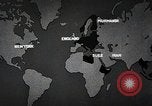
Many Polish refugees are seen in the final phase of their monumental trek of three years and three thousand miles from Poland, during World War 2. Scene shifts to Poland in 1939, where polish refugees crowd roads carrying their belongings in wooden carts and other conveyances. They are seen at a rest stop where they obtain food. Animated map shows path of refugees fleeing East into the Soviet Union, following the German invasion in August, 1939. The path continues Southeast in 1941, as they flee from the German campaign, Operation Barbarossa, into the Soviet Union. Their journey continues along the west coast of the Caspian Sea, through the Caucasus, to Persia (Iran). Views of refugees arriving at the Persian border, where they are seen near many tents, and being provided with articles of clothing from British and American Red Cross Stations. Refugees donning new shoes and other items. Young girls having their hair styled. Refugees sit at long tables where they receive hot meals. A teacher conducts an outdoor class for Polish refugee children. Closeup of children at their desks. Refugee women are seen tilling soil to plant crops, while fathers and grown sons and daughters leave to join the new armies of the Polish Government in Exile. Views of Polish women, in uniforms marching and of uniformed armed Polish soldiers, as well becoming part of the Allied war against the Axis powers. Polish refugees at an outdoor shrine, offering prayers for the safety of their members in the military. New polish refugee arrivals at the Persian border being greeted by others, many of whom are family members.
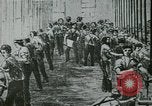
Industrialization of the U.S. and U.S. President Andrew Jackson and statesman Daniel Webster in the America
The history of the United States. Illustration : industrial workers at work in mills in New York. View of other industries with power machinery. New York is made the economic capital. Vehicles on streets. A map showing the east of Mississippi and new states added to the union. Andrew Jackson becomes the U.S. President in 1828. Men of the Congress during a meeting. American statesman Daniel Webster addressing the House of Representatives. Men listening to Daniel Webster.
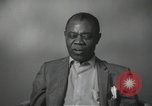
Jazz trumpeter and singer Louis Armstrong with his parents and teachers during his early life in the U.S.
African American Jazz trumpeter and singer Louis Armstrong in the United States. Armstrong speaking during an interview. He says that he was born in 1900, in "James Alley." (He was actually born in 1901.) A large crowd gathered likely on Canal Street in New Orleans during Mardi Gras circa 1930s. A large float in the parade. Highlights of Louis's life. Louis Armstrong's childhood home, shortly before it was demolished in the mid-1960s. In 1901, Louis Armstrong is born on August 4th, in New Orleans, Louisiana, to Mary (Mayann) and William Armstrong. A photograph of Louis with his mother, Mayann, and sister, Mama Lucy (Beatrice), c. 1922. View of the French Quarter in New Orleans, with characteristic ironwork and porches. A horse carriage and a vehicle moving down a city street. A view of Louis Armstrong's teachers Bunk Johnson, Joe 'King' Oliver and others. Louis Armstrong says that he has played with all the best musicians. Louis Armstrong seated with a trumpet in his hand and other musicians standing beside him.
A river no longer navigable in France due to a bombed out bridge during World War II. The French repair the bridge
Many commercial barges tied up next to one another along banks of a river blocked by a destroyed bridge in France during World War 2. Numerous tug boats also tied up along the river bank. View from one bank of the remains of the bridge completely blocking river traffic. A man rows a small boat from the near shore. Camera pans over the wreckage. Next workers are seen repairing the bridge. Water flows rapidly through an open section of new substructure. A barge loaded with men and steam driven equipment is on the up-river side of the bridge. Black smoke issues from burning coal or oil powering the barge. A single new walkway spans above the bridge opening. Next is a closeup of the work barge with steam rising from it. A different section of the bridge structure is seen next, with a gang of workmen on new bridge decking and others working from below on a barge. Closeup of workers installing the bridge decking. One is cutting excess length of a board, with a hand saw. Several men looking over the edge of the bridge deck at water flowing through spillways underneath it. Closeup of a diver in complete diving gear, including a metal helmet, working at the base of the bridge. Man climbing a ladder from a steel section of bridge. Worker using an Oxy-Acetylene Cutting Torch to remove a damaged section of steel. Tugboats plying the river. Local citizens watching the tugboats from atop a downstream bridge. as boat traffic resumes with the upstream bridge repaired. Closeup of tugboat passing under the bridge. Glimpse of tugboat under a graceful undamaged bridge. Closeup of a bulk carrier powered barge passing a bridge filled with spectators. A clamshell bucket grabbing material from the barge and raising it to load it somewhere.
War supplies transported by the U.S. Army and the U.S. soldiers land in islands in the Pacific Theater during World War II.
War equipment and supplies transported to different parts by the U.S. Army in the Pacific Theater during World War II. Animation of a map depicts the routes taken by the ships to supply war equipment in different parts of the world. Men load supplies on donkeys. The donkeys loaded with supplies walk through rocky terrain. An aircraft loaded with supplies in flight. A warship in the Atlantic Ocean. A soldier observes through a binoculars. An aircraft in flight overhead the ship drops bombs. Explosions in water as bombs are dropped. A convoy of ships. American soldiers land in England. The soldiers disembark from the ships. A soldier carries supplies out of the ship. New Caledonia : Soldiers march out of a warship. The soldiers wave standing at the ship rail. Soldiers march holding flag of the United States. Flag of New Caledonia and the United States hanging out of a building. Iran : A stencil mark of USSR on a crate shows materials arrived from Soviet Union. Two soldiers greet and salute each other. Two soldiers standing in front of a vehicle talk. Egypt : Soldiers walk on a gangplank to unload supplies from a ship. Trucks parked. A train pulls past the trucks parked. A U.S. aircraft carrying cargo in flight. A U.S. aircraft stationed. Animation depicts the air routes of the U.S. Army air transport command. Men carry aircraft parts. Men stack crates. A U.S. aircraft drops supplies in isolated areas of New Guinea. Men look skywards as the aircraft drops supplies.
CRITICALPAST.COM: About Us | Contact Us | FAQs - How to Order | License Agreement | My Account | My Lightboxes | Shopping Cart | Advanced Search | Featured Collections | Website Terms & Conditions | Privacy Policy ©2026 CriticalPast LLC.
License Agreement |
Terms & Conditions |
Privacy Policy
©2026 CriticalPast LLC.