


 Francais
 Deutsch
 Italiano
Refine Your Search
F-86 stock footage and images
- Showing 1801 to 1806 of 2472 results more
more Hide
Hide
Japanese film of high-ranking Allied military officers taken prisoner in World War II and held in various places including Japanese-occupied China
Camera pans over a closeup of British Lieutenant-General Arthur Ernest Percival who was captured in the fall of Singapore. American Lieutenant-general Jonathan Wainwright, smoking the stub of a cigar, as he sits with U.S.Major General Edward P. King, Jr. (Both were imprisoned in the Japanese invasion of the Philippines.) A naval officer POW posing in front of a tree. Tjarda van Starkenborgh Stachouwer, Governor-General of the Dutch East Indies, in pith helmet, smoking a cigarette. POWs eating and conversing with Japanese interpreters, (One POW appears to be U.S. Brigadier General George F. Moore, who was imprisoned along with Wainright and King, in the Philippines.) View of POWs in a library, where one is reading from a script, while being recorded. Other POWs looking at documents.
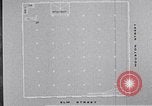
U.S. Secret Service, film showing details of the Texas School Book Depository from where assassin shot President Kennedy in 1963
A sketch shows the layout of sixth floor in the Texas School Book Depository building (207 N Houston St, Dallas, TX 75202, United States) from where the assassin fired shots that killed President John F. Kennedy, in Dallas, Texas, in 1963. The diagram shows that the building has two service elevators one facing the east and other facing west. It has two stairways -up and down. The assassin's gun was found in front of the down stairway. Views inside the sixth floor are then shown that reveal, among other things, numerous cartons throughout the area, providing plenty of cover for the shooter.
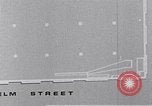
U.S. Department of Treasury, Secret Service, films a reenactment of President Kennedy's motorcade route when he was assassinated in 1963
On a sketch of the Texas School Book Depository Building 6th floor, a narrator points out locations pertinent to the assassination of U.S. President John F. Kennedy, in Dallas, Texas, in 1963. Camera shows stacks of boxes near windows on the 6th floor of the Building, as it pans across the scene. It focuses on a reconstructed scene of boxes near the window with Elm Street below to the right. A Secret Service agent is shown sitting in a position believed the same as the assassin and pointing in the direction that his rifle would have been.Views out the window of traffic moving on streets below. Next, an open convertible car is seen accompanied by two motorcycle police, simulating the movement of the President's motorcade as it turned from Main onto Houston Street. Narrator notes that next turn, from Houston onto Elm Street is quite sharp and driven very slowly. Narrator describes the shots fired as the car retraces specific locations on the route. Photograph of reenactment made for the President's Commission, using the Secret Service followup car. It shows telescopic sight cross hairs as the assassin would see them. Next the car being driven in the current reenactment is viewed through a four power, 18mm Ordnance Optical Incorporated rifle scope, like the one used by the assassin.That last part of the film is shown again in slow motion.
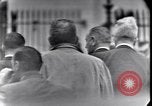
Political figures and dignitaries pay last respects to slain former President Kennedy at White House in Washington DC
Governors of various states and other government officials visit the White House to pay last respects to the Kennedy family following the assassination of President John Kennedy. Former President Truman enters the White House to pay respect to the slain president, and as he comes out with Major General Henry Vaughan (Truman's military aide), photographers flock around his car to take pictures. White House police men are seen on duty. Members of cabinet and Secretary of Defense Robert McNamara also reach the White House to mourn the death of the former President. Chief Justice Warren and Mrs. Warren, President Johnson and Mrs. Johnson, Senator of Massachusetts Leverett Saltonstall, Illinois Senator Dirksen, Chief of Protocol Andrew Bittle Duke, General Curtis Lemay of the Air Force, Secretary of the Air Force Eugene Zuckert and his wife, General Maxwell Taylor Chairman of Joint Chiefs of Staff all arrive at the White House to pay last respects to the former president John F.Kennedy. Mrs. Warren weeps as she comes out of the White House.
An interview with Senator Abraham Ribicoff about the death of former president Kennedy
Interview with Connecticut Senator Abraham Ribicoff, who was United States Secretary of Health, Education and Welfare in the Kennedy Administration. Shortly after President Kennedy's assassination. He talks about his visit to the White House to pay last respects to former president John F. Kennedy. He speaks high of Kennedy's term in the office as the President and ensures that newly appointed President will carry forward Kennedy's philosophy and work towards a better nation. The secretary also supports the idea of passing impending legislation in the name of former president Kennedy to pay homage to him.
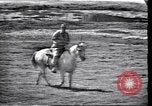
An informal visit to Lyndon Johnson's ranch in Texas in United States
Newly appointed President of United States Lyndon Johnson rides on a horse back at his ranch in Texas. The presenter states that Johnson often moves about his ranch in a car,electric go cart or on a horse back praising his cattle. The news presenter speaks about a unique feature of the LBJ ranch i.e. the Friendship Walk. Mr. and Mrs. Johnson along with their elder daughter Lynda shows the area to the interviewer. It has the names of all the famous people engraved on the stones in the lawn who have visited the ranch. The interviewer thanks the Johnson family for their kind cooperation and bids them adieu. The presenter informs that this informal visit at the LBJ ranch was shot weeks before the tragic assassination of John F. Kennedy.