


 Francais
 Deutsch
 Italiano
Refine Your Search
F-86 stock footage and images
- Showing 2347 to 2352 of 2472 results more
more Hide
Hide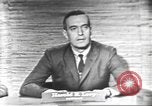
Kennedy and Nixon present their views about tax increments during a presidential election debate in Washington DC.
The second Kennedy-Nixon Presidential Debate in Washington DC, United States. Harold R. Levy of Newsday asks Democratic candidate Senator John F Kennedy about his recommendations to increase tax. Kennedy answers and states that in the present scenario tax increase is not desirable. He says that if it would be essential to U.S. security he would suggest a tax increase. He talks about his programs for economic growth, care for the aged, development of natural resources which would build the strength of the United States. He states that Americans can mobilize their economy and resources. Republican candidate U.S. Vice President Richard M Nixon comments on the increasing expenditures for defense, mutual security, economic and technical assistance. He says that he thinks it may be necessary to increase taxes to maintain a sound economy. He concludes and states that no president can add billions of dollars to his nations expenditures and not pay for it, after all the payment is made by peoples money.
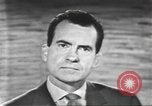
Kennedy and Nixon comment on decisions taken in favor of the U.S. during a presidential election debate in Washington DC.
The second Kennedy-Nixon Presidential Debate in Washington DC, United States. Paul Niven of CBS asks Republican candidate U.S. Vice President Richard M Nixon whether the decisions made so far for the U.S. were right. Nixon says that his decision during the Korean War was right. He disagrees with Kennedy that American prestige is at an all time low. He talks about the average income, daily meal and lifestyle of the Americans. He concludes and states that its his responsibility to correct Kennedy if he misstates. Democratic candidate Senator John F Kennedy disagrees with Nixon and gives the testimony of Senator George Aiken that majority of the Americans did not have income to afford a decent diet. He lays importance on a balanced budget.
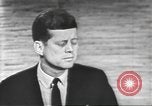
Kennedy and Nixon talk on drawing the defense line in the Far East during a presidential election debate in Washington DC.
The second Kennedy-Nixon Presidential Debate in Washington DC, United States. Edward P. Morgan of ABC asks Democratic candidate Senator John F. Kennedy to comment on whether Quemoy (Kinmen) and Matsu Islands were unwise places to draw U.S. defense line in the Far East. Kennedy states that he believes strongly in the defense of Formosa (Republic of China or Taiwan) and says that the U.S. will defend Quemoy (Kinmen) and Matsu if it is a part of a general attack on Formosa (Taiwan). He says that the U.S. should consult with the Nationalists. He states that the Americans should protect their commitments. Republican candidate U.S. Vice President Richard M Nixon states that he disagrees completely with Senator Kennedy on this point and states the example of the Korean War. Regarding Quemoy (Kinmen) and Matsu he says that these two islands are in the area of freedom and under the control of the Nationalists. He states that the U.S. should not force the Nationalist allies to get off of them and give them to the Communists because the Communists aren't after Quemoy (Kinmen) and Matsu, but after Formosa (Taiwan).
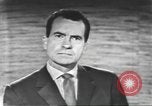
During a presidential election debate in Washington DC, Kennedy and Nixon give their views on the importance of party labels.
The second Kennedy-Nixon Presidential Debate in Washington DC, United States. Harold R Levy of Newsday asks Republican candidate U.S. Vice President Richard M Nixon to comment on the importance of party labels. Nixon answers and talks about Democratic and Republican Presidents. He says that the party label is not important, it is the belief and the leadership qualities of the presidential candidate that are important. He states that it is the people who determine and elect their presidents. He disagrees with Kennedy's statement that his party has not proposed programs. He mentions the programs proposed by his party in fields like education, housing and defense that would lead to the overall development of the nation. Democratic candidate Senator John F Kennedy presents his views and states that party labels are important as they tell about the programs and the candidate. He says that the Democratic party has stood for progress, people's welfare, strong foreign policy and national defense. He compares the approaches used by Democratic presidents with those used by the Republican presidents. He concludes that in the past years the Republicans have opposed housing, care for old age, federal aid to education and minimum wage. Moderator Frank McGee thanks the candidates and mentions future program details.
During an election debate in the US, Kennedy and Richard Nixon talk about a hypothetical invasion by the Chinese Communists.
The third Kennedy-Nixon Presidential Debate in the United States. Charles Van Fremd from CBS News asks Republican candidate U.S. Vice President Richard M. Nixon that if he were the president would he launch a war if the Chinese Communists began an invasion of Quemoy (Kinmen) and Matsu Islands and if he would authorize the use of nuclear weapons if regular conventional forces failed to halt the invasion. Nixon answers and states that it is irresponsible for a presidential candidate to indicate the course of action and the weapons he would use in the event of such an attack. He states that he would not say in advance how the U.S. would respond. He states that the Chinese Communists do not want just Quemoy and Matsu or Formosa (Republic of China or Taiwan), but the world. He concludes that defense of the free world territories and not surrender will lead to the path of peace. Democratic candidate Senator John F. Kennedy talks about a treaty to defend Formosa (Taiwan) and the Pescadores Island. He states that the U.S. would meet its commitment to Formosa. He disagrees with Nixon's suggestion that the United States should go to war if Quemoy (Kinmen) and Matsu islands are attacked as the treaty does not include these two islands. He concludes and says that the U.S. would defend if Formosa (Taiwan) or the Pescadores Island is under attack.
Kennedy and Nixon comment on nuclear disarmament before summit conference during a presidential election debate in the U.S.
The third Kennedy-Nixon Presidential Debate in the United States. Douglass Cater from Reporter magazine asks Democratic candidate Senator John F Kennedy about what sort of prolonged period does he envisage before there could be a summit conference and if he thinks that there could be any new initiatives on the grounds of nuclear disarmament during that period. Kennedy answers and talks about the need of strengthening of U.S. conventional forces and increasing missile production. On the question of nuclear weapon disarmament he states that the new administration should renew negotiations with the Soviet Union. He disagrees with the present administration's efforts regarding nuclear controls and general disarmament. He states that if he would get a chance he would make efforts to provide for control of nuclear weapons testing and begin general disarmament levels. Republican candidate U.S. Vice President Richard M Nixon mentions about his speech on this subject. He disagrees with Kennedy's statement that the administration is not making any effort because this is the highest level of operations in the whole State Department which is under the President himself. Roscoe Drummond from New York Herald Tribune asks Vice President Nixon about defending Quemoy and Matsu islands. Nixon answers and states that the U.S. should not deal with dictators and should not indicate which particular area it would defend. He gives the examples of the Korean War and World War II where the U.S. made a mistake. He says that Kennedy should change his position in this regard and not encourage the Chinese Communist and Soviet aggressors to react. Kennedy says that the treaty with the Republic of China excludes Quemoy and Matsu from the treaty area. He states that the treaty only includes defending of Formosa (Taiwan) and the Pescadores. He concludes that the U.S. should meet its commitments and raise war if the Chinese Communists attack the Pescadores and Formosa.