


 Francais
 Deutsch
 Italiano

Refine Your Search
Goodenough Island New Guinea 1943 stock footage and images
- Showing 217 to 222 of 13663 results more
 Hide
Color Sound

German occupation, martial law, and Danish resistance in Denmark during World War II
Film about Denmark after the Nazi German occupying force declared martial law and state of war with Denmark, in 1943-44 during World War 2. It was made by Danes and smuggled out of Denmark during that period. Opens with view of a church building and flocks of birds. Views of German army troops marching into Copenhagen, Denmark on April 9, 1940. SS troops dressed in black, marching. German soldiers carrying rifles with fixed bayonets, goosestepping. A fire burning at site sabotaged by Danish resistance elements in 1943. Derailed trains carrying goods to Germany. Fire at a German factory. Danish workers with bicycles staging a strike in protest German measures in response to resistance actions. Danes gathered in outdoor observance memorializing those killed by the Germans. A shop owned by German sympathizers (Quislings) destroyed by other Danes. People gathered on street on 29 August 1943, when the occupying German forces attacked the remaining Danish garrison and declared martial law. Announcement posted in Danish on a wall. View of Danish Naval vessels ordered scuttled by the Danish Admiralty, including the coastal defense ship,Peder-Skram, seen in front of a large building, the submarine, Havfruen (not seen) and others seen sunk at docks in Copenhagen harbor. Bullet hole through a glass window. A week later, on Sunday, 5 September, 1943, a German Panzer light tank is seen moving on a street, as pedestrians go about their business in Copenhagen. German soldiers patrolling on a motorcycle with sidecar. A man holding his hands up as he is hustled through a crowd under arrest by a German in black uniform (possibly Gestapo or SS). Motorcycle driving through pedestrians on the sidewalk. Spectators line a fence by an open field near a building labeled "Badstue Badminton." One, a woman, speaks through the fence to a Danish soldier interned there. View of the quarters of the Royal Guard at Rosenborg, occupied by German soldiers and with Nazi flag flying above it. Civilian relatives of interned men wait outside army headquarters for news about them. A courtyard, during a mass funeral, is filled with memorial flower wreaths covering the coffins of Danish soldiers and civilians killed by the Germans. Camera focuses on a wreath from King Christian of Denmark, among the many others. Two German soldiers march up a path at the Royal Residence Amalienborg, where King Christian is arrested. Views from moving camera as Danish flags are seen flying all over the city of Copenhagen, on 26 September, 1943, to celebrate the King's 73rd Birthday. The major exception is the Nazi Gestapo headquarters in the "Shellhus" (the prewar Shell Oil offices) shown in isolation. Views of people moving their belongings on hand carts after their homes were taken over by Germans. The slogan in English, "Do it well and do it now,"is seen left by Danish resistance fighters where they sabotaged a German military installation.
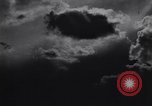
The bombing of Rekata bay, near Munda in the South Pacific,on August 24th 1943.
Bombing of Rekata bay (near Munda and Guadalcanal in the South Pacific) during August 24th 1943. U.S. B-24 Liberator bombers of the 13th Army Air Forces in flight at a high altitude over the bay. Bombers drop bombs on Japanese targets at Rekata bay. (World War II period).

Japanese naval convoy under American fire and Japanese planes drop bombs on Darwin, Australia.
Map Shows location of Port Darwin in Australia. A Japanese naval convoy is under attack by U.S. Planes. Heavy splashes and explosions in water. A Japanese sailor aboard a ship looks through his binoculars. Japanese infantry advances through the New Guinea jungle. A bombed hangar. Wrecked planes inside the hangar. Japanese plane takes off from an airport recently captured from the Americans. Japanese troops inside bombers flying at a high altitude above Darwin. Japanese bombers drop bombs on Darwin. Heavy smoke rises from the explosions. (World War II period).
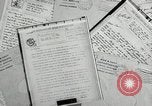
Views of Lexington Main Street and University of Kentucky on 'By Request' program for American soldiers.
Women's Army Corps (WAC) Sergeant in broadcasting studio for the Army Navy Screen Magazine feature called: "By Request." She holds a letter received from 43 American soldiers ("foxhole buddies") in New Guinea. They ask "By Request" to show them scenes from the University of Kentucky, where they trained, and some shots of Lexington, Kentucky. The program continues with motion pictures of the requested scenes, beginning with the Phoenix Hotel and a theater on the Lexington Main Street. Pedestrians on the side walk and cars parked by the roadside. Keith's Bar and Chop House. Bartenders and waitresses serve beer. A roller coaster, known as the Wildcat (after UK's mascot) at the Joyland amusement park, located on Paris Pike north of town. The University of Kentucky campus. GIs and women soldiers on campus. A sign for the University. Soldiers take pictures by the statue of James Patterson on campus. (Given the lack of foliage on the trees, this film was obviously taken sometime between November and March. ) (World War II period).

Newsreel 'Allied forces in action on India-Burma fronts" shows airfield construction and Allied officers
Natives learn to build airstrips in India for Allied Forces. Indians using primitive tools. Indian women are also seen working to build air field runways and landing strips. A U.S. Army B-25 bomber aircraft lands and taxis. General MacArthur, General Krueger and General Rupertus inspect newly won positions in New Guinea. In Burma British and Indian troops advance. Explosions seen as British Army forces fire mortars. (World War II period).
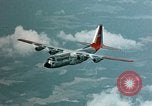
Lockheed C-130B Hercules aircraft in flight and copilots at controls in the United States.
C-130 annual report shows Lockheed C-130B Hercules in the United States. Lockheed C-130B Hercules in flight. Shows a copilot at controls. Aerial view of Lockheed C-130B Hercules wing tip above heavy cloud bank. Lockheed RC-130A Hercules in flight. Observers at instruments. A Lockheed C-130B Hercules lands at La Paz Airport, Bolivia. A Lockheed C-130B Hercules lands at Goroka Airport, New Guinea.
CRITICALPAST.COM: About Us | Contact Us | FAQs - How to Order | License Agreement | My Account | My Lightboxes | Shopping Cart | Advanced Search | Featured Collections | Website Terms & Conditions | Privacy Policy ©2026 CriticalPast LLC.
License Agreement |
Terms & Conditions |
Privacy Policy
©2026 CriticalPast LLC.