


 Francais
 Deutsch
 Italiano

Refine Your Search
Goodenough Island New Guinea 1943 stock footage and images
- Showing 271 to 276 of 13663 results more
 Hide
Color Sound
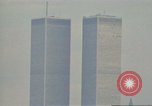
Views of Lower Manhattan, Twin Towers, and Liberty Island from Ellis Island area in New York City.
Ellis Island and its vicinity in New York, United States. View across harbor to World Trade Center Twin Towers recently completed. Broken piers in the water. The Statue of Liberty in the foreground. A helicopter in flight overhead beyond the Statue of Liberty. Buildings in the foreground.
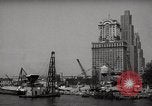
Scenes of New York City and New Jersey from New York harbor, in vicinity of Ellis Island.
Scenes of New and New Jersey from New York harbor in vicinity of Ellis Island. At lower Manhattan, derricks and cranes can be seen and construction activity associated with the building of the Brooklyn-Battery tunnel. Among skyscrapers seen are the Empire State Building and the Chrysler Building, both further uptown, in the background. Docks and piers are seen along the waterfront. B&O Railroad barge tied to a pier.

Destroyer Escort USS Frament, DE 677, is built and launched. Destroyer Escorts fitted out, readied for shakedown cruise
U.S. Destroyer Escort USS Brennan, DE-13,underway. U.S. navy crew aboard the ship. View at shipbuilding area of Bethlehem Steel in Quincy, Massachusetts. Keel is laid and shipbuilders busy on day 60 of construction of DE-677, the USS Frament. Scenes of construction. Welding steel plate. DE-677 is christened USS Frament and launched on June 28, 1943. Destroyer Escorts at pier, being fitted out. New ship's crew assembled on pier and boards for shakedown cruise. Supplies and munitions loaded on board the ship, including ammunition, depth charges, and torpedoes ("tin fish").
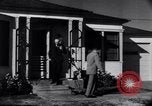
British worker and his American counterpart in labor exchange program visit the Lockheed aircraft plant in Los Angeles, Calfornia
A British guest on labor exchange program visit to the U.S. during World War 2. He leaves the home of his counterpart American host in Los Angeles, California. They leave in the American's car and drive a considerable distance to the Lockheed Aircraft Company facility. View of Honor Roll listing 15, 174 Lockheed affiliated members of the U.S. Armed Forces. The British-American pair walk past a Lockheed Ventura airplane under construction. View of a room filled with P-38 Lightning fighter planes completing final construction, outside the plant. A film clip of the maiden flight of the Lockheed Constellation aircraft (Later designated C-121 by the Army Air Corps) is inserted at this point. It shows the Constellation taking off from the factory airstrip in 1943, and climbing without raising its landing gear. View of aircraft fuselage under construction, where the British worker is inquiring about the manner of its assembly. Next he is seen observing a turntable press operation being run by men and women workers. View of workers using pneumatic hand tools to remove wrinkles from edges of pressed products. A woman punch operator is seen with safety straps on her hands that pull them away each time the punch comes down. Another woman worker demonstrates an electric spot welder. (The observing visitors are required to wear safety goggles in case sparks are created by the process.) Closeup of the aircraft part being spot welded. More workers operating similar machines in the plant, including an African American man and woman. Workers placing a large sheet of aluminum into a machine that fabricates wings for the P-38 fighter plane. Closeup of the British worker and his American counterpart on a balcony overlooking the production line for the Lightning aircraft. View across the production line floor. The two look into the factory first aid station available to workers and also see the transportation section where worker carpools can be formed. Employees are seen obtaining ration books and driver licenses from government clerks working in the plant itself. Employees are seen eating outdoors under foliage camouflage and others gather at an indoor eating site. Next, a section of a B-17 flying fortress wing, is seen moving out of a manufacturing jig. New components are immediately placed into the empty jig for construction. View of final installation area for B-17s, An overhead crane moves a finished wing, including engines, to be mated with its fuselage. Glimpse of numerous B-17s being assembled. A finished B-17 bomber being towed out of the factory.

Airfield is being constructed at Marston Strip in North Carolina. First use of "Marston Mats."
Views of diesel powered bulldozer leveling off sandy field and pierced steel planking (PSP) laid down by U.S. Army workers to quickly build landing strip at Marston Strip, North Carolina, supporting Camp Hoffman airfield (later renamed Camp Mackall in 1943). A C-47D aircraft landing on the new landing strip. This was the first use of the perforated steel planking, nicknamed "Marston Mats" (or sometimes misspelled "Marsden Mats"), which were widely employed by the U.S. Army in World War 2.
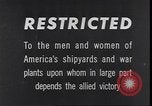
1940 launching of USS Hornet (CV-8); accomplishments of USS Hornet, famous for the 1942 Doolittle Raid during World War II.
A film titled 'The Life and Death of The USS Hornet' dedicated to the workers of America's shipyards and war plants during World War II. The Capitol building in Washington DC. U.S. President Franklin Roosevelt gathered at press conference to announce the bombing of Tokyo Japan by Doolittle Raid forces in April 1942. Reporters run out to phones and typewriters. A man at NBC microphone in 1943. The headlines of newspapers read 'Japs Murder Doolittle's Fliers'. American people in groups and families listen to radio broadcasts, gathered at work and in living rooms around radios to hear the radio news. They buy newspapers at newsstands. Headline of newspaper reads "Carrier Hornet was Shangri-La". Workers at shipyard, factories, machine shops. Men and women war workers of varying ages and races, including white, Japanese-American, and African-American seen welding, machining, and working to buld the ship and its parts. Scenes from the launching of USS Hornet CV-8 in December 14, 1940, with sponsor Annie Reid Knox at the launching.
CRITICALPAST.COM: About Us | Contact Us | FAQs - How to Order | License Agreement | My Account | My Lightboxes | Shopping Cart | Advanced Search | Featured Collections | Website Terms & Conditions | Privacy Policy ©2026 CriticalPast LLC.
License Agreement |
Terms & Conditions |
Privacy Policy
©2026 CriticalPast LLC.