


 Francais
 Deutsch
 Italiano
Refine Your Search
Greek-Civil-War stock footage and images
- Showing 889 to 894 of 27579 results more
more Hide
Hide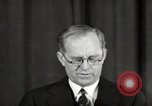
Joseph Kennedy speaks over radio in Washington DC and says that World War II is an industrial war and not a war of men.
Former U.S. Ambassador to the UK Joseph Kennedy records a speech for radio in Washington DC during World War II. U.S. Ambassador to the UK Joseph Kennedy speaks about mobilization of troops in war and says that World War II is an industrial war. Joseph Kennedy suggests that speedy rearmament is the only way United States can stay out of war.
World tensions after World War II. The Baruch Plan. The Berlin Airlift. The Korean War. The Cold War. The Atomic age. Ballistic Missiles
Speaking before United Nations Atomic Energy Commission (UNAEC) in its first meeting in June 1946, Bernard Baruch proposes international control of all atomic energy -- the so-called Baruch Plan. Low level aerial view of ruined post World War 2 European city. Goods including heavy equipment, locomotives, being loaded aboard ships to aid in the postwar recovery of Europe (The Marshall Plan). Workers in Western Europe making use of Marshall Plan materials to rebuild their national infrastructures. West European farmers restoring agriculture. View from overflying light airplane of parts of postwar Berlin in 1948. Blocked roads and empty railroad tracks leading from East Germany to West Germany, blocked by the Soviet Union. Barge traffic at standstill due to Soviet actions. U.S. C-54 transport aircraft flying supplies into West Berlin (The Berlin Airlift) during the Soviet blockade of that city. West Berlin citizens watching U.S. transport aircraft bringing fuel, food and other essentials into the isolated city. A C-54 flying low over empty railroad lines, as it prepares to land in West Berlin. Supplies offloaded from a DC-3 ( AKA C-47 or British Dakota) equipped with unusual set of rear cargo doors. Supplies being moved on Tegel Airport with many C-54 aircraft in the background. Numerous C-47 aircraft operating at Tempelhof airport. An East German official opening a barricade as Soviet blockade of West Berlin ends on May 12, 1949, and supply trucks begin to move over roads again. Flags of Western nations flying on high flagpoles. Glimpse of Allied warships underway during the Cold War. Formation of P-38 Lightning aircraft in flight overhead. NATO troops marching and NATO armor on parade. Flashes of heavy artillery firing at night. Korean refugees moving South in 1950 with the outbreak of the Korean War. View of UN Security Council meeting in the absence of Soviet representative. U.S. tanks firing guns and American infantrymen in conflict with North Korea in Korean War. American wounded on stretchers.Delegates of both North and South Korea signing the Korean Armistice Agreement in P'anmunjŏm, on July 27, 1953. A rocket is launched. Images of earth from inside a space craft in orbit. Narrator mentions the first satellite to circle the earth, the soviet Sputnik 1 in 1957. View of Soviet pilots in low pressure altitude chamber. A test subject in an aircraft making a maneuver that allows him to experience "weightlessness." Objects in his cockpit float about. A military rocket launch monitored by arrays of radar. An object being retrieved from space by means of a parachute. A nuclear powered submarine. Rockets on display during a military parade in Red Square, Moscow, the Soviet Union. A U.S. Air Force B-52 bomber taxiing. More views of rockets seen during a Soviet military parade in Red Square, Moscow.
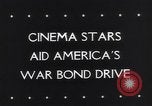
Cinema stars aid America's War bond drive during World War 2 war bond drive in Washington DC
Hollywood movie stars ride in U.S. Army vehicles in Washington DC during World War 2 war bond drive. Stars seen include James Cagney, Lucille Ball, and Fred Astaire as they travel on streets of Washington DC. Next scene shows Washington Monument and view of a dirt track arena beside the Washington Monument. Hollywood actress Virginia Gilmore waving to the crowd. The war bond rally continues there with more movie celebrities seen, including Judy Garland, Greer Garson, Harpo Marx and Mickey Rooney. The stars and crowd seen at the War bond rally at Washington monument. Slogan on large sign reads "Back the Attack."
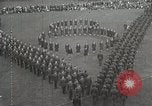
Lieutenant General James Doolittle purchases a war bond at a war bond rally in England during World War II.
A war bond rally in England during World War II. American soldiers stand in a formation of 'V8'. Commander of the U.S. 8th Air Force Lieutenant General James H. Doolittle purchases a war bond at a booth and signs a register. Photographers take pictures. Soldiers in a formation of V8. Soldiers take their seats in front of the Army Air Forces band. Major Glenn Miller leads the band. The band plays. Officers seated in chairs applaud. Glenn Miller signs an autograph.
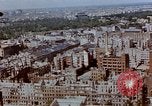
Aerial view of Berlin destroyed by war, including War Ministry building in Berlin, Germany after World War II.
Aftermath of World War 2 in Berlin, Germany. Aerial views of bomb damage caused to the buildings in the city of Berlin. Wide views of wreckage from Allied bombings during World War II. Anti-aircraft defense towers seen on horizon. Vast expanses of destroyed buildings all over Berlin. Damaged War ministry building in Berlin. Tempelhof Airport with aircraft parked along the runway and near terminals.
Allied warheads at a session of the Joint Allied War Council in Washington DC to discuss war strategy during the World War II.
The Allied Forces fight the Axis troops during World War II. Joint Allied War Council in session in Washington DC. U.S. Army Chief of Staff, General Marshall; U.S. Chief of Air Forces, General Arnold; U.S. Admiral Leahy and U.S. Admiral King and other British and United Nations warheads at the meeting. A map of Europe and North Africa. In North Africa British and American bombers drop bombs on the German supply lines. The allied soldiers advance in pursuit of the retreating enemy. German and Italian prisoners are taken. U.S. General Eisenhower points at a map. General Doolittle shown. From the White House U.S. President Franklin D. Roosevelt addresses the people of France in French over the radio. An American ship at a French port. French children welcome the ship. A man distributes free milk and food to the French children.
CRITICALPAST.COM: About Us | Contact Us | FAQs - How to Order | License Agreement | My Account | My Lightboxes | Shopping Cart | Advanced Search | Featured Collections | Website Terms & Conditions | Privacy Policy ©2026 CriticalPast LLC.
License Agreement |
Terms & Conditions |
Privacy Policy
©2026 CriticalPast LLC.