


 Francais
 Deutsch
 Italiano
Refine Your Search
Greek-Civil-War stock footage and images
- Showing 895 to 900 of 27579 results more
more Hide
Hide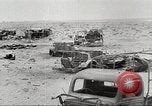
German and Italian prisoners of war being marched and war damage on a battlefield in Egypt during World War II.
Activities of the British soldiers in Egypt in October 1942 during World War II. Wrecked German equipment and ammunition on the field. Wrecked German trucks, armored military vehicles, artillery, and airplanes on the airfield at El Daba. German and Italian prisoners of war stand on the ground. Officials discuss amongst themselves. British soldiers aboard tanks as they pass on the street. British flag being hoisted. Soldiers aboard a truck passing on the street. Houses in the area. Wrecked German vehicle on the street. Destroyed buildings. British and American airplanes fly in formation overhead. British and United States Army military truck convoy passes on the street and in desert terrain. Tanks lined up on the street.
Film juxtaposing German defeat in World War 1, with its defeat in World War II, and comparative postwar impacts.
Film begins stressing the historic aggressive military traditions of Germany. A brief view of thousands of Adolf Hitler's Nazi troopers assembled in dramatic formation at the Nazi party rally grounds in Nuremberg, Germany. Explosion of the Nazi eagle, with swastika symbol, atop the Zeppelintribüne grandstand at Zeppelinfeld in Nuremberg, being blown up by U.S. Army soldiers at the end of World War 2 in Europe. Germans celebrating the armistice ending World War One. German soldiers captured, in unconditional surrender, ending World War Two. Huge open field filled with defeated German soldiers in the second world war. German armies parading through Berlin at the end of World War One. American troops occupying the entire country of Germany after the second world war. A Nazi eagle being destroyed on a German government building at end of the second world war. Old photograph of the German general staff, led by Helmuth von Moltke the Younger, that was still intact, after World War I. In contrast, after World War 2, the entire Nazi military was held and subject to trials at Nuremberg. Großadmiral Erich Raeder seen being taken in custody. Closeup of Field Marshal Wilhelm Keitel. German industry unimpaired by World War I, contrasted with utter destruction in the second world war. American officer coordinating resumed operation of of a postwar plant. View of German diplomats remaining in office after WWI. Proclamation barring Nazi party members from all offices after WWII. German Kaiser Wilhelm II in peaceful exile in Holland after the first world war. A Nazi officer war criminal, is taken in custody by American Military Policemen, and executed by a firing squad. World War 1 did not affect German schools and curriculums. After World War 2 all Nazi doctrines were destroyed. New text books and curriculums were prepared by the Allies for German use. Map shows small area of post World War 1 occupation, in contrast the the entire Germany after WWII. Weimar Republic government, post WWI is contrasted with post World War 2 government by the Allied military powers. British Marshal Bernard Montgomery, American General Dwight D. Eisenhower, Soviet Marshal Zhukov, and French General Charles de Gaulle, are shown. Views of American soldiers interacting with German citizens during their occupation of Germany. Images of Germans: Frederick the Great, Otto von Bismarck, and Kaiser Wilhelm. Views of German farmer sowing seed, postman delivering mail, policemen escorting children. Normal activities resumed in Germany, in areas of culture such as orchestral concerts, etc.
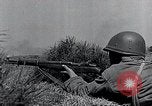
Role of American women in the military; WACS, nurses, and other military roles for women in World War 1 and World War 2
The role of women in the armed forces in the United States. A U.S. Army sniper fires a 1903 Springfield rifle on the Korean front during the Korean War. A woman in the Women's Army Corps (WAC) inspecting such a rifle in the U.S. Several Patton Tanks moving up a hilly road in Korean War. A WAC testing the turret of a Patton tank. U.S. Army women at desks as they work with Army men in an office. Picture depicts Molly Pitcher, wife of a fallen U.S. Revolutionary War artilleryman. Depiction of George Washington at desk. Depiction of Clara Barton, an American nurse with a wounded soldier. Reenactment of Clara Barton working with another women. A man holds the flag of the American red cross. Actual footage of a Wright Brothers aircraft in flight. Women in long dresses pushing an early model of car. A group of American soldiers in World War I running on a battlefield.. U.S. Army troops wearing gas masks and firing rifles from trench in World War I. American women war production workers assembling belts of machine gun bullets during World War I in a munitions factory in the United States. A nurse tending a wounded soldier. A woman nurse helping place a wounded soldiers into an ambulance in Europe, in World War I. Nurses in an operating theater in a hospital during World War I. Women march in victory parade at end of World War I. Women's suffrage demonstration by suffragists (sometimes called suffragettes) in front of the White House and then women and men entering a polling place to vote around time of of 19th amendment giving women the right to vote in 1920. Aviatrix Amelia Earhart climbing down from an airplane. Swimmer Gertrude Ederle on an award stand. U.S. Navy Vought SB2U-2 planes in flight as they drop bombs. Scene of Pearl Harbor attack by Japanese during World War 2. Army nurses look out from deck of ship in World War II. Soldiers fire artillery. View of mountains and scenes of combat on islands in the Pacific during WWII. General Mark Clark awards nurse Silver Star medal. Repatriated Army nurses, who were prisoners, are loaded onto an aircraft by means of a fork lift. In 1942, President Franklin D. Roosevelt signs legislation establishing the Women's Army Auxiliary Corps (WAAC). Secretary of State George Marshall and others witness the signing. Depiction of Godess Athena. Women volunteering for WAAC move in a line carrying bags. American women in military uniform marching. WAAC volunteers being processed. Women receive physical exams and receive inoculations. WAAC personnel being trained: working on X rays, in medical pharmacy laboratories, food service, and radio work. Women on board warships in World War 2.
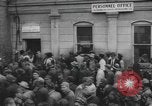
After solving problems related to housing, war production goes up at a shipyard in Mobile, Alabama in World War 2.
War industry leads to problems in Mobile, Alabama during World War II. A large number of people gathered outside the Personnel Office in Mobile. Congress provides 2 million dollars for housing of war workers (building tanks, guns, ships and other war material in factories, manufacturing plants, and shipyards for the war effort). Shows racially segregated housing and facilities for African American workers versus white workers. Views of a cleared slum area where African Americans had been living been living in poor quality homes before the war. Shortage of housing is addressed with new housing for African American war workers, "Certified Colored War Workers". African American children play and eat at a nursery. Dormitory units for single war workers equipped with gymnasium and other basic facilities. Government owned trailers built by the Maritime Commission near a ship yard. The problem of providing a day nursery is undertaken. Modern permanent homes for war workers who can afford them. After meeting the problems like housing and sanitation, production goes up at the ship yard. A new ship being launched at the ship yard. A sign on the ship reads ' Cedar Mills'.
African American soldiers serving in wars, especially World War I; Memorials to African American United States soldiers.
A film on contributions of African American soldiers in various wars, but mostly focusing on World War I era. African American workers at an oil field with oil derricks talk to each other. Depiction of African Americans serving in the Spanish-American War and advancing towards a battlefield. African American man speaks about his experience of the war. Scenes of excavation and construction of the Panama Canal. Huge earth moving equipment at work and a man triggers an explosive detonation during the dig. A U.S. Navy ship underway in the newly completed Panama Canal. World War I scene of a U.S. Army unit including African American soldiers marching through a town in France, in formation, with a military band leading the march. African American soldiers of the 813th Pioneer Regiment near Marseilles France work to build a railroad. Also scenes with soldiers from the 332nd Labor Battalion, and the 808th Pioneer Regiment clearing an area near Verdun. African American soldiers of the 8th Illinois infantry (later the 370th infantry) running with the rifles as they mobilize for battle in France. African American soldiers of 371st Regiment and 372nd regiment crossing battlefield during World War I. Members of the 369th regiment in battle. Railroad guns and heavy artillery firing during World War I. American soldiers leaping from a trench and running across no mans land during battle. African American soldiers of the 369th infantry ("Harlem Hellfighters") receiving awards, medals, and citations at an awards ceremony in France during World War 1. Henry Johnson and other African Americna soldiers marching in New York City victory parade soon after the armistice ending World War I. Graves of soldiers at Arlington Cemetery as seen from a moving vehicle. Images of grave markers for several African American soldiers and officers. Two African American soldiers approaching the All Wars Memorial to Colored Soldiers and Sailors, in Philadelphia, Pennsylvania. Close-up view of the memorial and plaque on the memorial. Several other memorials in the U.S. showing African American soldiers. View of a facsimile of the 371st Infantry Regiment, 93rd Division (colored) memorial in France, near the towns of Ardeuil and Séchault. Dramatized depiction of the memorial being destroyed by the invading German Army on June 15, 1941. African American preacher speaks in a church.
Contribution of African American soldiers during the Spanish American War and World War I.
A film about the role of African American soldiers during various wars in the United States. A dramatization shows a black soldier during the Spanish American War. He also talks about his role in Cuba and the construction of the Panama Canal. Footage of the Panama Canal being constructed and ships underway in the canal. United States Army forces including black soldiers boarding troop transport ships bound for Europe during World War 1. A railroad train carries African American soldiers to France during World War I. African American soldier units under General Pershing march in formation with an Army band in France during World War 1. African American soldiers work and fight against the Germans, including the 813th Pioneer Regiment near Marseilles, the 332nd Labor Battalion, and the 808th Pioneer Regiment near Verdun. African American soldiers racing for front lines including the soldiers with the 8th Illinois and the 372nd regiment and the 371st, and the 369th Infantry Regiment (sometimes called the "Harlem Hellfighters") in the Argonne. View from behind soldier as he fires a machine gun, and United States Army infantry firing artillery. African American soldiers of the 369th regiment "Harlem Hellfighters" being decorated and receiving the French Croix de Guerre for their heroic actions in World War I. The African American soldiers march at a parade in New York City following World War I and are greeted by throngs of enthusiastic African American civilians attending the parade. View of Henry Johnson being congratulated by civilians after he and Needham Roberts performed with exceptional heroism and received the Croix de Guerre. Close up view of the Croix de Guerre medal on a uniform. Graves of African American soldiers who lost their lives during World War I at Arlington National Cemetery in Virginia. View of the All-Wars Memorial to Colored Soldiers and Sailors in Logan Square in Philadelphia (Logan Square, SE corner 20th Street & Benjamin Franklin Parkway, Philadelphia, Pennsylvania). View of a stone memorial erected in the Meuse-Argonne region, north of Sechault, as a tribute to the efforts of the African American soldiers of the 371st Infantry Regiment who fought and died there on April 21, 1918 during World War 1.
CRITICALPAST.COM: About Us | Contact Us | FAQs - How to Order | License Agreement | My Account | My Lightboxes | Shopping Cart | Advanced Search | Featured Collections | Website Terms & Conditions | Privacy Policy ©2026 CriticalPast LLC.
License Agreement |
Terms & Conditions |
Privacy Policy
©2026 CriticalPast LLC.