


 Francais
 Deutsch
 Italiano
Refine Your Search
Greek-Civil-War stock footage and images
- Showing 913 to 918 of 27579 results more
more Hide
Hide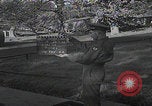
German Nazi prisoners of war fed during World War II
German Nazi prisoners of war detained in the United Kingdom during World War 2. Military Police guarding outside Nissen huts. A bus full of German prisoners of war arrives. Military policemen disembark first. German prisoners of war disembark from the bus one by one under guard. Military police instruct prisoners to “Leave your luggage!”. Captured German generals crowd in one corner to wait for others to disembark. German prisoners of war are led away. Prisoners of war eating and chatting in German inside a mess hall. A prisoner hands out a soup bowl, receives a tray with food. Captured German generals speaking to each other. British Military Police watch over prisoners of war. One of the captured German generals is still wearing an Iron Cross.
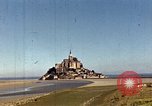
American troops and war correspondents at Mont Saint Michel and Saint Malo in France during World War II
American troops and war correspondents in France, during World War 2. They visit Mont Saint Michel, a small rocky island at the mouth of Couesnon River in Normandy, separating Normandy and Brittany. View of the island with a monastery at the top. War correspondent Robert Capa (of Life and of Time Magazines) looks on and takes pictures. Military jeeps leave the island. Madam Poulard stands under a sign at her Hotel Poulard. Sign for the Hotel and its reputed omelette. Soldiers on the street. Shops and French flags. GIs at the Benedictine Abbey and steepled church. An old French man points. U.S. Soldiers take a tour of the monastery with a woman guide. Steeples, towers, arches and other architectural features of the abbey and monastery. War correspondents including Charles Collingwood, Chicago Daily News' Helen Kirkpatrick, New Yorker Magazine's Joe Liebling (Abbot Joseph Liebling) and Warden Becker. Helen and Charles pose for the camera. Ernest Hemingway, covering for Colliers Magazine, drinks and talks to Bill Walton. War correspondents including Bill Stringer seated and walking on the street. They visit the monastery and take pictures. Civilians on the streets. Tall sticks in sand placed by German forces around the island to prevent Allied planes from landing at low tide. Three war orphan brothers whose parents were killed at the battle of St Lo, play on the beach as their grandmother looks on. Views of the island and patterns on the sand around the island from the receding waters of low tide. St. Malo, Brittany: Field near Saint Malo. American soldiers bathe and swim in a lake. They fool around in the water, taking a break from battle.
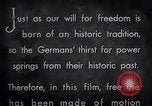
U.S. Army orientation film "Here is Germany" showing the contrast in life in Germany pre-war and during World War 2
U.S. Army training film titled 'Here is Germany'. Circa 1930 - 1938 views of pre-war German countryside, and German cities including Berlin and others before destruction in World War 2. Shots include famous German landmarks and buildings in major cities including Brandenburg Gate and Victory Column sculpture close-ups and other monuments all before bombing of World War II. Lifestyle of German people with families and children in their routine lives in the decade of 1930 before the war. Farmers working fields, mined coal transported by rail, potatoes poured from a full sack, a boy shepherd with geese; a farmer counting pigs descending a ramp at a farm. City port or harbor scene with ships and a modern looking railroad train arriving at a station, sign on side reads Deutsche Reichsbahn (German Reich Railway). High speed highway roads like the Autobahn. German cruise ship at sea. Aerial view of airport with "Berlin" sign on ground. German schools, offices, factories and markets. German woman braiding a girl's hair. German woman taking in washed clothing from a clothesline. German men, women, and children cleaning and polishing work areas and possessions. A German library with people studying and others at book shelves. German classroom with a teacher instructing children and writing on a blackboard. Scenes of German musicians and symphony orchestra and musical instruments, artisans, masons, cooks. Busy roads with cars. Narrator then presents a darker other side, showing an arms factory during rearmament of Germany, German soldiers escorting away a religious priest. German military officials. Scenes circa 1945 of victims of German armies and of the concentration camps. Lumps of dead bodies from massive public shootings, a man being tortured, burning chambers, prisoners of war, concentration camps, human ovens, gas chambers. Survivors of the German custody in relief camps of Red Cross. Evidence of atrocities committed by Nazi Germany. Articles made of human skin and bones. Daily utility items like toys and brushes made from human body parts. Scenes of survivors of concentration camps. Polish people dead from Nazi atrocities at Lublin Castle. Italians and Belgians murdered by Germans, American POWs murdered by Germans. Scenes return again to 1930s views of peaceful German citizens and German lifestyle juxtaposed with views of German soldiers and military actions in World War 2. Some famous Americans of German roots: Wendell Willkie, Admiral Chester Nimitz, Henry J. Kaiser. Narrator talking about American customs and values. View of two teenage American boy students viewing a housing area and taking notes. One of the teenage boys is African American. Some men gathered at a bar in an American town. A man holding a long fly fishing pole preparing to depart on a fishing trip. Woman neighbors in discussion. Young American women walking down a sidewalk in an American town as a group of American boys watch and admire them.
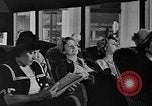
World War II film intended to encourage American civilians (especially women) to participate in the home front war efforts.
Mix of actual World War 2 footage scenes outside the United States, and dramatized war scenes inside the U.S. Narrator speaks as a U.S. soldier writes a letter to his mother at home, in which he contrasts the hardships of war torn countries and peoples with the relative safety and lack of suffering of the U.S. population during World War 2. Opening scene shows typical American women riding in a bus. One woman, ostensibly the soldier's mother, climbs aboard a bus as another woman steps out of it. A woman visits a friend who says she had to give up her Red Cross work because it didn't leave her time to get her hair done each week. A group of women at a garden party bridge club. Narrator says one of them could not work at a USO canteen because it conflicted with her bridge party. A woman lounging in a garden chair, is claimed to avoid a war job because they are all boring and dirty. A maid serves some hard to obtain foods to two woman at lunch. The hostess accused of obtaining them on the black market. The scene shifts to the letter writing son serving with the army in Europe. He relates taking a village recently, and the film shows residents cheering as the American soldiers occupy it. Fire fighters direct streams of water on burning wrecked buildings. Refugees fleeing their homes. Several nuns helping some as they evacuate. shells striking as refugees travel. Populations fleeing and refugee citizens leaving as invading forces come, in Russia, Czechoslovakia, Poland, France and France. View of people running for shelter in China. At this point, the film shows the chaos in those countries superimposed on America, where fires are being fought, and ambulances respond to help injured. A woman picks up her child as she and others run, looking skyward with dread. Air raid sirens sound in the background. A British soldier looks over a scene where Asian people are evacuating from war torn homes. A group of despairing European people. The film creates an imaginary image of and ordinary American woman digging through the rubble of her destroyed home. American women lined up, in front of bomb damaged buildings, to receive one egg a month. Other American civilians lined up to receive a ration of potatoes. Women in England are seen shoveling rubble from the remains of their homes after a blitz bombing by the German Luftwaffe. In Russia many women are seen digging and performing manual labor which the narrator says is labor forced by invading forces (possible slave labor forced by Nazi German forces). Women in Greece clearing rubble. Again, film creates imaginary view of Americans clearing rubble from their destroyed houses and evacuating en masse. Two American women comforting another in front of her burning home. More views of Americans in mass evacuation, carrying their belonging with them. Narrator states children are evacuated first and them film shows scenes of English children being sent to safety on buses. View of Russians evacuating in horse-drawn carts. Imaginary transition to Americans evacuating known local places. Chinese evacuating across a bridge, assisted by British soldiers. More imaginary scenes of Americans evacuating. A soldier writing a letter and then packing up his gear to move on with members of his army unit. They line up in formation and then march. Imaginary view of American women marching side by side with them. Glimpse of large formation of uniformed nurses marching. Last scene is of American flag superimposed on marchers.
World War 2 battle scenes; wrecked buildings and masses of displaced persons in Europe after World War II.
'Problems of Peace in Europe' produced in 1948, depicts reconstruction problems in aftermath of World War II and includes footage from during the war and soon after the war. Scene of desperate and hungry civilian people (possibly in Germany but could be elsewhere in Europe) scrambling over each other and trying to find food on the ground among garbage or wreckage, circa 1945 or 1946. European peoples massing to reestablish political order and seek relief in post-war Europe. Montage of images of people from all walks of life. Reminders of war showing aircrews in bombers and bombs falling. Batteries of rockets being fired. A formation of U.S. B-17s and a B-26 aircraft with D-day stripes, in flight. Allied bombing of cities with devastating effect (likely 1944-1945). Aerial view of the Statue of Liberty in New York Harbor. Aerial view of a major U.S. industrial complex, with many smoke stacks and industrial pollution. Mass of workers leaving at end of shift at a U.S. manufacturing plant or factory. Views of two different streamlined locomotives pulling passenger trains at high speed, approaching camera position. Freight trains speeding on railroads. Farmers harvesting and baling hay by machine and cultivating fields with tractor. Multiple wide views of the K-25 building of the Oak Ridge Gaseous Diffusion Plant, in Oak Ridge Tennessee, the world's largest building in 1944 when it was built, and an instrumental part of the Manhattan Project effort to develop the atomic bomb in World War 2. Huge sprawling industrial sites in America. Map of Europe. Street scene in Germany with destroyed buildings and rubble cleaned from street, but still piled up in places. Desperate, hungry, and poverty stricken German citizens rummaging through garbage piles for anything to eat or anything of value. Two very young German boys standing together on a street, with one boy smoking a cigarette. Children scrambling over trash and rubbish heaps.
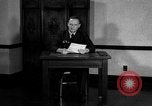
Charles A. Lindbergh speaks against United States participation in European Wars early in World War 2.
Charles A. Lindbergh delivers an anti-war speech early during the outbreak of World War II in Europe. Lindbergh speaks in a studio of the Mutual Broadcasting System. He speaks against American involvement in wars in foreign lands. He states that the Americans should not be asked to fight in foreign countries, but to focus on defense of the United States. Among other things, Lindbergh says: "The doctrine that we must enter the wars of Europe, in order to defend America, will be fatal to our Nation, if we follow it. When men are called upon to fight, and to die, for their country, there must not be even the remotest question of foreign influence involved." He states that Americans have no confidence in decisions of their leaders. He talks about the high number of aircraft and war materiel manufactured to fight in European countries. He talks about the affect on the National debt of the current spending for armaments and war production. He speaks out against the current American leadership (democratic party under Franklin Roosevelt) and how it did not do the right things to see what was coming in Europe and take steps to prevent it. He says that Americans are not confident in their leaders. Lindbergh speaks out against building of untold thousands of military aircraft, but he speaks in favor of a defense-focused American Air Corps.
CRITICALPAST.COM: About Us | Contact Us | FAQs - How to Order | License Agreement | My Account | My Lightboxes | Shopping Cart | Advanced Search | Featured Collections | Website Terms & Conditions | Privacy Policy ©2026 CriticalPast LLC.
License Agreement |
Terms & Conditions |
Privacy Policy
©2026 CriticalPast LLC.