


 Francais
 Deutsch
 Italiano

Refine Your Search
Greek-Civil-War stock footage and images
- Showing 13903 to 13908 of 27563 results more
 Hide
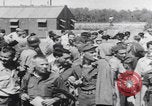
United States B-17 bombers land at Popesti Airfield to rescue POWs (Operation Gunn, WWII)
15th Air Force Operation Reunion (Operation Gunn) to rescue Allied prisoners of war in Romania during World War II. Captured Allied prisoners of war waiting for evacuation at Popesti-Leordeni Airfield. Allied prisoners shaking hands and saying goodbye to Romanians. Some Allied prisoners of war are seen wearing Nazi German Stalhelm helmets (worn as souvenirs). United States bombers approaching Popesti Airport to evacuate 1,161 Allied prisoners of war from Romania. Allied POWs begin to move in lines according to their assigned groups. Some prisoners of war waving at the camera. Colonel Krager shoots a handgun to send signal to an incoming bomber. Bombers flying over Popesti Airfield. Crowds of Allied prisoners of war waving and cheering. Boeing B-17 Flying Fortress bomber landing at Popesti Airfield.
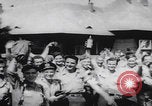
B-17s land to evacuate Allied POWs during (Operation Gunn, WWII)
15th Air Force Operation Reunion (Operation Gunn) to rescue Allied prisoners of war in Romania during World War II. Evacuation of 1,161 Allied prisoners of war (POWs) from Popesti Airfield, near Bucharest, Romania. Captured Allied prisoners of war cheering at the arrival of a United States bomber at Popesti Airfield. Boeing B-17 Flying Fortress bomber landing at Popesti Airfield. The first group of prisoners of war board the B-17 Flying Fortress bomber. B-17 Flying Fortress bomber departs Popesti Airfield after the first group of POWs boarded the aircraft. Another group of POWs approach a B-17 Flying Fortress bomber. Fighter escorts circle above Popesti airfield as POWs board bombers to San Giovanni Airfield (Bari), Italy. B-17 Flying Fortress bomber takes off from Popesti Airfield. A prisoner of war wearing a German admiral’s cap and other men waving at the camera during evacuation. Some POWs are holding souvenir handguns as they board the bomber. Soviet soldiers on horseback watch departing Allied POWs’ evacuation. Allied prisoners of war speak to a Soviet soldier. “Germans kaput” says the narrator, pertaining to the only words both Soviet and Allied troops mutually understand.
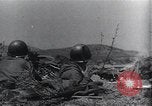
United States Army 187th Airborne Regimental Combat Team returns to Japan from Korea and is welcomed by City of Beppu, Oita
Clip opens with rapid changing scenes: American troops in trench in Korea during the Korean War. American tank on street in Germany. American Ski troops in Alaska. Amphibian assault training in Puerto Rico. Rotating Globe shows: U.S. Army on alert to defend against aggression. Sergeant Stuart introduces episdoe and states that U.S. Army has come to Japan to know their culture and make friends after war and occupation. U.S. Army troops of the 187th Airborne Regimental Combat Team, are seen arriving by railroad train at a train stateion near their base near Beppu,Oita on the island of Kyushu, Japan. U.S. Army soldiers, including white and African American soldiers, exit train cars. They receive a warm welcome from Japanese population. Banner reads:" Welcome Pala Troop comin back from Korea, City of Beppu."[sic] Women holding flowers and families with small children waving American and Japanese flags, welcome them on the train station. A sign over the train station platform reads: "Welcome 187 Para Troop Coming Back From Korea, City of Beppu." The troops stand in formation on the platform while the unit's officers receive the flowers from the women. Japanese men in fraternal uniforms and the general population all join in the welcoming ceremonies. The troops march off the train station under another sign reading: Welcome Home 187 RCT." and march down the main street of Beppu under a swirl of paper confetti. Next scenes are from autumn of 1945, as U.S. soldiers march through streets of Japan during occupation following the end of World War 2. U.S. troops seen marching behind Japanese police to occupy Japan, in 1945, amidst the aftermath of suffering and destruction of the war. The local population standing at road sides and watching with worry and concern. Scenes of postwar destruction in Japan. Rubble of bombed buildings. Scene of simple wooden dwelling shacks and wreckage nearby. A Japanese boy with his baby brother on his back. The baby is crying. Next scene moves again to circa 1950 in streets of a Japanese city, possibly Tokyo, rebuilt and with busy scenes of traffic on streets and commerce. Large outdoor rally with a Communist speaker addressing large crowd of Japanese people who sit and listen. Scenes from a what the narrator describes as a Communist rally in Japan, against America, which turns violent. Protestors running in streets during demonstration, with signboards and police and fire fighters extinguish flames at scene of an overturned, burning car. Flashback again to 1945 or 1946 as U.S. Army soldiers use tractors and heavy equipment to clear and level an area of war rubble and debris during rebuilding efforts after World War 2. Japanese citizens look on, watching the machines at work.
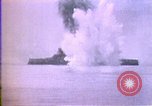
Final days of WW I, and aftermath. Riots in Russia. Treaty of Versailles. League of Nations. Harding elected President
Final throes of World War I and postwar situation. German submarines sinking allied ships. American workers work in war plants. U.S. Army General John Joseph Pershing visits France. American soldiers disembark from a ship in France. Germans defeat Russians on Eastern front and divert troops to the Western front. German soldiers on horse drawn wagons and others walk carrying guns as they move. Riots in Russia after it collapses in war. American soldiers fire field artillery. U.S. President Woodrow Wilson writes letters to countries at war like Germany. Papers with the 14 points to maintain peace. The soldiers of Germany and America on battle field. Dead soldiers on ground. Soldiers carry another injured soldier on a stretcher. The people protest during a rebellion in Germany. Soldiers of America cheer signing of Armistice. Cemetery. .Americans on streets in the U.S. after the war. President Woodrow Wilson goes on a tour of Europe. He sails to different places. Prime Minister David Lloyd George of the United Kingdom, Prime Minister Vittorio Emanuele Orlando of Italy, Prime Minister Georges Clemenceau of France, and President Woodrow Wilson of the United States in France during the signing of the Treaty of Versailles. Map shows the different nations formed after the war. The president returns after his visit. Henry Cabot Lodge, a U.S. senator. President visits different places to explain the peace treaty. Sketches show the President suffering a paralytic stroke and his wife takes his important decisions. Sketch depict the opponents of the peace treaty and the defeat of the league of nations. Warren Gamaliel Harding elected as the new President Harbinger of the future: views of Adolf Hitler on the rise in postwar Germany.
Human Liberty Bell; WWI leaders British General Haig, French General Petain, Italian General Diaz and King Albert of Belgium
Map showing Germany and nearby regions after conclusion of World War I. Writing indicates areas on map including Battle Line at End of Hostilities, Line to Which Germans Must Retreat, and Neutral Zone (between the two areas). Slate indicates that German Kaiser Wilhelm II had just abdicated (28 November, 1918) and shows footage of Kaiser Wilhelm II on horseback at a formal event. Next scene shows a massive human formation of soldiers in the shape of the Liberty Bell known as "The Human Liberty Bell", formed by 25,000 officers and men at Camp Dix, New Jersey to celebrate the armistice in World War 1 and the abdication of German Kaiser Wilhelm II. Camera pans upward to show the human bell from base to top. Next scenes show key Allied military leaders in World War I: British General Haig reviewing troops; France General Philippe Petain emerging from a building; Group of French soldiers marching; Italian General Diaz together with French officers reviewing troops; and King Albert of Belgium exiting a building outside Paris during World War 1 and entering a waiting horse-drawn carriage. View of United States President Woodrow Wilson reading newspaper and seated in a chair. (World War I; World War 1; WWI; WW1)
Analysis of the German labor force from 1939 to 1943 (WW2)
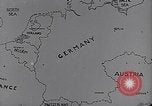
Analysis of the Germany's labor force, military strength and effects of World War II on manpower. German soldiers march. Men work in factory on equipment and machinery. Women work in factory. A cemetery of World War 1 soldiers in Germany. Narrator explains how loss of man power from world War 1 deaths, and subsequent lower birth rate leads to war production worker needs being filled by many young German women and even German boys and girls working in industrial factories also. Wounded German soldiers being treated in field during World War 2. A map points Germany, Sudetenland and Austria. Graphs examine labor force by sex, age and military replacement availability; compare the labor force according to sex from 1939-1943; detail the increase of work force through the women part time workers and the veterans. Women weld equipment in a factory. Men do mining work. Narrator speaks of foreign workers (such as from Poland, Netherlands, Czechoslovakia, Yugoslavia), and how some now serve "under economic pressure and compulsion" (as forced labor or slave labor). Views of forced labor crews working digging earthworks. Laborers also work on building or repairing railroad stations and track work. Lines of prisoners of war, also used for labor, walk under German guard as lines of German uniformed troops walk in the opposite direction. Graphs compare the labor force in agriculture, industry, trade services, transport and government.
CRITICALPAST.COM: About Us | Contact Us | FAQs - How to Order | License Agreement | My Account | My Lightboxes | Shopping Cart | Advanced Search | Featured Collections | Website Terms & Conditions | Privacy Policy ©2026 CriticalPast LLC.
License Agreement |
Terms & Conditions |
Privacy Policy
©2026 CriticalPast LLC.