


 Francais
 Deutsch
 Italiano
Refine Your Search
Greek-Civil-War stock footage and images
- Showing 1405 to 1410 of 27579 results more
more Hide
Hide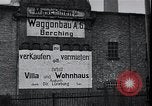
Life in Germany before, during, and after World War 2, including rise of Nazi party and intolerance in Germany
Unrest in Germany in 1930's during crisis of unemployment and inflation that had followed after World War I. A closed and boarded-up German factory. Two barefooted, jobless German men sleep in a park. During Great Depression in the United States, a weary woman is seen walking through an alley and looking in garbage cans. Sign for Los Angeles California Leather Company seen on building behind her. Children play in streets of a slum area. In Germany, scene of boys in training in Hitler Youth and carrying shovels, then carrying rifles and learning low crawling and military attack techniques. German farmers plowing on farms. Several night scenes including Nazis and brownshirts on the march, burning of books. Secret police or Gestapo and soldiers escort a church priest or clergy out of a church. During time of rising anti-Jewish sentiment in Nazi-led Germany, scenes of abuse and Gestapo arrests of some German citizens such as Jewish people, suspected Communists, political foes, and others critical of the Nazi party. A group of people attack and beat Jewish people in streets. A parade by the Wehrmacht German troops. Rearmament of Germany in 1930's. Scenes from busy German munitions factories. A Junkers Stuka aircraft factory filled with planes being built. A German artillery factory. German Luftwaffe and Panzer attack. German tanks roll over landscape. Scenes at end of war of burning German cities. Women run through bomb-wrecked streets of devastated Berlin during an aerial bombing raid by Allied aircraft. One woman falls as she runs. A woman and children race for the doors of a bomb shelter in Germany. The bomb wrecked streets of Berlin heaped with rubble and wreckage. Elderly German man walks through ruins. Small locomotive train running carrying cars of cleared rubble. German civilian dig potatoes in gardens. German women stand atop a collapsed building pile and clear rubble with shovels. German man waters a newly planted garden with empty shells of wrecked buildings in background. Newspapers produced by M.G. seen in newspaper printing press and rolling off presses. Binding of booklets and magazines from a German printing press. Sculptured bust of Goethe superimposed over books written by Goethe and Schiller. A montage shows in contrast the peaceful life in Germany before war, and scenes again of war, with alternating, juxtaposed scenes: German police officer escorts children across a street, book burning by Nazis, Gestapo violent arrest of a German citizen who is being pushed and hauled away. A German football (soccer) match in a stadium. Cook serves food to a man. A man in a concentration camp tips a bowl to his mouth. German children playing in a pool. Then juxtaposed scene with German women and children racing for a shelter during an air raid in World War 2. Scenes of bomb explosions. A peaceful waterfall.
Historical events of 1935 including Stresa Front, U.S. anti-war demonstrations, FDR in Jacksonville, Easter Parade, Female flyers
Scenes showing various historical events that took place in April 1935, during the Great Depression. In Stresa, Italy, on the banks of Lake Maggiore, leaders of Britain, France and Italy confer on German rearmament, in violation and defiance of the Versailles Treaty. (There they sign the "Stresa Front"). Images show the French and British delegations arriving by boat and walking near the port at Stresa, including British Prime Minister Ramsay MacDonald, French Prime Minister Pierre Etienne Flandin, and French Foreign Minister (President of the Council of Ministers) Pierre Laval. U.S. College students across the country join in anti-war, pacifist demonstrations a few years before World War 2. They are seen marching with banners and anti-war signs and cartoons. One banner reads, "It is the task of the 20th century to make this world a brotherhood." Also "War is Hell....Who want to go to hell?" and "War is Stupid". President Franklin Roosevelt returns from a two week cruise. He arrives in Jacksonville Florida. Local officials and crowds in Jacksonville greet him and cheer. Boy Scouts in a line greet the President. Views of Franklin Roosevelt in an open car and on ships and docks. Al Smith and Herbert Hoover share the speaker's stage in New York lending their support in fundraising for the Salvation Army during the Depression. Scenes from the Easter Parade in New York City. Crowds gather, filling double-decker open air buses. Al Smith seen with his wife. Postmaster General James Farley and Irish tenor singer John McCormack are seen on Fifth Avenue in New York. Amelia Earhart completes a 1700-mile flight from Burbank, California to Mexico City. Scenes of her in Mexico City in a car laden down with celebrating Mexican officials. Aviatrix Bernadine King sets a new record for upside down endurance flying. She is seen getting into her plane, and her plane is seen upside down in the air.
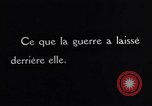
Film depicting some of the tragic human aftermath during and after World War I
A film looking at some of the tragic human costs of World War 1 ("The Great War"). Opening slates read, (in French) "What the war has left behind it." "9 million dead." Then, a vast battlefield cemetery is shown,filled with rough wooden crosses. Camera pans over parts of it. Another, better tended cemetery is seen with finer crosses. Then another battlefield graveyard, with freshly dug graves and rough markers is shown. Slate reads, "The sea, a vast tomb." Another slate reads, millions of crippled," followed by scenes of Allied soldiers and medics, carrying their gear, across a barren battlefield. One rough cross is seen.In next scene it is clear they are scouring the battlefield for wounded and dead. Stretcher bearers make their way cautiously across ditches and makeshift bridges as they retrieve the wounded. Two assist a walking wounded soldier with bandaged eyes. Wounded seen being brought into a sandbagged brick building serving as a hospital. A field ambulance also takes patients from the hospital. A convoy of field ambulances carry wounded from the battlefields. A two-stacker British hospital ship steaming at high speed away from a French port, headed for England. Wounded British war veterans being moved in wicker wheel chairs outside a substantial building. Uniformed attendant picks one up bodily and places him into another wicker wheel chair that allows his legs to be outstretched. The attendant covers him with a blanket. Next, that veteran is seen, conversing with a men, in an outdoor area, where other wheel-chair bound veterans are enjoying small flower gardens and socializing in the sunshine. A white-coated caregiver assists a stooped veteran who takes many small steps to walk. Next is seen the famous 1919 painting by John Singer Sargeant, of blinded soldiers on the battlefield, titled, "Gassed." (It is now in the British Imperial War Museum.) Slate reads "They'll never see again," and several blind veterans are seen in dark glasses walking outdoors in the company of others. Blind veterans, injured in gas attacks, are seen making baskets by hand.

Women training and working at war materiel factories in the United States (WW2)
Soldiers on tanks fire artillery mounted on the tanks. Aircraft in flight. Views of explosions in the battlefield. Soldiers walk in lines. The soldiers in front of tents. Anti-aircraft artillery crew fire at enemy aircraft during World War II. New recruits in civilian clothes arriving for training in military armed forces in the United States. Men are trained for the army. Workers in an American factory make war equipment and war materiel. Men work on airplanes. They carry tire tubes for aircraft. People move inside an aircraft production building. Women stand in a line. Women workers report at a war production plant. A woman is being interviewed. Female war materiel workers are seated on benches and an official briefs them about the job. The women receive uniforms including a one-piece coverall uniform, wiping cloth, a cap, hairnet, and safety glasses or safety goggles, and a towel. A woman takes out uniforms from shelves in a closet. A woman wears a pair of glasses and a cap. Women move inside the production factory on the factory floor. A female worker teaches another woman how to operate a lathe. A liquid comes out of a pipe of the machine in operation. Two women work on the lathe. A truck in front of the receiving department. Women at a table make a note of the incoming material. Women work with hammer on a sheet. Women check for flaws in the raw materials. American flag seen on the wall above the women workers.
Pre-war views of cities and countries in Pacific region; wartime views of Japan attacking nearby nations
Animated map of Pacific region shows sphere of Japanese influence and potential areas for Japan to control in the Southwest Pacific during World War 2. Majority of scenes are from before outbreak of World War 2. Final scenes of clip include invasion scenes. Clip begins with pre-war views of city life and streets of Manila, Philippines and Filipino people. Scene changes to Hong Kong under British, and scenes of port area and buildings near port. Chinese civilians on busy city streets of Hong Kong. Views of jungle areas in Malaysia. Views of buildings and temple landmarks in Bangkok, Thailand. A car and a rickshaw pass by with temples in background. Thai tanks and Thai soldiers marching through the streets of Bangkok as civilians watch soldiers in Thailand on parade. Aircraft in skies over Bangkok during parade. Scene changes to Makassar on Celebes and people on streets in city of Indonesia. Views of port of Singapore, pre-war. Elevated views of city of Singapore and City Council offices. Buildings and traffic along busy streets in Singapore. View of the General Post Office (GPO or Fullerton Building.) Scene changes to Sumatra with port views and three float planes of flying boat aircraft flying overhead in formation. Final scenes of clip focus on Japanese offensive maneuvers during World War 2: Japanese fleet at sea and Japanese aircraft in skies overhead. Japanese soldiers boarding landing craft from transports. View from inside Japanese landing craft of Japanese soldiers preparing to go ashore on a beach landing. Japanese soldiers invading an area in the Pacific under cover of naval bombardment. Japanese soldiers firing machine guns and rifles. Japanese infantry charging. Animated map of Pacific region. Japanese aircraft bombing Port Darwin in Australia.
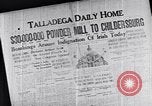
Growth of housing, military facilities, and military industries in Talladega, Alabama for World War 2
Growth of war industries in Talladega Alabama during World War II. Newspapers of Talladega, Alabama. A large crowd on barge, coming to land. Scene of an office. Workers at a construction site in Alabama. A man operates a crane. A big cylindrical elevator at hook of the crane lowers down. A truck at house. Dog outside house. A man operates a full track tractor at construction site. African American workers lay railway tracks for a railroad train service. Many scenes of the African American work crew working on the railroad tracks, and taking a break to drink water from a ladle. (Background sound track during these work scenes is a man singing the African American spiritual song "Joshua Fit the Battle of Jericho." A side rail pulls down as attach to hook of a crane. Tanks on rail coaches. Food loads arriving by railroad train cars to feed the growing population of war workers. Potatoes in sacks. A cook prepares food. People in war time production industry eat food at dining table in groups in a mess hall or dining hall. People do various construction jobs building infrastructure for war workers. A man operates a crane. A cylindrical box lowers down. Children play outside a mobile home trailer. A child with a cat. An open air theater. A bunk house with beds for rent. People at a cafeteria. A woman with children. Cars outside a cafeteria. A board reads 'Field Office'. Large crowd.
CRITICALPAST.COM: About Us | Contact Us | FAQs - How to Order | License Agreement | My Account | My Lightboxes | Shopping Cart | Advanced Search | Featured Collections | Website Terms & Conditions | Privacy Policy ©2026 CriticalPast LLC.
License Agreement |
Terms & Conditions |
Privacy Policy
©2026 CriticalPast LLC.