


 Francais
 Deutsch
 Italiano
Refine Your Search
Hoboken New Jersey 1918 stock footage and images
- Showing 7435 to 7440 of 9472 results more
more Hide
Hide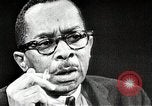
James Baldwin expresses his views on Martin Luther King Jr.'s philosophy during an interview in United States.
Doctor Kenneth Clark, Professor of Psychology at the City College of New York; Director of Fallen Youth Opportunities Unlimited and Research Director, North Pride Center for Interpretation interviews James Baldwin on civil right movement of African Americans. James Baldwin expresses his views on Martin Luther King Jr.'s philosophy of non violence.
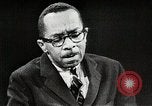
James Baldwin expresses his views on future of African Americans in America and hopes for equality during an interview in United States.
Doctor Kenneth Clark, Professor of Psychology at the City College of New York; Director of Fallen Youth Opportunities Unlimited and Research Director, North Pride Center for Interpretation interviews James Baldwin on civil rights movement of African Americans. James Baldwin expresses his views about the future of African Americans in America. He smokes during the interview. Doctor Clark ends the interview and leaves the chair. He expresses hope for equality for African Americans soon.
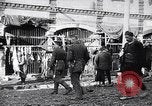
Bulgarian and Austria-Hungarian troops in Skopje (Skopie) during World War I.
The Macedonian front during World War I. Street scene with merchant stalls that shows various nationalities, including Turks, and soldiers of Bulgaria and Austria-Hungary in Scopje, Macedonia during World war 1. Row of shops displaying wares, including butcher shop. Scene shifts to what slate describes as a new neighborhood district. Seen is the old stone bridge (Kameni Most) over the Vardar River in the city center, where local people are seen in everyday pursuits, moving wagons and carrying bundles on the street and over the bridge. Soldiers cluster around a striped booth at the foot of the bridge. Another scene shows troops entering a camp area along a river. Some are digging trenches. Smoke rises from camp fires. Wagons of military supplies being pulled by horses and oxen and gathering at a railroad siding (box cars in background). A staff car drives into the area, displaying a German flag on its hood and the German Eagle crest on its door. It skids about momentarily in the mud. Supplies being loaded into the railroad box cars under supervision of German officers. Troops marching into an encampment, where others are being served food from a German field kitchen. Rifles are stacked in a large mound. Soldiers line up and appear to be receiving their pay at a paymaster window in a building. Troops in full field gear march, in a loose column, out of the encampment. German infantry in pointed helmets (Pickelhauben) marching, out of camp, through mud toward the front lines.
A man digging a grave in grave yard wipes his sweat in Guatemala.
Graveyard overlooking a rural village in Cuba. Cross monument. Recent grave marker dated 1934. Grave digger, an old man, is deep in a new grave he is digging. He wipes his face and smiles. (Note: film transferred backwards).
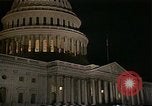
U.S. Congress discusses balanced budget initiatives in Washington DC; scenes of American in various cities.
View of United States Capitol building illuminated, at night. A meeting of House of Representatives. The meeting of Congress is addressed by several people. Patients in a hospital. U.S. Army soldiers marching on a military base. A U.S. politician speaking to a reporter. Children in a elementary school classroom listen and participate in class as teacher stands in front of blackboard.. A farmer operates a tractor on a farm field. Men and women, mostly office workers, walk on a busy sidewalk in a U.S. city (possibly New York) wearing typical 1980s fashions. A "Beefsteak Charlies" restaurant sign is seen in the background.
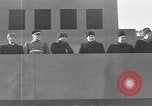
Soviet leaders review military parade in Red Square, Russia
New Soviet Leaders review military parade in Red Square, from Kremlin balcony, following death of stalin. Among those seen are Beria, Bulganin, Malenkov,and Khrushchev. Jet bomber, flanked by several jet fighters, flies over the parade. Soldiers on army trucks, howitzers, and rocket launchers move during the parade. Civilians holding flags, posters and flowers also move during the parade. Aerial view of the large parade. Dignitaries on terrace wave at the crowd.
CRITICALPAST.COM: About Us | Contact Us | FAQs - How to Order | License Agreement | My Account | My Lightboxes | Shopping Cart | Advanced Search | Featured Collections | Website Terms & Conditions | Privacy Policy ©2026 CriticalPast LLC.
License Agreement |
Terms & Conditions |
Privacy Policy
©2026 CriticalPast LLC.