


 Francais
 Deutsch
 Italiano
Refine Your Search
Hoboken New Jersey 1918 stock footage and images
- Showing 787 to 792 of 9472 results more
more Hide
Hide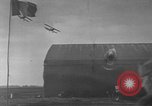
French Air Force in World War I. Formations of airplanes from successive eras.
Opening scene shows French Nieuport airplanes returning to their base from a mission, during World War 1, circa 1918. They fly over their hangar. The French tricolor flag flies from a flagpole nearby. A crashed airplane sits, nose to the ground and tail in the air, near the hangar. An airplane taxis close to the hangar, as mechanics work on airplanes in various stages of damage and repair. Next shown are a succession of formations containing aircraft from different periods of time. A loose formation of biwing aircraft fly overhead, toward the camera. They are followed by a loose formation of twin engine biplanes. Next is seen a large loose formation of American Army training biplanes from the period between the World Wars. Finally, a formation of U.S. 1950 era B-36 bombers is seen in formation.
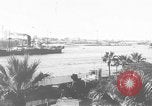
Seamen take launch to board their ship in Suez Canal.
Merchant Marine officers who need to join their ship, leave dock on a Egyptian launch that takes them out to their ship, in Port Said, Egypt. (The launch flies an Egyptian flag design in use from 1922 through 1953.) When the officers arrive at their ship, deckhands lower a rope ladder and the officers climb aboard. View of steamship, SS Aeolia, underway. (This ship, launched as the Stuyvesant 1918, was acquired in 1950 and named, Aeolia, by Cia Naviera del Atlantica of Panama. It was managed for them by the Hellenic Mediterranean Lines, Piraeus.) Back of a sailor as boat he is on passes a statue of Ferdinand de Lesseps at the Port Said entrance to the Suez Canal.. Views waters around Port Said with palm trees along shore and commercial shipping traffic in the waters.
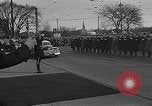
Queen Elizabeth, the Queen Mother, places a wreath and greets veterans at the Canadian National War Memorial, Ottawa, Canada.
Queen Elizabeth Bowes-Lyon of the United Kingdom (Queen Elizabeth the Queen Mother) arrives at the Canadian National War Memorial (Wellington St, Ottawa, ON K1P 5A4, Canada) in a Cadillac automobile with a clear plastic roof. She walks along a line of Canadian war veterans and converses with some of them. Royal Canadian Mounted Police officer holds back crowd of enthusiastic spectators. The Queen Mother places a wreath at the base of the war memorial, which is already adorned with countless wreaths placed there on Canada's Remembrance Day. Memorial is engraved: "1914-1918." The Queen Mother wears three pearl necklaces. Canadian spectators pack the sidewalks, as the Queen Mother rides along the streets of Ottawa. Views, from a height, of the ceremony at the National War Memorial. The Queen Mother stands before assembled officials. A military band is in formation. Large numbers of spectators are assembled to watch. The Queen Mother's wreath is shown with its card reading: “From Her Majesty Queen Elizabeth, The Queen Mother."
Walter Hagen demonstrates golf techniques and plays golf with two other men at a golf course in Michigan.
Walter Hagen and two other players demonstrate and play golf in the United States. Walter Hagen demonstrates several different shots from varying terrain. Water in the background. Ball roles into the hole and Hagen takes it out. Hagen hits the ball from a sand bunker. Hagen is joined by two other players and the golfers tee off. The course is likely Oakland Hills Country Club, where Walter Hagen was the first club professional beginning in 1918.
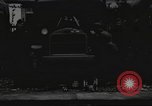
General Officer visits AEF Motor Transport Corps Reception Park in France during World War I
View of soldiers with automobiles in an American Motor Transport Corps Reception Park, in France, during World War 1. A general, in a trench coat, is being escorted by another officer as he examines automobiles in the park. atop the main garage, the letters, "M.T.C." and "Motor Reception Park" are painted. The general's car sits with driver, awaiting him. It appears to be a Locomobile touring car, and bears the identification number: 1111. (Note: The American Expeditionary Forces Motor Transport Corps (M.T.C.) was formed out of the Quartermaster Corps on 15 August 1918. As the name implies, Reception Parks were where newly arrived vehicles were uncrated, assembled, and made ready for service.) (World War I; World War 1; WWI; WW1)
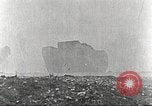
Extract from 1927 British feature film "The Somme," portraying events during the Battle of the Somme, in World War I
Scene from 1927 feature film about World War 1. British tank crosses a battlefield under fire. It is a Mk V tank with dummy guns fitted to simulate a fighting tank. British troops sheltering in a shell-hole recognize it as friendly and follow it towards enemy lines, where it rides over the parapet of a German trench and crushes a machine-gun position. (The tank is an anachronism; the Mark V did not enter service until 1918.)
CRITICALPAST.COM: About Us | Contact Us | FAQs - How to Order | License Agreement | My Account | My Lightboxes | Shopping Cart | Advanced Search | Featured Collections | Website Terms & Conditions | Privacy Policy ©2026 CriticalPast LLC.
License Agreement |
Terms & Conditions |
Privacy Policy
©2026 CriticalPast LLC.