


 Francais
 Deutsch
 Italiano
Refine Your Search
Hoboken New Jersey 1918 stock footage and images
- Showing 781 to 786 of 9472 results more
more Hide
Hide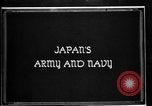
Emperor Hirohito watches maneuvers performed by soldiers in Japan.
Conditions in Japan in 1927-1928. An animated map of the Pacific Ocean depicts the growth of Japanese military might since 1894. The map depicts areas under Japanese empire in 1894, the Chinese Japanese War of 1894-1895, the Russian Japanese War Of 1904-1905 (Russo-Japanese War), the territory under Japanese influence and World War I from 1914-1918. Officers watch as Japanese soldiers march. Japanese cavalry units. Soldiers run forward. Japanese Emperor Hirohito looks at the maneuvers at the Imperial Japanese Military Academy in Tokyo. He salutes standing at a dais. The soldiers parade. A naval smoke screen is laid to shield the army at a river crossing. The Emperor looks on as soldiers in a barge land at a shore. Two vessels in a water body. Japanese sailors march. Emperor Hirohito in conversation with military officials. From the deck of his flagship 'Katori', he watches as naval guns are fired.
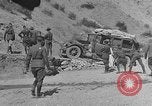
Soldiers of American Mission to Turkey and Armenia, push vehicles up sandy slope, near Euphrates River.
U.s. soldiers of the American Military Mission to Turkey and Armenia, push several of their military vehicles up a sandy sloping road from vicinity of the Euphrates River, near Kharput (Elazıg) Turkey. The last car in the group appears to be a 1918 Ford Model T Touring car. It displays a small American flag on it's radiator.
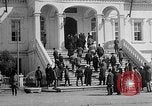
American military mission, to Turkey and Armenia, visits Erzincan, Turkey.
Members of the U.S. Military Mission to Turkey and Armenia, following World War 1, climb the steps of the Courthouse in Erzinjan (Erzincan) Turkey (the Provincial Capital). Next, an honor guard of Turkish infantry are seen marching along the street. Local people stand at the side of the road, across from the government building, where two Turkish soldiers stretch a banner across the steps reading (in French) "Long live the 12th principle of Wilson." (This alludes to the 12th point in a speech by U.S. President Wilson in January, 1918, that set the stage for ending World War 1. It stated, in essence, that The Turkish part of the Ottoman Empire should remain sovereign, while other nationalities under Turkish rule should be free to develop autonomously.) The film ends showing members of the Mission visiting a Red Cross Orphanage, where a group of little girls walk past them.
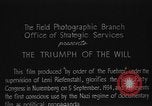
Various German officers address sixth Nazi Party Congress at Nuremberg, Germany.
Sixth Nazi Party Congress at Nuremberg in 1934. Fuhrer Hitler's Deputy Rudolf Hess inaugurates the Sixth Nazi Party Congress and speaks into a microphone. German officials sit and listen. He welcomes foreign delegates and says that representatives of army are under orders of Fuhrer Adolf Hitler. Hermann Goring, Fuhrer Hitler and Nazi Propaganda Minister Joseph Goebbels seated. The crowd applauds. He says 'You are the guarantee of our victory' and gives a Nazi salute. Hitler approaches and shakes hands with Rudolf Hess. Alfred Rosenberg in his speech addresses the Congress. He says the work which started after 1918 will be continued. Press Chief Dr. Otto Dietrich speaks into a microphone. He says truth is the basis of press and we have to say truth about Germany to the world. Fritz Todt speaks. He says 52000 men have started working on highway and more will join. Fritz Reinhardt speaks about adding more values to finance ministry. Richard Walther Darre, Julius Streicher, Robert Ley and Hans Frank speak. Nazi Propaganda Minister Joseph Goebbels says that may the high flame of our enthusiasm never die. Konstantin Hierl says that German people are ready for German labor service. (From a U.S. government-edited version of production "Triumph of the Will" with World War 2 period English audio narration and commentary added.)
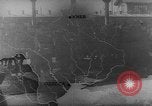
German army vehicles move along the snow covered roads in Russian territory; also Russian troops and officers in World War 1
The German Army in conflict with Russia in World War I. A map of Soviet Russia, showing cities of Kiev and Odessa. Snow covered roads in Russia. German army vehicles move along the snow covered roads. Scene from First World War, of German General Paul von Hindenburg and his deputy, General Erich Friedrich Wilhelm Ludendorff, leading procession of officials and officers across a railroad train platform. Lieutenant General Helmuth von Pannwitz, Cossack Cavalry Commander, on horseback in a public square. Lieutenant General Anton Denikin with Cossack troops in winter weather coats and hats, talking and laughing. German troops on the march. German commanders review troops occupying a city (Odessa, 1918?) What appears to be a baroque-style cathedral in background. Occupying German troops parade through streets of city. German soldiers on guard at a large building entrance. A sign on a building reads in German 'German Commander'.
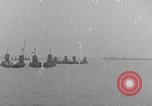
German U-boats obtained by Britain after World War I
German submarines taken as war prizes by Britain after World War I. A British official is taken by boat to inspect the submarines. Accompanied by British Naval offiers, he steps walks along the deck of the German submarine, U-9, pointing to its identifying letters. He poses with the officers. Visible behind them is the British submarine, L-15. (Note: The German U-boat, U-9, was surrendered on November 26, 1918 and broken up at Morecambe, England, in 1919.)
CRITICALPAST.COM: About Us | Contact Us | FAQs - How to Order | License Agreement | My Account | My Lightboxes | Shopping Cart | Advanced Search | Featured Collections | Website Terms & Conditions | Privacy Policy ©2026 CriticalPast LLC.
License Agreement |
Terms & Conditions |
Privacy Policy
©2026 CriticalPast LLC.