


 Francais
 Deutsch
 Italiano
Refine Your Search
John-F.-Kennedy stock footage and images
- Showing 373 to 378 of 3762 results more
more Hide
HideColor Sound
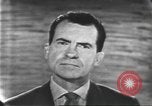
During a presidential election debate in Washington DC, Nixon and Kennedy mention measures to combat unemployment.
The second Kennedy-Nixon Presidential Debate in Washington DC. Harold R. Levy of Newsday asks Republican candidate U.S. Vice President Richard M. Nixon to mention the measures he would advocate to combat unemployment. Nixon states that to combat unemployment, the U.S. should concentrate on depressed areas and analyze sections of society where unemployment exists. He mentions a program for education, for equal job opportunities and for older citizens. He talks about full utilization of government resources and credit expansion in order to fight unemployment. He mentions measures like development of the private sector of the economy, tax reforms and tax cuts to stimulate more jobs. Democratic candidate Senator John F Kennedy talks about the area redevelopment bill passed by his party. He questions as to why Nixon opposes putting medical care for the aged under Social Security. He says that they should increase the use of surplus foods in backward areas and should not impose a high interest rate policy. He concludes and talks about development of educational aid and effective tax policies programs.
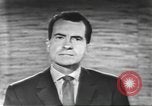
Kennedy and Nixon present their views about a summit conference during a presidential election debate in Washington DC.
The second Kennedy-Nixon Presidential Debate in Washington DC, United States. Alvin Spivak of United Press International asks Republican candidate U.S. Vice President Richard M Nixon about the possibility of occurrence of a summit conference after the presidential elections. Nixon states his willingness as the President to meet Soviet Premier Nikita Khrushchev or any other world leader if it would serve the cause of peace. He states that another summit conference will lead to negotiations at the diplomatic level and hamper peace. He concludes that he would hold another summit conference only after some preparation and assurance from Khrushchev that he wanted something meaningful from the conference. Democratic candidate Senator John F Kennedy states that before any summit conference the United States should build its military as well as economic strength. He talks about U.S. commitment to Berlin. He concludes and says that he agrees with Nixon statement in not meeting Mr. Khrushchev unless there were some agreements at the secondary level- foreign ministers and ambassadors - which would indicate that the meeting would have some hope of success, or a useful exchange of ideas.
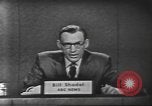
During an election debate in the US, Kennedy and Richard Nixon talk about a hypothetical invasion by the Chinese Communists.
The third Kennedy-Nixon Presidential Debate in the United States. Charles Van Fremd from CBS News asks Republican candidate U.S. Vice President Richard M. Nixon that if he were the president would he launch a war if the Chinese Communists began an invasion of Quemoy (Kinmen) and Matsu Islands and if he would authorize the use of nuclear weapons if regular conventional forces failed to halt the invasion. Nixon answers and states that it is irresponsible for a presidential candidate to indicate the course of action and the weapons he would use in the event of such an attack. He states that he would not say in advance how the U.S. would respond. He states that the Chinese Communists do not want just Quemoy and Matsu or Formosa (Republic of China or Taiwan), but the world. He concludes that defense of the free world territories and not surrender will lead to the path of peace. Democratic candidate Senator John F. Kennedy talks about a treaty to defend Formosa (Taiwan) and the Pescadores Island. He states that the U.S. would meet its commitment to Formosa. He disagrees with Nixon's suggestion that the United States should go to war if Quemoy (Kinmen) and Matsu islands are attacked as the treaty does not include these two islands. He concludes and says that the U.S. would defend if Formosa (Taiwan) or the Pescadores Island is under attack.
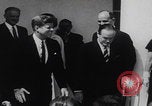
President Kennedy presents the Congressional Gold Medal to comedian Bob Hope
United States President John F. Kennedy honors famous comedian Bob Hope at the White House, Washington. D.C. President Kennedy making remarks while presenting the Congressional Gold Medal to Bob Hope at the Rose Garden in the White House. Bob Hope makes a speech after the president. Bob Hope shows the Congressional Gold Medal. Bob Hope’s wife Dolores Hope, Missouri Senator Stuart Symington, other senators, and members of congress watch the ceremony.
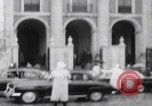
United States military, civilians, and Spanish citizens attend a memorial service for President Kennedy in Madrid, Spain
Memorial Services for United states President John F. Kennedy, held in Madrid, Spain, following President Kennedy's assassination. People enter the San Francisco de Borja church (Calle de Maldonado, 1, 28006 Madrid, Spain) in front of the United States Embassy in Barrio Salamanca, Madrid. Cars driving past the church as crowds started to gather and fill outside the church. United States military personnel and civilians are joined by Spanish civilians outside the San Francisco de Borja church. View of the church façade. A woman in black crosses the street. The San Francisco de Borja church as seen from the United States Embassy. Two men bring wreaths to the church. United States military officials enter the church. Guests with umbrellas continue to arrive for the service.
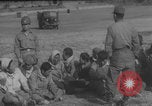
Soldiers guard refugees in Korea; President Kennedy inauguration speech
Soldiers guard a group of Korean refugees during the Korean War. The refugees sit on the ground. Hungarian rebels shoot behind a building between Károlyi and Cukor Street (Budapest, Károlyi utca 9, 1053 Hungary) in Inner City, Budapest during the Hungarian Revolution in 1956. In a devastated street, a tank rolls in, with Soviet soldiers sitting on top. Burned and abandoned tanks along Andrassy Avenue. Newspaper article titled “Khrushchev Hails New African States”. United States President John F. Kennedy delivers his inaugural speech from the East Portico of the U.S. Capitol in Washington, D.C. “We shall not always expect to find them supporting our view. But we shall always hope to find them strongly supporting their own freedom--and to remember that, in the past, those who foolishly sought power by riding the back of the tiger ended up inside.” President Kennedy said.
CRITICALPAST.COM: About Us | Contact Us | FAQs - How to Order | License Agreement | My Account | My Lightboxes | Shopping Cart | Advanced Search | Featured Collections | Website Terms & Conditions | Privacy Policy ©2026 CriticalPast LLC.
License Agreement |
Terms & Conditions |
Privacy Policy
©2026 CriticalPast LLC.