


 Francais
 Deutsch
 Italiano
Refine Your Search
Long Beach California USA 1960 stock footage and images
- Showing 5809 to 5814 of 27665 results more
more Hide
Hide
Adolf Hitler opens the 1937 International Automobile Exhibit in Berlin, Germany.
Adolf Hitler at opening of the International Auto Show in Berlin on 20 February 1937. He strolls along a street, past a military honor guard. He is accompanied by several Storm Troopers (Sturmabteilung). Hitler walks up to and shakes hands with members of a German motorcycle racing team, standing next to their machines. He then greets and shakes hands with three racing car drivers standing near their cars (Mercedes Silver Arrows). View of crowd enthusiastically greeting Hitler. Next, the racing cars drive along the street, followed by Hitler and companions in his Mercedes-Benz W150 770 Paradewagenen. The rest of his entourage follows in open staff cars. Glimpse of Military honor guard presenting arms in salute. View of the motorcade driving toward the camera, along the Unter den Linden, with the Brandenburg Gate in the background. Spectators line the sidewalks. The motorcade passes a long line of German military motorcyclists standing next to their machines. The motorcade stops there where Hitler steps from the lead car and crosses the street to enters the building housing the Auto Show, which is guarded by black uniformed SS troops standing along the sidewalk. Images of the Berlin 1937 Auto Show illustrated Posters advertising the "Internationale Automobil und Motorrad Ausstellung" (International automobile and motorcycle exhibition). Poster shows stylized artistic drawings of cars and sketch of the Brandenburg Gate. Inside the building a stage is lined with a group of trumpeters in fancy regalia, playing a fanfare. Nazi swastika banners are massed in the back of the stage. From a podium on stage Hitler delivers a short address to open the event, in which he reiterates his desire to have a low-price car produced for the ordinary people of Germany. Closeup of Joseph Goebbels with arms folded, in the audience. View of men in fancy regalia holding Nazi swastika banners. Next, Goebbels is seen at the podium, acting as a cheer leader for the National Socialistic Party (Nazi Party), the German nation, and its leader, Adolf Hitler. He leads the audience in chanting "Zieg Heil." three times. Curtains part revealing automobiles on display. Closeup of the front of a Daimler Benz car. Adolf Hitler leads others entering the exhibit floor, accompanied by executives of the automotive industry. Goebbels is seen at his side, next to Dr. H.C. Wilhelm Kissel, who became the first chairman of the Board of Daimler-Benz AG in 1937. Closeup of Hitler reaching out to a car, as Kissel stands near, behind him. Hitler and Kissel converse and Hitler embraces him and expresses his enthusiasm. Again Hitler reaches out to the car, commenting as he does. View of the exhibit floor filled with cars and people. Closeup of Hitler conversing with civilian auto executives as he stands next to a streamlined Adler 2,5 Liter Type 10 Cabriolet automobile. Closeup of the chrome embellished hood and front bumper of the Adler car. Hitler closely examining the tread of an auto tire. Closeup of transparent cutaway showing inside of a car hood. Hitler standing on the opposite side of the car. Hitler stands with several men discussing a DKW-Union automobile with its side hood panels raised. Men discussing the new Opel Admiral sedan introduced at this auto show. (The car was powered by a newly developed 3,626 cc straight-six engine.) Hitler with others, looking under the hood at the engine. Sketch of a German artificial rubber tire factory. View of materials used in tire manufacture. Closeups of tires. BMW R6 motorcycle and other motorcycles. Remainder of film devoted to engines, and many cars made by DKW-Union.
Activities at a Soviet airbase and army base during World War II.
Opening slate in Russian, refers to N-skaya squadron of our brave falcons. View of a rough encampment in a clump of pine trees in the Soviet Union, during World War 2. Closeup of two Soviet aircraft completely hidden by boughs of pine trees. Complete change of scene shows Soviet soldiers assembled in a clearing in a forest, where they are to watch some local performances. View from the rear of soldiers grouped informally around army soldier entertainers. Soviet soldier musicians in a band are seated nearby with instruments, including a balalaika and accordions. The setting is park-like, perhaps at an army base. Next some of the army entertainers begin to dance as the band plays. View of a circle of army spectators watching the entertainers. Closeup of the dancers performing athletic Russian dances in unison. A group of women army soldiers are seated in the grass near other spectators, watching and applauding the performances. View of a Russian solder doing a solo performance. Camera pans over the military spectators. Abrupt change of scene shows an Ilyushin DB-3 bomber that has been partially cleared of its camouflage tree limbs. Soviet troops prepare long belts of machine gun ammunition, running the rounds through a had-cranked device that secures them. They re-box the belt ammunition. A truck carrying soldiers arrives at the Ilyushin DB-3 aircraft. Soldiers get out and unload crated munitions from the back of the truck, which they roll to the aircraft. They open a crate to reveal a bomb inside. Other soldiers carry a crate of belted machine gun ammunition. Next the armorers are seen arming the airplane. Closeup of one atop the aircraft, loading the belt ammunition, while others hoist a bomb through the bomb bay doors. One soldier checks the aircraft machine guns for mobility. Soldiers tending a pile of crated munitions are approached by a Soviet Air Force officer who brings them credentials that they must mark with their fingerprints and sign. The officer congratulates them. Closeup of the Russian officer. Another Air Force officer (a Major) holds a map and speaks to a Soviet radio operator in the field. Soldiers remove the last tree limbs from the Ilyushin bomber aircraft, and aircrew members prepare to board. The aircraft with engines running. The bomber taxis out and takes off raising lots of dust from the rugged airfield. Glimpse of three Soviet bombers in formation above the airfield.
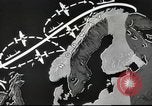
The German Luftwaffe attacks Allied supply convoys to Murmansk, Russia, during World War II
Animated map shows World War 2 supply convoy routes to Murmansk, Soviet Union. German Junkers 88 bombers, JU 87, Stuka dive bombers, Fokker D.XXI aircraft; and Dornier Do-17 bombers are seen as aircraft used to disrupt the convoy traffic. An officer aboard a convoy escort ship looks through binoculars. A group of German Stuka dive bombers peels off to attack the convoy. Escort warships fire antiaircraft guns at the attacking German aircraft. bombs striking a supply ship. German Me 109 aircraft flying over the convoy. An attacking German aircraft is downed and crashes into the sea. A bombed supply freighter rapidly sinks. Smoke rises from another burning ships. A long line of supply ships arriving at Russian port. Aircraft and tanks being offloaded.
U.S. Army chaplain Colonel Alfred Oliver is interviewed after being liberated from a Japanese prison camp in the Philippines.
U.S. prisoners of war are freed in the Philippines during World War II. Liberated men are being interviewed. U.S. Army chaplain Colonel Alfred C. Oliver Jr. is interviewed. He talks about the experience of being liberated from a Japanese prison camp after a long time. He speaks about the chapels destroyed by the Japanese. A thatched hut in the background.
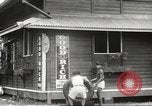
Filipino people working in different jobs, industry, and factories in the Philippines before World War 2
Activities of Filipino people in the Philippines before World War II. A horse-drawn calesa moves through Escolta, the business district of Manila. Billboards advertise Coca-Cola in the Philippines. Activities and quiet scenes at the siesta time. Buildings along the sides of a street. Sign boards outside the buildings read: 'Good Rich' and 'Coca Cola'. A Bahay Kubo (Nipa hut) in the countryside. A horse drinks from trough. A monkey hangs on bamboo pole. A water buffalo (carabao) laze in the mud. Timber trees are felled by men for lumber. Smoke from chimneys of factories. Wooden logs are carried on railroad wagons moving on rails. People work in a sugarcane farm and harvest the sugarcane. Men with Carabaos plow in a sugarcane field. Filipino workers transport sacks of sugar into a ship. Men climb up coconut trees and pick coconuts. The coconuts are loaded into carts. A Filipino man pours out a cup filled with sap from a rubber tree. Men cut tobacco. Filipino women roll tobacco into cigars inside a cigar factory. Men harvesting and slicing abaca (also known as Manila hemp). The processing of hemp. Men shredding Manila hemp into long strands. Shredded abaca are hung outdoors to dry. A machine twines hemp. (Pre war scenes, but from a 1944 film.)
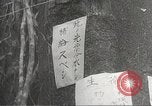
Japanese soldiers look at their mails and an airplane makes a message pick up with a skyhook in the Philippines (WW2)
The Japanese occupation of the Philippines during World War II. Mails are pasted on a tree. Japanese soldiers look at postal mail in a jungle setting. Japanese soldiers carry supplies using a long bamboo pole. Soldiers filling drums with water from a river. Hose fills the drum with water. A truck carrying water containers drives past along a way. Japanese soldiers use rolling pins and boil a pot. Water flows from hose. Japanese cooking from vats. A Japanese airplane in flight. The airplane makes a message pick up with a skyhook.
CRITICALPAST.COM: About Us | Contact Us | FAQs - How to Order | License Agreement | My Account | My Lightboxes | Shopping Cart | Advanced Search | Featured Collections | Website Terms & Conditions | Privacy Policy ©2026 CriticalPast LLC.
License Agreement |
Terms & Conditions |
Privacy Policy
©2026 CriticalPast LLC.