


 Francais
 Deutsch
 Italiano
Refine Your Search
M4-training stock footage and images
- Showing 5365 to 5370 of 8218 results more
more Hide
Hide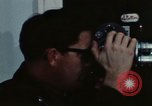
Bolex movie camera and still cameras photograph the United States Joint Chiefs of Staff
Closeup of a Bolex-type movie camera with turret lens selection as the United States Joint Chiefs of Staff pose for a formal portrait. The officers seated include from the left--- General Fred C. Weyand, United States Army ; General David C. Jones, United States Air Force ; General George S. Brown, United States Air Force ; Chairman Joint Chief of Staff Admiral James L. Holloway, United States Navy ; General Robert E. Cushman, United States Marine Corps. Operations deputies standing in the background include Lieutenant General Donald H. Cowles, United States Army ; Lieutenant Huyser, United States Air Force ; Vice Admiral Train, United States Navy ; Vice Admiral Tailey, United States Navy ; Lieutenant General Beckington, United States Marine Corps. Camera pans from officers to the bank of cameramen eager to take pictures.
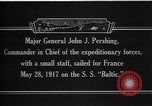
American Expeditionary Forces (AEF) arrive in France during World War I
The United States declares war against Germany during World War I. On May 28, 1917 Major General John J. Pershing, Chief of American Expeditionary Forces aboard the S.S. Baltic on its way to France during World War I. Nearly 2,000,000 American soldiers disembark at a port in France. The troops disembark from the ship. A ship at the harbor. Ships underway at sea. Sailors on the deck of a ship. A German U boat underway. Naval gun being fired at the U boat. Explosion occurs at sea. A man waves signal flags from a ship. The troops disembark from the ship. Soldiers at a rail road station and a train pulls up to carry them to the war front. (World War I; World War 1; WWI; WW1)
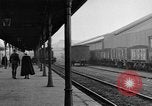
Allied soldiers at a rail road station in France during World War I.
Allied soldiers in France during World War I. A rail road train pulls up at a station in France. Allied soldiers on the platform. They move across a rail road track. They enter a building at the station. Nurses cook food inside the building. A nurse at the entrance distributes packets to the soldiers. A General stands next to the nurse.
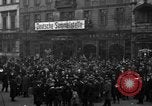
Citizen residents of Upper Silesia voting to determine whether they will be associated with Germany or Poland.
After World War 1, in accordance with Article 88 of the Treaty of Versailles, residents of Upper Silesia are deciding by ballot, whether to be attached to Germany or Poland. Citizens in Kattowitz (Katowice) milling about in front of a building with a sign that reads ' Deutsche Sammelstelle. ' A horse and wagon passes them. Armed French occupation troops climb aboard an open truck. A small boy watching is chased away by a soldier.The truck drives away, past crowds of people on sidewalks. Three uniformed French soldiers pose in front of crowd of spectators. Three uniformed men with Red Cross arm bands stand under red cross flag flying from building. People massed at entrance to a building move into it under sign reading "eingang." A French officer (General Henri Le Rond) standing with a British officer (Colonel Henry Percival) and an Italian officer (General Antonio de Marinis), reads a newspaper and converses with the others in garden at Oppeln (Opole). Views from moving train of industrial complexes with numerous smoke stacks and factories, in the Oppeln region of Upper Silesia. A map showing area of plebiscite, and the coal reserves and coal mines of the region.
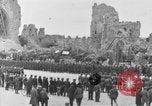
Destroyed St. Martins cathedral in Belgium and views from a moving car of the Schwebebahn suspended railway in Germany
Allied military and some civilians gather for a ceremony at the ruins of Saint Martin's Cathedral, in Ypres Belgium, destroyed by Germany in World War 1. Scots Guards in kilts are seen among the assembled military. A ladder is seen and something is being raised by a hoist in the background,as preliminary cleanup is being undertaken. Scene shifts to point of view footage from a moving rail car on the Suspension Railway (Schwebebahn) in Barmen-Elberfeld Germany. At first it travels above a street in the city. Then it is seen moving over the Wupper River, in the Elberfeld region, as another suspension rail train approaches from the opposite direction. It continues traveling along (above) the waterway. (Note: Barmen-Elberfeld was re-named Wuppertal in 1930. The Schwebebahn is still in operation today, and is the oldest operating transportation monorail in the world. It is now called the Wuppertal Suspension Railway. Its original full name is: "Electric Elevated Railway (Suspension Railway) Installation, Eugen Langen System" (Anlage einer elektrischen Hochbahn (Schwebebahn), System Eugen Langen)).
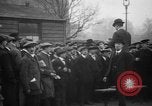
Men in Britain receiving personal notices for military service in World War I. Group is led by military officials.
Conscripted British men receive personal notices as their names are read at public gathering. The drafted men assemble and march off for training and World War 1 service, accompanied by uniformed officials. Friends and bystanders, including a number of women, walk along beside and behind the new recruits on their way to war.
CRITICALPAST.COM: About Us | Contact Us | FAQs - How to Order | License Agreement | My Account | My Lightboxes | Shopping Cart | Advanced Search | Featured Collections | Website Terms & Conditions | Privacy Policy ©2026 CriticalPast LLC.
License Agreement |
Terms & Conditions |
Privacy Policy
©2026 CriticalPast LLC.