


 Francais
 Deutsch
 Italiano

Refine Your Search
Melville Rhode Island 1943 stock footage and images
- Showing 235 to 240 of 6735 results more
 Hide
Color Sound

USAAF B-25 Mitchell aircraft take off from an air base in China and drop bombs over Hong Kong during World War II.
Although narrator states "General Chennault's United States 10th Air Force," this film actually depicts Chennault's 14th Air Force formed in 1943. Its B-25s and P-40s are shown during an attack on Hong Kong during World War 2 U.S. Army Air Force B-25 Mitchell aircraft take off from an air base in China to attack Hong Kong. The aircraft in flight. Propellers of the aircraft. Aerial view of the area below. Bombs being released over Hong Kong. View of crew in cockpit of B-25.The aircraft landing at an air base in China after the mission. P-40s with tiger teeth paint job parked on the airport tarmac. Aircrews relax with refreshments on the ramp.
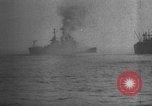
Allied Naval Task Force operations supporting Amphibian assault on Salerno, Italy, in World War II
Opening scene shows the USS Savannah (CL 42), on 11 September, 1943, after being struck by a German remotely controlled glider bomb released from a high flying German aircraft, She was supporting Allied amphibious operations at Salerno, Italy, in World War 2. Next, after fires were put out and smoke cleared, The disabled Savannah is seen sitting low in the water, making way slowly, among other Naval Task force ships in the background. (She made way to Malta under her own steam for emergency repairs.) Views of the Savannah passing as she heads for Malta. A Fletcher class destroyer fires her naval guns at the shore. Attack transports and other support ships are seen nearby. More views of support ships, including the USS Samuel Chase (APA-26). A barrage balloon seen above the convoy in some scenes. Sailors manning a Bofors 40mm anti-aircraft gun aboard a U.S. warship. A British Escort Carrier with number 337 on her bow. Sailors with a Oerlikon 20 mm cannon aboard a warship. The British Escort Carrier seen earlier, (with number 337 on her bow) passes the camera ship. Aircraft are seen on her flight deck. A Navy warship firing 40mm Bofors and 5-inch guns as it lays down a smoke screen.
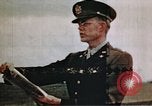
Military award ceremony for members of 351st Bomb Group At RAF Station Polebrook, England, during World War II
During World War 2, Group Adjutant reads 8th Bomber Command orders of the day, on July 7th, 1943. Members of the 351st Bomb Group stand in formation in front of B-17s during an award ceremony. The decorations, including Silver Star, Distinguished Flying Cross,and Soldiers Medal, are arranged on a table for presentation. The recipients are lined up at attention. Narrator points out Bombardier Stevens receiving the DFC and other airmen and their awards.

The U.S. Army Quartermaster Corps store procured supplies and enlisted men are trained in quartermaster operations (WW2)
The United States Army Quartermaster Corps in the United States during World War II. A diagrammatic comparison of army manpower of 8,000,000 in December 1943 as against 1,750,000 in December 1941. A diagrammatic representation of huge increase in volume of obligated procurement in 1942 as against 1941. Men wheeling carts of supplies at a store. Men carrying supplies coming down a gangway from a ship onto a dock. Soldiers with guns standing on the dock. Soldiers moving through a wooded area. Men carrying the procured materials for storing. Officers watching the men. Two soldiers wearing their uniforms. People and vehicles moving on a city street. A signboard on a building reads 'Office of the Quartermaster General War Department'. The headquarters building in view. A map of the U.S. showing locations of different procuring offices across the nation. Men and women working in an office at the headquarters. Petroleum, Subsistence and Textile sections at the headquarters. Officers working in the headquarters. Men getting into a truck. Enlisted men being trained in various quartermaster operations at a training center.

Austrians carry banners in a parade during Innsbruck Shooting Festival, Austria (WW2)
Innsbruck Shooting Festival in Innsbruck during July, 1943, announced by banner stretched across a road. Buildings and Nazi banners in view. Closeups of Austrian men and women in colorful costumes. Closeup glimpse of the flag of a World War II Austrian State. A parade of Austrians carrying various Austrian State flags and others carrying unidentified flags. The parade viewed from above, and then from within the ranks of marching participants in traditional uniforms and carrying rifles. A huge crowd of spectators gathered on the sidewalks. A brass band playing for the marchers, from the sidelines. Shots of marcher's feet and then of them from waist up. German soldiers in uniform, recovering from war wounds, have front row seats. An antique cannon is fired. Then the street becomes completely filled with participants and spectators.

Colonel Oveta Culp Hobby is the first commanding officer of Women's Army Corps in the United States.
Women's Army Corps in the United States. Women's Army Auxiliary Corps, created in 1942 is converted to WAC (Women's Army Corps) in 1943. A WAC carries a cake. 'WAAC' written on the cake. A WAC walks outside a building. Several men stand and talk. The WACs parade on a field. A United States flag. Duties performed by WACs. Women work as mechanics and handle complicated equipment. They take photographs through cameras. The U.S. Capitol building in view. U.S. Army General George Marshall and U.S. Secretary of State Henry Stimson. Colonel Oveta Culp Hobby is the first commanding officer of WAC. A dramatization depicts recruitment and induction of WAACs. A sign reads 'WAAC, information and recruiting'. A woman appears in an interview. The women undergo physical examination and are then recruited. WAACs undergo a training. They perform physical exercises and swim. Several WACs go to specialization classes. WACs cook food. A woman receives an award for her husband's bravery during World War II.
CRITICALPAST.COM: About Us | Contact Us | FAQs - How to Order | License Agreement | My Account | My Lightboxes | Shopping Cart | Advanced Search | Featured Collections | Website Terms & Conditions | Privacy Policy ©2026 CriticalPast LLC.
License Agreement |
Terms & Conditions |
Privacy Policy
©2026 CriticalPast LLC.