


 Francais
 Deutsch
 Italiano
Refine Your Search
Miami Beach Florida USA 1963 stock footage and images
- Showing 7969 to 7974 of 26838 results more
more Hide
Hide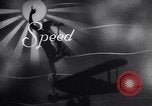
U.S. Army Air Service pilots Jimmy Doolittle and Cyrus Bettis and their Curtiss R3C racing airplanes
Views of U.S. Army Air Service Lieutenant James Doolittle, winner of the Schneider Cup Race, and of his Curtiss R3C-2 airplane equipped with floats. Brief view of Lieutenant Cyrus Bettis, climbing out of his R3C racing airplane, after winning the Pulitzer Trophy.
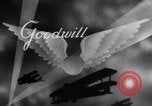
The start and the finish of the U.S. Army Air Service Pan American Goodwill tour in 1926-1927
Glimpses of airplanes and crews that made the Pan American Goodwill flight that covered 22,000 miles to 21 Central and South American nations, in 1926. Aerial view of hangars and runway at kelly Air Base, Texas, as one of the five Loening OA-1 Amphibious aircraft takes off from the runway on Dec. 21, 1926.The five aircraft seen in flight over a city, are: The New York, with crew: Maj. Herbert Dargue and Lt. Ennis Whitehead; The San Antonio with crew: Capt. Arthur McDaniel and Lt. Charles Robinson; The San Francisco with crew: Capt. Ira Eaker and Lt. Muir Fairchild; The Detroit, with crew: Capt. Clinton Woolsey and Lt. John Benton; and The St. Louis, with crew: Lt. Bernard Thompson and Lt. Leonard Weddington. President Coolidge presenting the pilots with with citations for the Distinguished Flying Cross at Bolling Field, Washington, D.C., on May 2, 1927, at the opening of the Pan American Air Commission Conference.
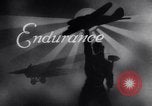
U.S. Army Air Corps sets new airborne endurance record using midair refueling
The U.S. Army Air Corps Fokker C-2 named the 'Question Mark' is rolled out and takes off.from Van Nuys, California, on New Years Day 1929 with Capt.Ira Eaker at the controls. Shortly thereafter,it is refueled by a C-1 airplane piloted by 1st Lt. Odas Moon and 2nd Lt. Joseph G. Hopkins., View of the The C-1 above and slightly ahead of the Question Mark, maintaining 20 to 30 feet of vertical separation, with both aircraft stabilized in level flight at 80 mph. The refueling hose is reeled out. View of the Question Mark in flight over the coast of California. At the conclusion of the mission, cut short by engine trouble after 150 hours aloft, the crew, Sgt Hooe, Lt. Elwood Quesada, Lt Halverson, Captain Eaker and Major Spatz are seen standing in front of their airplane, the FokkerC-2, Question Mark.
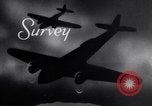
B-10 bombers fly from Washington DC to Alaska and back, led by Lt. Col Henry H. Arnold.
Ten Martin B-10 bombers taxi and take off from Bolling Field, Washington, DC, for mapping flight to Alaska, and back. View of Army Air Corps Lieutenant Colonel Henry H. Arnold, who commands the operation. The ten Martin B-10 bombers in formation, flying overhead. Scene changes to their return, as B-10 bombers are seen flying over the Potomac River at Washington, DC. Colonel Arnold, standing with some of his pilots, accepts the MacKay Trophy from Secretary of War George Dern for their accomplishment.
Pilot demonstrates loop, barrel roll, double roll, tail spin, and inverted flight, in a Douglas Model O-2C airplane
U.S. Army Air Corps douglas Model O-2C biplane (number 26-410) taxis and takes off (possibly piloted by Army Captain J.R. Schumaker). The pilot demonstrates several aerobatic maneuvers, including loop, barrel roll, double roll, tail spin, and inverted flight.
Army Air Service demonstrates high speed bombing at low altitude, while being photographed from airplane flying above.
Shadow is cast on the ground by camera airplane as it flies slowly, above U.S. Army Air Service biplanes demonstrating high speed low altitude tactical bombing. Bombs can be seen exploding behind the attacking airplanes. (These are possibly Curtis A-3 Falcon airplanes of the 3rd Attack Group which pioneered such tactics in the Air Service.)
CRITICALPAST.COM: About Us | Contact Us | FAQs - How to Order | License Agreement | My Account | My Lightboxes | Shopping Cart | Advanced Search | Featured Collections | Website Terms & Conditions | Privacy Policy ©2026 CriticalPast LLC.
License Agreement |
Terms & Conditions |
Privacy Policy
©2026 CriticalPast LLC.