


 Francais
 Deutsch
 Italiano
Refine Your Search
Miami Beach Florida USA 1963 stock footage and images
- Showing 4771 to 4776 of 26888 results more
more Hide
Hide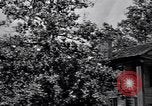
Young girls at a farm house or dilapidated plantation house in the southern United States.
Farm houses and former grand plantation houses, now in disrepair, seen among trees during time of poverty in Great Depression. A clothes line outside a house. Entrance to a house with large columns. Plaster and paint have peeled from the columns revealing the bricks. Young girls stand by a pillar at the entrance. Eroded land near an abandoned house.
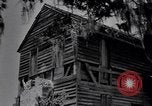
Forks of Cypress plantation home and other sites, likely in Alabama, circa 1939; African American man tending a large bell.
From the U.S. Department of Agriculture documentary "The Land." A seemingly abandoned, dilapidated house at an unidentified farm or former plantation location, possibly in Alabama, during the Great Depression. Spanish moss hanging from nearby trees. Views of a different, wooden, rundown house with a front porch, possibly at a different location. Scene changes again to a third different house, this one made of brick. A lone African American man emerges from double doors of the house. He walks up to a bell, cleans it, and rings it. Distant open view in front of the bell includes a valley and river (possibly the Tennessee River in western Lauderdale County, but not confirmed.) Scene changes again to show the first house and the trees with Spanish Moss. View returns to the location with the man tending the bell. Next scene shows the Forks of Cypress plantation house in Florence Alabama, (Lauderdale County). View of the old main Greek Revival Forks of Cypress house built in 1830 for James Jackson. View of the west elevation of the house. The smokehouse is seen behind and to the side of the main house. A clothes line with clothes on it is beside the smokehouse. Chickens walk on the porch of the house, past its tall colonnade of 24 ionic columns. (Note: The house burned completely in a 1966 fire). Next scene is again the elderly African American man at the brick house location. He looks around, mumbling to himself, walks back towards the house, and pauses on the front steps. The first wooden house with Spanish moss in nearby trees is shown again. Scene returns to the elderly African American man who enters the brick house and closes the doors behind him. Film directed and narrated by Robert Flaherty.
Continued struggle after Dust Bowl: Winds blow away top soil; Desperate migrant farmers during Great Depression
U.S. Department of Agriculture documentary depicts how rural America used machines to achieve production at a terrible cost to the land and people including erosion and poverty. The Dust Bowl in the Great Plains. Top soil is blown away in a storm. Barren land. Soil washed into the Arkansas River. Layers of soil in the river. Wasted land and rivers due to sheet erosion. Soil destruction, barren land and farms. Texas: A town called "Go Forth" or "Goforth" founded by cotton farmers long ago. Abandoned houses, damaged roads, and unemployed desperate farmers are seen. Emaciated cows search for food. On the edge of the town, migrant landless farmers sit by a fire near a car. Rains and water erode the soil. A sign in a barren eroded patch reads 'Abernathy Furniture Co.'. The wind blows away the top soil.
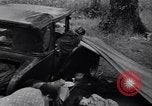
A poor migrant farming family packs up their belongings and moves westward in the United States.
A poverty stricken migrant farming family lives in make shift shelters and tent camps during the Great Depression in the United States. A girl sleeps in a tent while a woman washes utensils nearby. A man and a young boy cook food on a stove. An unemployed family lives in a trailer. The man with his wife and children. The woman with her children. The man loads their belongings into a horse wagon. A young boy near his bicycle. Other farmers watch as the family gets on and they begin their journey westward.

American, Filipino and Mexican men, women and children work in farm fields, United States. Migrant farmers seeking work.
Clouds over barren and parched land during Great Depression. Expansive views of open western plains and distant mountains. Some cactus plants in undeveloped wide open areas in Arizona. A steam engine locomotive pulls a train in the distance. Hills, cattle graze. Elevated view of a man made Theodore Roosevelt Lake reservoir and the Theodore Roosevelt dam that created it, northeast of Phoenix Arizona. Farms, fields, trees and vegetation. Migrant farmers in overloaded cars and heavily loaded automobiles on a dirt road. A parked trailer. A loaded wagon attached to the car. Boxes of fruits and vegetables including lemons, sweet potatoes and oranges at very low prices. Children of migrant farmers playing together and milling about. Groups of migrant worker farmers looking for work and competing for work in Arizona with four crops a year due to warm conditions and water from dams. Cars with variety of western United States 1939 license plates. Filipino and Mexican immigrant farmers pick fruits and vegetables (lettuce) on a farm. Men work on an irrigated field. Narrator states that Filipino and Mexicans have the jobs because they are strong. They pick and load lettuce into trucks on a lettuce field. Men work at sheds at packing machines to pack the lettuce. Trucks loaded in the field. Mexican border on Rio Grande river valley: Men, women and children work in a field. Most are Mexican. They pick fruits and vegetables and load them into buckets and containers. A man supervises the workers. Women workers pick and sort produce on a field. A man with a loaded horse wagon. Men lift boxes of produce. Migrants work in a field.

A young boy and a woman from a poor farm family live in poverty and dilapidated shacks, United States.
Destitute children from poor migrant farm families play near dilapidated houses and tent communities and shacks during the Great Depression in America. A poverty stricken woman stitches and sews in a tent. A sick young boy moves his hands in his sleep as he thinks he's picking peas, while his mother watches over him at his bedside in a tent or shack.
CRITICALPAST.COM: About Us | Contact Us | FAQs - How to Order | License Agreement | My Account | My Lightboxes | Shopping Cart | Advanced Search | Featured Collections | Website Terms & Conditions | Privacy Policy ©2026 CriticalPast LLC.
License Agreement |
Terms & Conditions |
Privacy Policy
©2026 CriticalPast LLC.