


 Francais
 Deutsch
 Italiano
Refine Your Search
Mig-15 stock footage and images
- Showing 289 to 294 of 682 results more
more Hide
Hide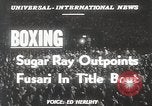
Sugar Ray Robinson wins the welterweight title in bout, Jersey.
Wrestling match between Sugar Ray Robinson and Charley Fusari in Jersey, France. James Farley and Walter Winchell seated on chair to watch the match. Sugar Ray Robinson and Charley Fusari fight on boxing floor. Cameramen record the match. Gene Tunney watches the wrestling match. Robinson successfully defended his welterweight title for the last time against Charley Fusari. Robinson won a lopsided 15 round decision. Robinson won the wrestling bout that was staged for the Runyon cancer fund.
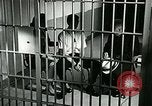
Actions taken to reduce drug addiction and illegal drugs in the United States.
Victim of drug abuse and drug dealing is interviewed in jail. He is questioned about the pills used and their effects on his memory and body. He answers the officer. Officials of drug administration seize the drugs. They investigate the drug smugglers and illegal distribution channels. A man sells drugs illegally. Officials arrest the drug dealers involved in selling drugs illegally. The Congress enacts the Drug Abuse Control Amendments. United States President Lyndon Johnson signs law on July 15, 1965 and speaks about drug abuse and illegal drugs like bennies and goofballs.. Commissioner of the FDA (Food and Drug Administration), James L Goddard, discusses the role of FDA in reducing drug addiction. Actor Paul Newman speaks about preventing misuse of drugs.
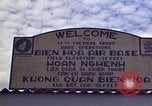
U.S. Air Force personnel construct sandbag bunkers and receive ammunition at Bien Hoa Air Base in Vietnam.
34th Tactical Group increases precautionary measures and aircraft buildup due to Viet Cong attacks at Bien Hoa Air Base in Vietnam. Sign: Welcome to 34th Tactical Group Base Operations, Bien Hoa Air Base, Field Elevation 36 feet (also in Vietnamese). Air Force Personnel construct sandbag bunkers. They look on notice board. Loudspeakers on pole. Air Force Personnel scramble from hut. They receive M-l6 (AR-15) rifles. They receive ammunition and proceed to bunkers. (Vietnam War period).
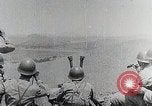
Role of metals in Japanese war against China during 2nd Sino-Japanese Conflict
Scenes of Second Sino-Japanese War, circa 1938. Japanese soldiers observing battlefield from a ridge. Japanese artillerymen firing field pieces. Flight of two Mitsubishi Ki-15-1 light bombers in formation, later called "Babs" by the Allies and known as a C5M in Japanese Navy usage. Aerial view of Japanese bombs falling on Chinese cities. Chinese citizens, including an injured woman, seeking shelter from bombing. Aerial view of Chinese ship being strafed by Japanese aircraft. The ship explodes. Downed Japanese warplanes burning. Scenes of destruction from bombing of oil facilities. Iron ore being moved in Japanese rail cars. Steel plants around Yawata, Japan. Numerous containers of molten steel inside a steel plant. Hot Steel ingots being moved. Animated map shows locations of iron ore deposits in Japan. Scrap steel being imported that, narrator states, helped boost Japanese wartime production to 12 million ingot tons in the Sino-Japanese war. More views of open rail cars moving alloying elements to a steel mill. Open mining using explosives. Mining operations for copper and bauxite (aluminum ore). Japanese miners shoveling ore by hand into open rail cars. Open rail cars moving in both directions on parallel tracks. (Note: Although some narration refers to 1941 Japanese production, the images are from earlier period.)
Second Sino-Japanese War
Opening scene shows formation of Japanese Mitsubishi G3M bombers in flight. View of bombardier at bomb sight inside a bomber. Bombs falling from the aircraft, upon the Chinese city of Shanghai, on a day in September, 1937. Ground level view of bomb exploding and Chinese civilians running for cover. A huge explosion throwing earth up. Aerial view of smoke rising from bomb strikes below. More ground views of bombs destroying structures. Chinese people fleeing across a bridge. Cluster of bombs falling from a Japanese airplane. More explosions and destruction. view from a G3M bomber, of others with bombs falling from them. View from above of civilians filling a street as they run for shelter. People on the ground rushing in all directions. Some are in horse-drawn carriages with luggage on top and other in rickshaws, apparently fleeing the city altogether. Bombing victims lying on the ground near destroyed structures. Heavy dark smoke rising from the attacks. Scene shifts to Japanese army officers entering the Yasukuni shrine in Tokyo. Behind them is A Shinto Tori (Gate) and behind that, the monument (statue) of Omura Masujiro. Scene shifts again, to view of the Temple of Heaven, an ancient Imperial Sacrificial Altar in Peking (Beijing) China. Chinese agriculture. Crowds of Chinese people. Stone statue of traditional Chinese lion. Picture of 1851 oil-on-canvas painting by the German American artist Emanuel Gottlieb Leutze, of Washington crossing the Delaware. Drawing of 15th century ship similar to one in Columbus'1492 voyage to America. Drawing of Roman Empire era building. Michelangelo’s statue of Moses. Drawing of ancient Egyptian pyramid and statue. Drawing of Chinese city and environs representing 4 thousand years ago. Extant ancient Chinese shrines and statues. Animated Relief map of China and surrounding countries of U.S.S.R., India,Burma,Thailand, Indo-China, Philippines, and Japan. Animation outlines China Proper. It also shows Manchuria and scenes from there of desolate mountainous land, with miners at work extracting raw materials. Mongolia and Sinkiang are outlined. The Gobi desert is seen with a long camel caravan crossing it. Closeup of nomads transporting animal skins by camel. The last region outlined is Tibet. The ice covered Himalayan mountains are shown. Buddhist monks praying in the courtyard of a shrine in Tibet. The Yellow, Si Kiang, and Yangtze Rivers are shown on the map. Views of Chinese sailing vessels.
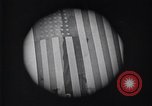
Flag draped replica of the Statue of Liberty unveiled during 4th Liberty Loan activities in Detroit, Michigan, World War I
As part of activities for the Fourth Liberty Loan Drive, in World War 1, a crowd of 15,000 attends the official opening of the Liberty Forum, marked by unveiling of a Statue of Liberty at Cadillac Square, in Detroit, Michigan. Abner Larned, chairman of the Liberty Loan sales committee and Mayor Oscar B. Marx officiate. The base of the statue contains words: "They Died For Liberty," and a list of fallen members.of the American Expeditionary Forces (AEF). (World War i; World War 1; WWI; WW1)