


 Francais
 Deutsch
 Italiano
Refine Your Search
Myitkyina Burma 1944 stock footage and images
- Showing 457 to 462 of 6869 results more
more Hide
Hide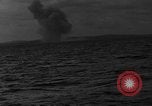
United States Navy heavy cruiser USS Quincy, CA-71 and battleship USS Nevada, BB-36, in World War II
Night action at sea during World War 2. A massive explosion occurs as a mine detonates. Flashes in the dark as tracers are fired at night and flares fall on the surface. United States Navy heavy cruiser USS Quincy, CA-71, painted in Camouflage Measure 31-32-33 series Design 18D. Next is the battleship USS Nevada, BB-36, painted in Camouflage Measure 22. ( Note: This was likely filmed between May 1944 and September 1944 when these two ships supported both the Normandy and Southern France Invasions.)
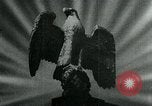
German Leader Hermann Goering officiates at a military funeral for World War II German pilot ace, Helmut Lent
Film begins showing German ace pilot Oberleutnant (Major) Helmut Lent, of a night fighter wing, with other pilots on the occasion of his 100th aerial victory, on July 31, 1944, when he was awarded the Knight's Cross of the Iron Cross with Oak Leaves, Swords and Diamonds. Next, a night fighter Messerschmitt Bf 110 twin-engine heavy fighter is seen taxiing out for takeoff at night in heavy rain. Scene shifts to a Nazi memorial service for Major Lent, who was killed in a crash on October 5, 1944. His flag-covered coffin is seen flanked by an honor guard. A display of his military awards is seen, also. View from beside the honor guard shows Field Marshal Hermann Goering raising his baton in salute as other attending the ceremony render the Nazi salute. Goering offers his condolences to parents of Major Lent. He then ascends steps toward the coffin and salutes. View from behind the honor guard as Goering delivers a eulogy. View Luftwaffe (Air Force) officers filling the seats of the hall, including famous ace, Adolf Galland. Goering steps from the podium and stands in front of the coffin, saluting with his baton, as the audience rises and all render the Nazi hand salute. With help of two soldiers, Goering places a large wreath of flowers before the coffin. Closeup of the wreath and Goering saluting with his baton. A large wreath with ribbons showing it is from the Furhrer (Hitler).
Launches of several U.S. Warships during World War II
Preparations for launch of the USS Hancock (CV-19) at Fore River Shipyard, Quincy, Massachusetts, on January 24, 1944. . Shipyard riggers removing supports from under the ship's hull. Platform at bow is decorated with bunting. Scene shifts to Brooklyn Navy Yard, New York, and the launching of the USS Missouri (BB-63), on January 29, 1944. Crowd gathered around the bow as the Missouri goes down the ways. Another change of scene to the Newport News Shipbuilding and Dry Dock Company of Newport News, Virginia. Here the ways are emptied following the launch of the Light Cruiser, USS Hancock (CL-81) on June 19, 1943. The Hancock can be seen in the water. Tugs attend to the newly launched Cruiser.

United States Army Air Corps film "The Truth About Ploesti."
Formations of B-24 Liberator bombers are seen in flight, headed for Ploesti, Romania, on August 1, 1943, during World War 2. Next, vertical columns of bombs are seen falling from the planes. Animated map of Europe shows Romania and Ploesti. It show paths of oil from the Ploesti oil fields to Germany. (Narrator states Ploesti provides 30% of Axis oil.) Map show path of 9th Air Force bombers from Libya to the Ploesti oil fields. Scenes shift to captured German films from 1944, showing the fires and destruction resulting from the constant B-24 raids. Huge black clouds rise from the area. Firefighters rush to combat flames. They direct streams of water on the conflagrations. (Commenter states: "Delayed action bombs prevented firefighters from rushing in, until too late.") Nighttime views of large fires and heavy smoke from 6 of Ploesti's 7 refineries ripped wide open. Film advances to August, 1944, showing Ploesti with the fires out, following Rumania's capitulation. Next, with some fires still burning, King Michael I of Romania, tours the site with military officers. They walk amidst the debris. Smoke rising near a rail marshaling yard. Against a background of dense smoke rising, a Slate is displayed showing the cost to the United States of the Ploesti raids, as 300 bombers and 3000 American airmen were lost.
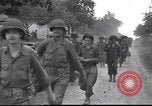
Troops return to a rest area, dig fox holes and a burning USAAF P-51 aircraft in France during World War II.
The United States Army in France during World War II. On 5th August, 1944 : soldiers of 35th Infantry Division, 137th Infantry Regiment, 3rd Battalion walk in columns while returning to a rest area near Le Mesnil-Robert. On 8th August, 1944 : an officer of 28th Division, 109th Infantry Regiment, 3rd Battalion shows replacements where to dig foxholes in Gathemo. The soldiers dig the foxholes. A United States Army Air Force ( USAAF ) P-51 Mustang burns after a crash landing near Vire. Ammunition in the aircraft exploding. The rescued pilot talks to two soldiers.
United States 1st Infantry Division soldiers advance into French cities and fight for Aachen during World War II.
The role of United States 1st Infantry Division (Big Red One) in various campaigns in Europe during World War II. United States 1st Infantry Division men fight in France as they advance further inland into the country. Soldiers relax, get a haircut and write a letter back home to their families. On July 25th , 1944 German aircraft launch an air attack. Infantrymen fight in the streets of a city in France. Combat engineers plant land mines. 1st Infantry Division soldiers enter Coutance, Mortain, Etampes, Meaux and Soissons. Soldiers around a monument at the Belgium border. 1st Infantry soldiers advance towards Aachen. Tanks fire as soldiers fight against the Germans in Aachen. Men on a machine gun. On October 25th 1944 Aachen surrenders to the Allies. U.S. Army armored vehicle drives over Nazi flag lying in a street.
CRITICALPAST.COM: About Us | Contact Us | FAQs - How to Order | License Agreement | My Account | My Lightboxes | Shopping Cart | Advanced Search | Featured Collections | Website Terms & Conditions | Privacy Policy ©2026 CriticalPast LLC.
License Agreement |
Terms & Conditions |
Privacy Policy
©2026 CriticalPast LLC.