


 Francais
 Deutsch
 Italiano
Refine Your Search
Myitkyina Burma 1944 stock footage and images
- Showing 463 to 468 of 6869 results more
more Hide
Hide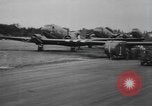
U.S. Paratroopers preparing, and then departing from England, to airdrop over Normandy during World War II
An airfield in England, filled with Waco CG-4A Gliders and their C-47 tow planes, in readiness for the invasion of Normandy, France, in World War 2. U.S. Army Air Forces intelligence officer briefing C-47 and Glider pilots and crews about conditions expected in the drop zones of Normandy before D-Day in World War 2. Brigadier General James Gavin,Commander of the 82nd Airborne Division, giving a final briefing to his paratroopers. A military chaplain holding final religious services for troops. General Dwight D. Eisenhower, visiting paratroopers of the 101st Airborne Division, as they prepare to depart on the night of June 5, 1944. U.S.Army paratroopers boarding their C-47 aircraft to depart for Normandy on June 5, 1944. Several are seen tying parapacks of heavy equipment to the aircraft for separate release. Paratroopers of 101st Airborne Division, loading equipment aboard a CG-4A Glider, and getting final briefing from their pilot. Other 101st Airborne troopers don personal equipment on the ramp near their C-47 airplane, which displays paint-striped wings and fuselage. Jumpmaster makes final check of his troopers. The paratroopers boarding their aircraft with heavy loads of equipment. C-47 aircraft take off towing their gliders.
Allied troops aboard ships and gliders head for Normandy, France for the D-day invasion during World War II.
Allied invasion of Normandy, France during World War II. U.S. General Joseph McNarney, Deputy Chief of Staff at a desk as he outlines the importance of June 6, 1944 the day Allied forces attacked the Germans in Normandy. He speaks about the decision to knock down the Nazis first and then the Japanese during the World War. He says that the invasion of Normandy was planned in November 1943. He also states how General Dwight D. Eisenhower, Supreme Commander of the Allied forces in Europe, planned and executed the invasion. He also speaks about how the U.S. Army Air Forces and the Royal Air Forces aircraft bombarded the coasts of Normandy prior to the D Day invasion. Past events show American soldiers getting onto landing crafts in England as they leave for the invasion. The soldiers aboard the ships in the English Channel. The soldiers read the Bible and comics, sleep and cook aboard the ships. On June 5th , 1944 the ships head towards Normandy for the invasion. In England gliders carrying paratroopers take off from an airfield to bombard the German positions in Normandy. British soldiers receive ration and work on motorbikes. TNT (trinitrotoluene) charges being prepared by soldiers tasked with demolition duties. British soldiers check their guns and other weapons prior to the invasion. Jeep and artillery being loaded onto aircraft.
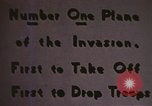
The first U.S. C-47 aircraft (and its crew) to drop Pathfinder Paratroopers on D-day eve in World War II.
U.S. Army Air Forces C-47aircraft , number 42-93098, of the 9th Troop Carrier Command Pathfinder Group, and its crew. This is the first aircraft and crew to drop American paratroopers (pathfinders) over France during the Allied invasion, in World War 2. The aircraft taxis on a British airfield. Crew of the aircraft are seen in front of it, including pilot, Lieutenant Colonel Joel Crouch, Copilot, Captain Vito Pedone, Navigator, Captain William Culp, Radio Operator, Harold Coonrod, along with two crew chiefs. Crew members shake hands and board the aircraft. Colonel Crouch waves from the cockpit of the C-47 (but has not started engines). Major J.L. Sweetman boards another aircraft. Colonel Crouche's C-47 taxis to where the Pathfinders will load up. View of Control Tower at RAF North Witham, with ambulance parked outside it. Three hours before takeoff.Colonel Crouch, is seen on a path near the airfield, with a Pathfinder Captain and Lieutenant, who will be aboard his aircraft and be the first to jump into France. They kid around. The Pathfinder officers note that Colonel Crouch wears paratroop wings. Later, two Pathfinders, of the 101st Airborne Division , with camouflaged faces and American flag insignia on their right shoulders, step from woods and pose momentarily. Pathfinder Paratroopers line up to board C-47 aircraft as Lt. Col. Crouch rides a scooter at the airfield. Aircrews and Pathfinders pose for photographs before taking off. The lead aircraft, number 42-93098, with Lieutenant Colonel Crouch at the controls, takes off from RAF Station North Witham at 9:54 PM, on June 5, 1944. to begin the invasion of France. (Note: This C-47 was shot down on September 18, 1944, during Operation Market Garden, and crash landed on Haamstede Airbase, Netherlands. Although shot at by German troops on the ground, pilot, Maj Joseph A. Beck, and Navigator Lt. Vincent J. Paterno, survived as prisoners of war. Copilot Capt Fred O. Lorimer and another crew member were fatally shot.)
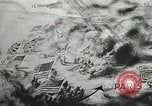
Allied Forces advance and French Army takes Paris in World War II.
Animated map shows American forces advancing toward Paris. Views of German troops disorganized and making their way individually among burning and destroyed military tanks and vehicles. A U.S. Army colonel confers with U.S. Armored unit officers, using hood of jeep as a table. U.S. Sherman tanks and tank destroyers moving along dirt roads toward Paris, at high speed and passing beyond the Orleans region. They move rapidly through groups of cheering French citizens in a French town. American armored units moving to bypass Paris. U.S. Army Air Force airplanes dropping maps to the armored units by parachute, because they were moving too fast to be supplied by ground. French forces, armed with American tanks, vehicles, and arms, are ordered to advance and take Paris. As they proceed, U.S. Army Air Forces support them from the air. Formations of P-51 fighter and B-26 bombers are seen. The French forces advance at rate of 25km per day. They are joyously welcomed as they pass through French towns on their way. Scenes of Paris. Local residents in line at a shop. German occupiers are seen beginning to leave Paris. A line of horse-drawn wagons is seen in the street. On August 14, 1944, Paris Police go on strike. They are seen drawn up in formation. August 15, 1944, the Gestapo left Paris. French citizens and police open fire on German Army vehicle. Parisians begin to hang the tricolor from their windows. French resistance fighters seen running in streets of Paris and firing weapons as they work to find remaining German forces. A doctor and several nurses run for cover. Parisians begin to fill the streets during liberation of Paris as elements of the French Army enter Paris. General Charles de Gaulle walking along a street in Paris.

U.S. soldiers being hit by shell fragments and their recovery after surgery in Naples during World War II.
A film titled 'Soft Tissue Wounds' shows U.S. soldiers being hit by shell fragments and their recovery after surgery in Naples during World War II. Bombs stacked on a field. U.S. sailors work around. A battleship's gun firing salvo. Fragments are removed by surgery from battle casualties. Reports of four cases handled in the Italian campaign of January 1944. The first case shows a soldier hit by a shell fragment. U.S. troops carry the soldier hit by the shell fragment in Italy. A truck moves ahead on a road. Wounded being carried into an evacuation hospital tent. A wound just below the buttock of a soldier. Primary infusion is given to the patient. The bleeding is controlled. The wound is dusted. Dressing completes an operation. The healing of the wound after a few weeks of the operation. The patient walks after healing. A U.S. soldier shows a scar under scapula. A U.S. LST (Landing Ship Tank) fires towards Anzio Harbor. [Note: script refers to British Hospital Carrier Leinster (#37) although footage appears to be of (British) Hospital Ship St. David (#27), later sunk by the Germans at Anzio in January, 1944]. A wounded soldier is carried on a stretcher aboard the hospital ship. Surgery is performed on the wounded soldier. The soldier on a bed after the operation. A ship underway at sea. A Red Cross ambulance and a truck transport the wounded soldiers to a hospital in Naples. The wound after one week of injury. The wound margins are refreshed. The wound edges are stitched. Removal of stitches after eight days. The soldier smokes a cigarette after recovering.
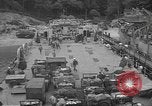
U.S. Military Vehicles loading into positions on upper deck of a Landing Ship Tank, in England, during World War II
Loading of USS Burnett County (LST-512) at Polgwidden (a.k.a. Trebah) beach, Helford River, near Falmouth, England during World War 2. View from top deck of the LST, as vehicles drive up a ramp and into positions on the deck. An M3 half track pulls up a trailer on the ramp of the LST. View from antiaircraft gun emplacement overlooking embarkation point. A sailor aboard the LST signals. Army vehicles are seen moving down a road and assembling at the embarkation wharf. (Note: Although these troops and equipment embarked on June 1, 1944, they remained aboard 5 days as foul weather delayed the actual D-Day landings until June 6, 1944)
CRITICALPAST.COM: About Us | Contact Us | FAQs - How to Order | License Agreement | My Account | My Lightboxes | Shopping Cart | Advanced Search | Featured Collections | Website Terms & Conditions | Privacy Policy ©2026 CriticalPast LLC.
License Agreement |
Terms & Conditions |
Privacy Policy
©2026 CriticalPast LLC.