


 Francais
 Deutsch
 Italiano
Refine Your Search
Nevada United States 1936 stock footage and images
- Showing 11995 to 12000 of 27248 results more
more Hide
Hide
Franklin Roosevelt nominated as Presidential candidate during 1932 Democratic Party National Convention in Chicago, Illinois
1932 Democratic Party National Convention in Chicago, Illinois. Democratic supporters carry signs with the names of US states and territories such as Mississippi, Florida and South Carolina. Keynote speaker Senator Alben Barkley of Kentucky speaks to the crowd, calling for the repeal of the Eighteenth Amendment to the United States Constitution, also known as the Prohibition. View of crowd in 1932 Democratic Party National Convention. William Gibbs McAdoo, a senatorial candidate of the Democratic Party for California, speaks to the crowd, nominating Franklin Roosevelt as the Democratic Party’s presidential candidate with the words, "he's entitled to the nomination" during the Democratic Party National Convention. Democratic Party National Convention crowd cheering as parabolic microphones turn to catch audio. Crowds cheer during the nomination of Franklin Roosevelt as the Democratic Party’s presidential candidate for the 1932 United States presidential elections.
Two WAC personnel and a soldier inspect destroyed and abandoned trains in Foggia, Italy (WW2)
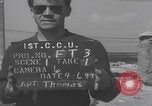
Two United States Women’s Army Corps (WAC) personnel (Corporal Mary B. McGillicudy of San Francisco, California and Private Barbara Brophy of Salem, Massachusetts) and Private Merrit Rawley (Great Barrington, Massachusetts) of the United States Army walking into marshalling yards in Foggia, Italy during World War II. A smokestack and piles of rubble are seen in the background. The WAC personnel and private walk over train tracks. View of completely demolished boxcar. The soldier helps the two WAC personnel to climb into an abandoned railcar. The two WAC personnel and enlisted man peer through windows of train. The trio inspects train wreckage. Corporal Mary B. McGillicudy and Private Barbara Brophy of the WAC smiling. Private Merrit Rawley stands in front of abandoned Ferrovie dello Stato (Italian state railways) trains.
President Harding presents Medal of Honor during funeral of American Unknown Soldier of WWI at Arlington National Cemetery
Funeral ceremony for the American Unknown Soldier of World War 1, just before burial at the Tomb of the Unknowns, (or Tomb of the Unknown Soldier) in Arlington National Cemetery. United States President Warren G. Harding arrives at the Memorial Amphitheatre in Arlington National Cemetery. The President along with military officers climbs up the stairs and enters the building. Chief Plenty Coos of the Native American Indian Crow Indian tribe arrives at the Memorial Amphitheater wearing full Indian regalia. Other Native American Indian tribesmen exit a car in native dress. The procession, including robed men playing brass and singing, arrives. Soldiers carry the casket and place it on a platform decorated with wreaths. Prayers are said by clergy present as people stand with bowed heads. Harding begins his speech with a two minute silence (at the Ampitheater and around the Nation). Camera pans over large, quiet crowd with Washington DC in the far distant backgound. President Harding speaks about the Unknown Soldier. He talks about the sacrifices made by American soldiers to uphold the freedom of the country. Slates indicate quotes from President Harding's speech, "We know not whence he came, but only that his death marks him with the everlasting glory of an American dying for his country....He may have been a native or an adopted son; that matters little, because the glorified the same loyalty, they sacrificed alike. He died for his country, and greater devotion has no man than this. He died unquestioning, uncomplaining, with faith in his heart and hope on his lips, that his country should triumph and its civilization survive." President Harding bestows the Congressional Medal of Honor on the Unknown Soldier, laying the medal upon the casket. United States and foreign military officers and dignitaries present pay tribute to the Unknown Soldier, including presentation of the Victoria Cross by Admiral of the Fleet Lord Beatty, on behalf of King George V of the United Kingdom.
Tactics of the 3rd Fleet and 7th Fleet in the naval battles and Japanese planes attack over U.S. carriers in Philippine sea.
Naval battle of Philippines between the United States and Japanese Imperial Navy. Animated diagrams show tactics of the 3rd Fleet and 7th Fleet in the naval battles on the Philippine (October 23-24, 29). Southern American unit destroys the battleships. Explains maneuvers employed in the Surigao and San Bernardino Straits. Shows Japanese planes attacking ships and being drowned. The carrier Princeton is damaged and sunk. Large smoke rises from carrier Princeton. American carriers are damaged. Several U.S. planes make crash landings on a carrier. United States Navy ace Commander Captain David S. Mc Campbell lands. He exits the cockpit and is greeted. (World War II period).
Washington Star parade float and Marine Corps band in Bicentennial Parade in Washington DC
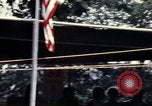
People gather to watch Bicentennial Parade in United States. Various Soldiers march holding flags in their hands. Cameramen take photographs of the event. A large float from the Washington Star newspaper decorated "76"and "Birthday" written on it and a large eagle bird. United State Marine Corps honor guard and band pass by and salute at the Presidential reviewing stand..People sit on the chair and watch the event. Army, Navy, Air force, Marines, Coast guard units march in parade.
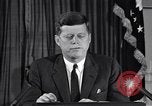
John F. Kennedy talks about the the New 18-Power Conference to be held on 14th March in Geneva, Switzerland
United States President John Fitzgerald Kennedy delivers a speech in Washington DC. President Kennedy seated on a podium as he delivers his speech. He speaks into the microphone. A flag of United States on the stage. He talks about the New 18-Power Conference on nuclear disarmament, scheduled for the14th of March, where the U.S. will present a statement of agreed principles that has been worked out with Soviet Union and endorsed by United Nations.
CRITICALPAST.COM: About Us | Contact Us | FAQs - How to Order | License Agreement | My Account | My Lightboxes | Shopping Cart | Advanced Search | Featured Collections | Website Terms & Conditions | Privacy Policy ©2026 CriticalPast LLC.
License Agreement |
Terms & Conditions |
Privacy Policy
©2026 CriticalPast LLC.