


 Francais
 Deutsch
 Italiano
Refine Your Search
Nevada United States 1936 stock footage and images
- Showing 13111 to 13116 of 27248 results more
more Hide
Hide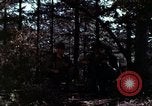
U.S. Army soldiers employ night vision principles and night vision devices for a successful night operation.
Night vision techniques and the use of metascope and starlight scope by the United States Army. Relaistic example of a night operation. Sergeant King obtains a starlight scope to scan the opposite bank.. Point man receives instructions for crossing the danger area. Soldiers advance. Soldiers in prone position takes aim with both eyes open above the barrel, and fire. One soldier signals to the rest. Two soldiers by the road. They take out a starlight scope and look through it. Sergeant King decides to continue and the patrol moves across. A soldier signals with a torch. They move through the jungle. Sergeant King radios the Company Commander about their approach into the parameter. Point man scans the area with a starlight scope to locate the friendly patrol. Recognizing the patrol leader's signal, the guard signals him to move forward. The patrol moves ahead while the guard continues to scan. The patrol returns, mission accomplished. Soldiers employ the night vision principles of scanning and off center vision, as well as night vision devices for successful night operations.
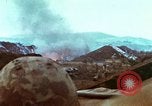
U.S. Air Force Military Airlift Operations in 1968 during the Vietnam War, and during 1976 border tensions in Korea
View from a U.S. Marine bunker as enemy shell explodes nearby, during the siege of Khe Sanh in 1968 during the Vietnam War. The United States Marines in the Battle of Khe Sanh firing mortars and a 105mm howitzer from their bunker. Enemy shells exploding on the tarmac, where American Air Force C-130 aircraft are parked. Marines rushing wounded comrades on stretchers, to C-130s for evacuation. Scene shifts to U.S. Marine Corps Lieutenant Colonel James P. Sheehan, standing at Camp Pendleton, California. (He was a company commander in the siege at Khe Sanh.) As he describes the C-130 aircraft support operations, a contingent of marines marches past, behind him. Scene shifts to a civilian narrator standing in the Military Airlift Command (MAC) Headquarters Command Center at Scott Air Force Base, Illinois. Among other things, he describes MAC support to the Tactical Air Command in Korea. Camera focuses on MAC air routes in the vicinity of the Philippines, Japan, and Korea. Next, is seen view of airfield at Mountain Home Air Force Base, Idaho, briefly at sunset, and then at night, as pilots of the 366th Tactical Fighter Wing and their F-111 aircraft prepare to depart for Korea, in response to border tensions, in August, 1976, after North Korean forces killed two American officers ("Korean Axe Murder Incident" and resulting "Operation Paul Bunyan"). Ground crewman directs a taxiing F-111 using lighted wands. The F-111s takes off. One of them is seen landing after the 7 thousand mile flight to Korea, as Major Paul Malandrino,Jr. (unseen) of the 366th Wing, speaks about MAC's airlift support. A C-141 MAC aircraft is seen landing. View of a C-141 with tail doors open and its cargo of military equipment on the ramp behind it. Glimpse of a marine with rifle and earphones, guarding equipment on the airfield ramp. Closeups of F-111 aircraft taking off.
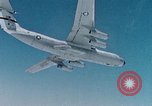
USAF Military Airlift Command (MAC) aircraft on missions to England, Germany, Spain, Turkey, Karachi, Manila, Japan, and Australia.
View of a United States Air Force Military Airlift Command C-141 aircraft in flight overhead. Pilot and copilot in cockpit of a C-141 inflight. A flight engineer and navigator at their respective stations in the aircraft. C-141 aircraft from the 437th Military Airlift Wing, at Charleston Air Force Base, South Carolina, taxis on the ramp at RAF Station, Mildenhall, England. A C-130 on final approach, passing thatched roof cottage and stone house nearby. A C-141transport aircraft flying low over a highway as it descends to land at the Rhein Main Air Base, Frankfurt, Germany. The C-141 touching down on the runway. View of trams running in the city of Frankfurt. Quick closeup of airport control tower at Torrejon Air Base, near Madrid, Spain and camera pans to a C-130 aircraft parked on the ramp. View from the air of the las ventas bull ring, in Madrid. The Banco Central building as viewed from the Plaza de la Cibeles, in Madrid. A MAC C-141 taxiing to park at the Incirlik Airfield, Adana, Turkey. Flowers in gardens at the Sultanahmet Mosque in Istanbul. Brief sunset view of an unidentified mosque. view of the passenger terminal at Karachi International Airport, Pakistan. Camera pans across a ramp to a MAC C-5 aircraft with its nose loading doors open. View of the Pasig River and buildings, from aircraft flying over Manila, Philippines and ground-level view of a central square. A crowded commercial business and shopping area of Ginza, Tokyo, Japan. Japanese pedestrians on the sidewalks and streets and views of Japanese people in mid 1970s fashions walking on streets of Tokyo. The Sydney Harbour Bridge (and Sydney Opera House in background), in Sydney, Australia. A C-5 inflight departing a coastline. Interior views of C-5 aircraft cockpit, with crew members at work. A navigator with sextant mounted in roof of aircraft.
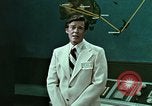
MAC aircraft transport and deliver relief material, bring back prisoners of war, and transport dignitaries
A man talks about American MAC medical missions from the MAC command headquarters. A map shows the path taken by a medically equipped C-141 from Irkutsk to Yokota Air Base hospital, Japan. Ground crewmen signal to a United States Air Force Military Airlift Command (MAC) aircraft. MAC planes deliver relief material to people during the floods in Pakistan. Men move towards the helicopter along with supplies. Supplies delivered during the famine and drought in North Central Africa. Men carry sacks of China rice. Destruction caused due to an earthquake in Guatemala. Cartons of clothes and other supplies loaded into a MAC plane. Plane taxis and takes off. Pilots talk on radio. U.S. prisoners of war brought back from Vietnam during Operation Home Coming. U.S. President Jimmy Carter exits a helicopter at Andrews Air Force Base and shakes the hand of a general. President Jimmy Carter climbs steps to Air Force One and enters the Boeing aircraft. Air Force One takes off from Andrews Air Force Base.
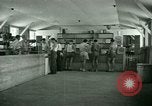
Prisoners purchase toiletries, soft drinks and cigarettes from a shop in.
A POW war camp in Southern United States during World War 2. German prisoners of war purchase toiletries, cigarettes and soft drinks. Toiletries displayed on shelves of store. Close-up view of hand of a man taking out a glass soft drink bottle from a refrigerator case.
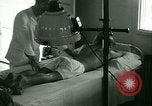
German and Italian Prisoners of War during World War II in U.S. operated POW camp.
German and Italian Prisoners of War receive treatment and massage at a POW camp in the United States during World War 2. Prisoner receives massage and Infra- red ray treatment in camp hospital or medical ward. Prisoner dictates letter to another prisoner. Doctor uses a stethoscope. Prisoner lies on a bed under mosquito net.
CRITICALPAST.COM: About Us | Contact Us | FAQs - How to Order | License Agreement | My Account | My Lightboxes | Shopping Cart | Advanced Search | Featured Collections | Website Terms & Conditions | Privacy Policy ©2026 CriticalPast LLC.
License Agreement |
Terms & Conditions |
Privacy Policy
©2026 CriticalPast LLC.