


 Francais
 Deutsch
 Italiano
Refine Your Search
New Mexico United States 1946 stock footage and images
- Showing 13477 to 13482 of 30777 results more
more Hide
Hide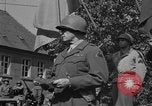
U.S. 9th Armored Division ceremony in Weiden, Bavaria, marking the end of World War II in Europe
Scene opens with closeup of Major General John W. Leonard, Commanding General of the U.S. 9th Armored Division, addressing his troops at the Schlörplatz in Weiden, Bavaria. He has assembled them to hear the news of Germany's surrender, ending World War 2, in Europe. A color Guard stands behind him. Upon hearing the news, the troops raise their arms and cheer, and partially break formation to converse with each other. They resume their formation and listen, as General Leonard continues to speak. Closeup of him reading from some notes. Scene shifts slightly, showing Leonard and the color guard in front of the Gustav von Schlör monument with famous old oak trees behind it. Next, the troops are viewed from the front, as they stand at Parade Rest with buildings near the square behind them. General Leonard walks down from the makeshift podium and passes in front of the assembled soldiers, and shakes hands with his Chief of Staff, Colonel Walter Burnside. Closeups of them shaking hands and conversing. Scene shifts to a unit Chaplain, giving a prayer of thanks for the end of hostilities. General Leonard and Colonel Burnside walk away from the gathering, as the color guard furls the colors. Suddenly an officer walks up on the grass and retrieves something from the base of the Schlör monument and quickly walks back into the square. A Captain has the color guard unfurl the colors again, which include the stars and stripes flanked by the Division colors and the General's two star flag. Next the entire assemblage poses as they are photographed from a high point some yards away. The view shows the color guard standing on grass in front of the Schlör monument with the massive oaks behind, surrounded by assembled troops, including some in a tank. Scene shifts to rear of the assembly, showing troops in armored vehicles at the back of troops in formation. Some armor is moving along a road behind the assembly. Another long shot of the assembled troops is followed by a closeup of them being called to attention. General Leonard walks into the center of the assembly, followed by several officers. They salute the colors and General Leonard converses with the Division Chaplain, who then steps into the grass in front of the color guard, where he removes his helmet, raises his arm, and gives a benediction as all bow their heads. (Note: Armored vehicles seen in this film include M4 Sherman and M36 Tank Destroyer.)
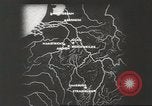
German Army Group Oberrhein undertakes Operation Nordwind, in Alsace, during World War II
German troops are seen in white winter uniforms, during World War 2, with some holding panzerfaust. Narrator mentions combat against Anglo-Canadian forces, and then speaks of preparation for the New Year's offensive. Heinrich Himmler, as commander of Army Group "Oberrhein" had ordered the launch of Operation Nordwind to recapture Strasbourg. Accordingly, On New Year's Eve, 1945,The Germans launch an offensive (Nordwind) into Alsace, attacking the Allied 6th Army Group at multiple points. On January 5, 1945, Army Group Oberrhein begins a support attack by General Otto von dem Bach's XIV SS Corps, the 553d Volksgrenadier Division, reinforced with armor and commando units. They are seen crossing the Rhine river in small boats at Gambsheim, just ten miles north of Strasbourg. Allied aircraft bomb German positions on the West bank of the Rhein (Rhine) River. The German troopers seize high ground West of the Rhein. German troops are seen firing recoilless anti-tank weapons in a field, Views of knocked out British and American tanks. Abandoned German Jagdpanzer IV faces a U.S. Tank Destroyer. German troops are seen advancing into town North of Strasbourg (Herrlisheim, Drusenheim, Offendorf ?). Scenes of destruction in town. Words: "Haus Bewohnt Civil" scrawled on homes to identify them as civilian occupied.
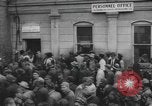
After solving problems related to housing, war production goes up at a shipyard in Mobile, Alabama in World War 2.
War industry leads to problems in Mobile, Alabama during World War II. A large number of people gathered outside the Personnel Office in Mobile. Congress provides 2 million dollars for housing of war workers (building tanks, guns, ships and other war material in factories, manufacturing plants, and shipyards for the war effort). Shows racially segregated housing and facilities for African American workers versus white workers. Views of a cleared slum area where African Americans had been living been living in poor quality homes before the war. Shortage of housing is addressed with new housing for African American war workers, "Certified Colored War Workers". African American children play and eat at a nursery. Dormitory units for single war workers equipped with gymnasium and other basic facilities. Government owned trailers built by the Maritime Commission near a ship yard. The problem of providing a day nursery is undertaken. Modern permanent homes for war workers who can afford them. After meeting the problems like housing and sanitation, production goes up at the ship yard. A new ship being launched at the ship yard. A sign on the ship reads ' Cedar Mills'.
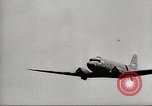
U.S. troops and their improvised movie theaters in combat zones during World War II
A U.S. Army Air Forces C-47 airplane carrying movies among its cargo bound from New Caledonia to troops stationed at Bougainville, Solomon Islands, during World War 2. Views inside the airplane cabin, where troops sit alongside the cargo. Glimpse from cockpit of aircraft on final approach to land on the airfield. Troops unloading canisters of movie films from the C-47. (Handing the movie reels out of the C-47 is Russ Laming of the 13th Troop Carrier Squadron, a.k.a the Thirsty 13th.) Army truck carrying mail bags and movie films driving away from the airfield. U.S. soldiers walk to their makeshift movie tent from foxholes and fortified positions. Sign on the tent reads: "Bougainville Roxy, Tonights feature." Movie projector seen inside the tent, as soldiers enter. Views of movie theaters made out of logs and other available materials at various locations in the Pacific theater of operations. They range from simple and rugged to more elaborate, at rear locations, away from the front lines. U.S. servicemen racing to get the best seats in a theater, as the doors open for a movie. Servicemen walking into an open air theater. They are called to attention as the unit commander arrives and takes his seat. View of wounded soldiers recuperating in a hospital,where a movie camera is being set up in the ward. They are tended by a French nurse wearing a "flying nun" hat (possibly North Africa). Servicemen and women being seated in an outdoor theater, and other places, waiting to watch movies. Allied troops join Americans to watch U.S. movies. A theater sign announcing the week's movie program at a Royal New Zealand Air Force post in the jungles. Courier carrying film canister from a jeep into a jungle theater. Soldier mounting the film on projector. U.S. troops watching a movie outdoors, during rain storm.
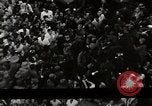
Events related to Cuban Missile Crisis: Cuban revolution in 1959; Khrushchev and Castro in 1960; Soviet missiles withdrawn 1962
Cheering Cuban crowds seen celebrating Fidel Castro's successful overthrow of Batista, in 1959, in Havana, Cuba. Fidel Castro with Nikita Khrushchev outside Hotel Theresa in Harlem, New York City, before meetings at the United Nations building in New York City, during the opening of the 15th General Assembly (September 19, 1960). View of Castro walking in front of UN building entrance. View of Soviet Navy ships carrying missiles from Cuba, back to the Soviet Union, in 1962. Nikita Khrushchev gesturing and talking outside a building. Newspaper photograph of Soviet Foreign Minister Andrei Gromyko conversing with U.S. President John F. Kennedy, who is seated in his rocking chair at the White House.
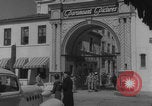
Film executives meeting in Los Angeles; Work Progress Administration staff and actors under WPA Federal Theater Project prepare and perform on stage
View of Paramount Pictures movie studio entrance. Hollywood film executives such as Paramount Picture’s Adolph Zukor in a meeting. View of Motion Picture Daily with news saying “Federal- NBC Units to Use Film Houses”. Two men buy theater tickets for a vaudeville show by the Federal Theater Project of the Great Depression organization called the Works Progress Administration (WPA). Works Progress Administration staff under the Federal Theater Project create props and stage design. A Works Progress Administration carpenter uses a Delta woodworking machinery. Works Progress Administration costume designer shows a design for a dress. Close up shot of Works Progress Administration costume designer. WPA technicians work on stage set design. A Works Progress Administration tailor measures a portly actor’s waistline. Seamstresses working in the costume department of the Federal Theater Project. Artist painting a background for a stage play. A seamstress adjusts a high slit dress of an actress. A milliner arranges a Fascinator, with tulle and pom-poms, on an actress’ head. Two actors and an actress practice a dance number together. Men and women dancers practice a dance. A pair of dancers perform a no-touch tango. Theater marquee saying, “Oh say can you sing WPA Music Comedy”. Newspaperman announcing show business news on newspaper. Orchestra plays inside a theater. Actors and actresses, in different period costumes, perform “Oh Say Can You Sing” as an ensemble after the curtains opened. View of faces of audience members as they clap and smile after watching the performance.
CRITICALPAST.COM: About Us | Contact Us | FAQs - How to Order | License Agreement | My Account | My Lightboxes | Shopping Cart | Advanced Search | Featured Collections | Website Terms & Conditions | Privacy Policy ©2026 CriticalPast LLC.
License Agreement |
Terms & Conditions |
Privacy Policy
©2026 CriticalPast LLC.