


 Francais
 Deutsch
 Italiano
Refine Your Search
Ohio-State-football stock footage and images
- Showing 11833 to 11838 of 24492 results more
more Hide
Hide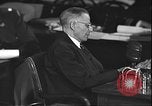
General Short speaks about the Japanese attack on Pearl Harbor occurring without notice, during an investigation.
Joint Congressional Investigation of the Pearl Harbor attack in the United States. Officials gather in the court room. Officials seated at their desk and Retired U.S. Army Major General Walter Short addresses them about the Pearl Harbor attack. He states that no mention was ever made by the Japanese for the attack on Hawaii. The United States had no idea to be prepared for the Japanese air raid on Pearl Harbor. On December 7th 1941. The United States Army was not notified about the attack even at that time. (World War II period).
President Johnson delivers a speech and people express grief after the assassination of Martin Luther King Jr. in the U.S.
From production "April Aftermath", showing mourning and grief throughout the United States after the assassination of Martin Luther King, Jr. on April 4, 1968. The flag of the United States is lowered at half mast. People watch on television President Johnson's speech about the assassination of Martin Luther King Jr. (leader in the American Civil Rights Movement). Families are seen at home gathered around the television to watch the speech. Views of several families of husband and wife and children gathered in their living rooms viewing television sets to watch the address. Most are white families. One family is an African American family watching television. President Lyndon B. Johnson delivers a speech. The Seal of the President of the United States on a dais. President Johnson declares April 7 as a national day of mourning for the civil rights leader. Mourning ceremonies are conducted in all churches and pilgrims of the United States. Television broadcast the faces of leaders and the news about the assassination and people expressing grief. A large crowd of civilians gather at a condolence meet. People in a line enter a building to express their grief. They come outside the building. A large crowd of civilians gather and attend the condolence ceremony. They express grief.
Americans voting and electioneering in national election on November 7, 1944, during World War II.
On November 7, 1944, during World War 2, citizens of Marblehead, Massachusetts, United States, are seen entering the Old Town House (built in 1727) to cast ballots in 40th quadrennial presidential election (in which incumbent President Franklin D. Roosevelt is running for an unprecedented 3th term). Scene shifts to inside a polling place, where voters stand in booths to privately mark their ballots. Others are seen depositing their marked, folded paper ballots in a collection box, as they finish voting. Closeups of several aged voters. One, an African American man, the narrator says is old enough that he was sold as a slave early in his life. Scene shifts to a full-blooded Native American Indian voter in Maryland, entering his polling place to cast a ballot. An old man who is a United States Civil War veteran, is shown sitting on a bench in a park in Los Angeles California, with friends. He holds a newspaper and wears a Civil War Union cap. A U.S. soldier wearing field uniform and steel helmet, looks at a bulletin board containing State-by-State voting information. A Technical Sergeant marks his paper ballot and leaves to mail it. A soldier takes an oath confirming legitimacy of his ballot as he turns it in at a military collection site. Sign in commercial establishment window of a U.S. town declares "Election Today." A bank window sign reads: "this Bank will observe Election Day, Tuesday, November 7th, a Legal Holiday." Sign in Bar window reads: "Bar Closed during Election Hours, Tuesday, Nov.7, 1944. Will Open at 9 PM." Republican political party workers advertise for their Presidential candidate, Thomas E. Dewey. Democratic political party workers drive a truck towing a trailer office plastered with advertisements for their candidate, Franklin Roosevelt. Republican and Democratic party voter information booths are seen next to one another where advertise their respective candidates to passersby on the sidewalk. A voting place identified by white wash sign on a window, and another, in a rural setting, by a sign pointing to it on a fence post. More signs and voters showing sentiments for their candidates. One displays a picture of Dewey on his car. A woman wears a large Roosevelt button on her sweater. Views of more imaginative signs for candidates and for ballot issues. People discussing ballot issues on the streets.
During a presidential election debate in the US, John F Kennedy and Richard Nixon comment on the necessity to defend Berlin.
The third Kennedy-Nixon Presidential Debate in the United States. Moderator Bill Shadel introduces the candidates and tells that candidates will not share the same platform. Republican candidate U.S. Vice President Richard M Nixon is in a Los Angeles studio and Democratic candidate Senator John F Kennedy is in New York. He also introduces the panel of correspondents who will question the candidates. The panel includes Frank McGee from NBC News, Charles Van Fremd from CBS News, Douglass Cater from Reporter magazine and Roscoe Drummond from New York Herald Tribune. Frank McGee asks Kennedy whether he would take military action to defend Berlin. Kennedy answers and says that the U.S. has contractual right to be in Berlin coming out of the conversations at Potsdam and of World War II. He states that the United States must meet its commitment on Berlin in order protect the security of Western Europe. He concludes by saying that the U.S. will meet its commitments to maintain the freedom and independence of West Berlin. Nixon disagrees with Kennedy's statement that the Republicans are trigger-happy and lead the nation into wars. He talks about the Democratic presidents who led the U.S. into wars. He concludes and states that he thinks there isn't any question about the necessity of defending Berlin.
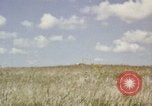
A train moving on the Union Pacific Railroad depicts the First Transcontinental Railroad Line of the U.S. started in 1869.
A train moving on the Union Pacific Railroad in the United States. A herd of cattle advances across the Americn plain. Close up view of Long Horn cattle. A train pulled by a black steam locomotive moving on the Union Pacific Railroad depicts the First Transcontinental Railroad Line of the United States opened for through traffic on May 10, 1869. The locomotive engine of the train as it emits black smoke. Mountain and western United States landscape views. A windmill in operation. Distribution of water and farmlands in the Western United States. A herd of cattle crossing a river.
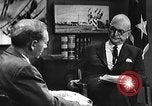
During an interview in the US, Lt. Gen. Ira Eaker talks about daylight precision bombing and B-17 Flying Fortress aircraft.
An interview of United States Air Force Lieutenant General Ira Eaker conducted by Dr. Maurer in the United States. General Eaker talks about daylight precision bombing, British and U.S. night and daylight bombing. He says that a few United States Army Air Force B-17 Flying Fortresses Could survive against several German aircraft. He further states that if they reduced the number of these aircraft by razing factories, then they didn't have to worry about German bombers.
CRITICALPAST.COM: About Us | Contact Us | FAQs - How to Order | License Agreement | My Account | My Lightboxes | Shopping Cart | Advanced Search | Featured Collections | Website Terms & Conditions | Privacy Policy ©2026 CriticalPast LLC.
License Agreement |
Terms & Conditions |
Privacy Policy
©2026 CriticalPast LLC.