


 Francais
 Deutsch
 Italiano
Refine Your Search
Ohio-State-football stock footage and images
- Showing 15703 to 15708 of 24492 results more
more Hide
Hide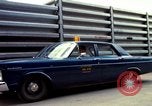
U.S. Air Force Colonel Richard C Catledge enters maintenance shop and talks to NCOIC at Bien Hoa Air Base in Vietnam.
United States Air Force Colonel Richard C Catledge visits maintenance shop at Bien Hoa Air Base in Vietnam. Colonel Catledge leaves staff car and enters the maintenance shop. He salutes the Non-Commissioned Officer in Charge (NCOIC) and walks to a group of airmen at work. Airmen work on jet engine. Colonel Catledge talks to NCOIC. Airman cleans the jet engine. (Vietnam War period).
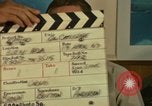
U.S. Air Force Colonel Catledge speaks about organization's mission and duties at Bien Hoa Air Base in Vietnam.
United States Air Force Colonel Catledge speaks about organization's mission in his office at Bien Hoa Air Base in Vietnam. Colonel Catledge speaks about the 3rd Tactical Fighter Squadron's mission, his duties, and the devotion to duty shown by his personnel in seven days operation. He talks about the 5 Tactical Fighter Squadron and their responsibilities. He talks about their major mission that is to support the Vietnamese. (Vietnam War period).

U.S. Air Force Colonel Catledge talks about his busy schedule and relaxation activities at Bien Hoa Air Base in Vietnam.
United States Air Force Colonel Catledge talks about relaxation places at Bien Hoa Air Base in Vietnam. He talks about his and 3rd Tactical Fighter Squadron's busy schedule of seven days operation. They go to swimming pool and hand ball court for relaxation. (Vietnam War period).
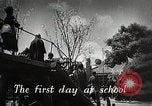
Infusing Nationalistic feelings in Japanese students.
Japanese children pray and bow their heads to the national flag.The totalitarian government infuses state shintoism in young children and it often blends religion with nationalism.This is done in order to destroy free thought and individuality among young Japanese.Minimum of six years of schooling is compulsory in Japan and all schools are under municipal control.Children draw and paint a picture of a bird and are taught to admire a cherry blossom tree.Fifth grade students read from their text books in a reading period.These government approved textbooks are poor in quality.

Japan's possible shortages of material for clothing in World War 2. Japanese domestic production of cotton, wool, and silk
Illustrated discussion of Japan's limitations in natural resources prior to World War II. Workers shown in textile mills which employed more than half of Japan's factory workers prior to the war, satisfying domestic and export needs. Analysis of the natural resources. Cotton thread is rolled on the spindles in the Textile mills in Japan. Textile mills produce fabric in Japan. Japanese women work in the textile mills. Bales of raw cotton imported from Japanese possessions in Korea and Formosa, and from the United States,India, Brazil and China. They are transported via horse carts and manually pushed on small rail carts to storage buildings for stockpiling. People cultivating some of the small amount of cotton grown in Japan. Horses and cattle used to pull plows in rice paddies. Pigs used as scavengers. Woolen fabric is produced from wool. Some of Japan's very few sheep being sheared for wool. Women working in fields of mulberry trees where silk worms flourish on their leaves. Views of the silk being spun onto spindles in a factory. Silk fabrics being stacked. Illustrated summary highlights Japanese domestic shortages of cotton, wool, and leather needed for clothing.
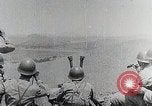
Role of metals in Japanese war against China during 2nd Sino-Japanese Conflict
Scenes of Second Sino-Japanese War, circa 1938. Japanese soldiers observing battlefield from a ridge. Japanese artillerymen firing field pieces. Flight of two Mitsubishi Ki-15-1 light bombers in formation, later called "Babs" by the Allies and known as a C5M in Japanese Navy usage. Aerial view of Japanese bombs falling on Chinese cities. Chinese citizens, including an injured woman, seeking shelter from bombing. Aerial view of Chinese ship being strafed by Japanese aircraft. The ship explodes. Downed Japanese warplanes burning. Scenes of destruction from bombing of oil facilities. Iron ore being moved in Japanese rail cars. Steel plants around Yawata, Japan. Numerous containers of molten steel inside a steel plant. Hot Steel ingots being moved. Animated map shows locations of iron ore deposits in Japan. Scrap steel being imported that, narrator states, helped boost Japanese wartime production to 12 million ingot tons in the Sino-Japanese war. More views of open rail cars moving alloying elements to a steel mill. Open mining using explosives. Mining operations for copper and bauxite (aluminum ore). Japanese miners shoveling ore by hand into open rail cars. Open rail cars moving in both directions on parallel tracks. (Note: Although some narration refers to 1941 Japanese production, the images are from earlier period.)
CRITICALPAST.COM: About Us | Contact Us | FAQs - How to Order | License Agreement | My Account | My Lightboxes | Shopping Cart | Advanced Search | Featured Collections | Website Terms & Conditions | Privacy Policy ©2026 CriticalPast LLC.
License Agreement |
Terms & Conditions |
Privacy Policy
©2026 CriticalPast LLC.