


 Francais
 Deutsch
 Italiano
Refine Your Search
Ohio-State-football stock footage and images
- Showing 15709 to 15714 of 24492 results more
more Hide
Hide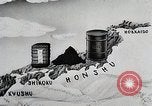
Japanese natural resources related to Second Sino-Japanese war and World War II
Animated map illustrating shortage of indigenous raw materials in Japan. As stockpiles vanish during Second Sino-Japanese war, Japan's domestic sources supply only 10% of the nation's needs for war. Animated sequence shows lack of steel, aluminum, copper, and power generation for the conduct of war. But one of the nation's greatest resources is the population of skilled Japanese workers, who are shown at various high tech jobs, as well as on the farms and in the fishing industry. Japanese workers are seen who work for the Zaibatsu (four ruling families of Japan). Banks of Japanese women typists and women in a factory. Young women painting faces on a "Kewpie doll." A Japanese family at dinner time. Women engaged in fabric spinning. Animated graphic illustrates Japan's war-related resources for World War 2, by showing a Japanese soldier standing astride map of Japan with lines extending to sources of needed raw materials from Japanese possessions in Korea, Manchuria,Formosa, China,Indochina,Malaya, and its network of Pacific Islands. Final scene displays copy of Los Angeles Times newspaper with headline reading: "Jap Supply Lines Blasted." It also features a story that appears to refer to the U.S. 6th Army invasion of Leyte in the Philippines, in October, 1944 (when General MacArthur waded ashore and stated,"I have returned"). (Note: Although produced during World War 2, this film shows prewar scenes of Japan. The animated illustrations and maps and, of course, the newspaper shown at the end, date from World War II.)
Farmers and fishermen in village, a man reads a book with train illustration in Japan
Black and white map showing Japan, the Korean peninsula, Manchukuo (Manchuria). Animation traces the borders of Japan. European people ride carriages on rail track. A boat with the United States flag sailing in a bay. A small boat sailing a river with rocky riverside in Japan. Japanese fishermen on the riverside pull the small boat using ropes. A mill wheel in a Japanese village. Farmers with carrying poles and baskets walking on the field. An elderly man wearing a Haori hakama reads a book with a train illustration. A Japanese drawing depicting a locomotive train.
Contrast between Chinese and Japanese national aspirations before Second Sino-Japanese War and WW2
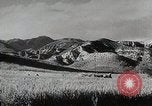
Film reviews China's four thousand years of history. Scenes showing mountains, woods, and a farmer plowing with oxen in rural China. A mass of Chinese people tightly packed together as they walk along a narrow alleyway in a town. Fleeting glimpses of two Chinese soldiers; a child; a woman; a woman and child; and numerous other Chinese people in a montage splayed across a background of moving crowds. An open book of Chinese characters. Mariners compass superimposed on an moving image of an ocean liner. Views of several large-scale astrolabes and world globes. A Chinese worker placing porcelainware in an oven for glazing. A man spooning gunpowder into a dish, followed by glimpse of a Chinese firework igniting. Chinese paper Dragon and street celebrations. A book entitled: "Analects of Confucius," in which, on page 105, is found the admonition: "What you do not want done to yourself, do not do to others." Ancient statues of two men and of two riderless horses behind them. Tall Chinese pagodas. Chinese artillery field pieces firing. Chinese troops advancing in several situations during conflict with Japan. Map of China and illustration of Japanese samurai warrior emblazoned across it. A book entitled: "The Tanaka Memorial, (Japan's Dream of World Empire)." A still photograph of Japanese Foreign Minister Baron Tanaka Giichi in military uniform, with other Japanese officers. Excerpts shown, ostensibly from this book. Emperor Hirohito is seen with Baron Tanaka, and other officers, all in military uniforms, in front of a tent, circa 1928. Automated map ostensibly illustrates the elements of a Japanese plan of conquest, starting with Manchuria for raw materials; the absorption of China for manpower; followed by a sweep South for riches of the Indies and Australia; and lastly a sweep eastward to crush the United States. More views of crowds of Chinese people are followed by an. animated map illustrating early World War II events, including Nazi Operation Barbarossa against Russia, approved by German leader Adolf Hitler in 1940, and the Nazi German occupation of Denmark, Norway, and other European countries. (Note: Actual existence of the so-called "Tanaka Memorial Imperialist Conquest Plan" is a subject of debate among historians.)
Views of China and Japan in the period leading up to the 2nd Sino-Japanese war
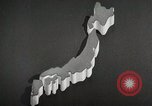
Film opens with outline map of Japan shown in contrast to 20 times larger China and figures representing China's 6 times greater population. Map of China is shown in pieces representing its numerous internal fiefdoms. In contrast, Japanese soldiers are shown marching in review before their singular leader, Emperor Hirohito and other national military leaders. Film shows contrasting 20th century characteristics of China and Japan. Sun Yat-sen, who figured prominently in post-Imperial China, and is considered the founding father of the Republic of China, is shown speaking to crowds. Narrator states that in 1911, this man fathered a peoples' revolution which brought to an end, China's ancient Imperial government. View of Chinese people marching and carrying flags and banners. Books are shown comparing China's Sun Yat-sen to America's George Washingon. Sun Yat-sen's political statement, shown in Chinese, contains words similar those in Abraham Lincoln's Gettysburg address. View of schools and colleges built in the new Republic of China. Chinese students shown in libraries. A couple dining in a Chinese hotel restaurant, overlooking other buildings. A tall clock tower looms at the same height outside their window. Steel being erected for a tall building. Architects at work. Scientist looking through a microscope. Technicians at work in a chemistry laboratory. Medical staff and patients in a modern hospital. Children in school under compulsory education program. Chinese people exercising their freedoms of expression and religion. The funeral of Sun Yat-sen, in 1925, attended by his successor, Chiang Kai-shek, and other Chinese leaders in military uniforms. Chinese people attending an outdoor ceremony. Examples of areas needing modernisation. Chinese workers using manually operated machinery to process fabrics. Commercial vessel plying a river using wind and sail only. Views of steam locomotives and trains being introduced to link parts of China. Trucks moving goods over roads (still unpaved). Miners working in open air mines, digging coal and iron. Molten tin being poured from a crucible. Machines performing complex tasks in a fabric mill and women tending spinning and knitting machines. School children engaged in collective outdoor games and exercise drills. Scene shifts to Japan, where Emperor Hirohito, on a white horse, leads military leaders in reviewing Japanese forces. A formation of Japanese Model 97 medium tanks passing in review, with tank commanders saluting from their turrets. Glimpse of Japanese steel mill. Headline in World-Telegram newspaper of 14 february, 1934, reads: "Tokyo House Passes Huge Arms Budget." A Los Angeles newspaper of 23 November, 1934, expands on the same story. New Orleans Times-Picayune, Sunday, 5, May, 1936, reports that Japan is strained by its huge arms costs.
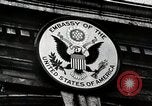
Beginnings of the Second Sino-Japanese war
Sign over American Embassy in China. Colonel William Mayer, former military attache in that embassy relates events precipitating Second Sino-Japanese war. Scenes of the Marco Polo bridge near Peking, on night of July 7, 1937, as Japanese artillery bombards the area. Animated map shows movement of Japanese forces out of Manchuria to occupy Peiping and Tientsin. Victorious Japanese troops stand atop a building, raising their flags and shouting cries of victory. Japanese army officers sit around a table smiling and contended and others walk in a group. Chinese artillery crews are seen retaliating as they fire field pieces at Japanese positions in Shanghai. Shells explode in background, and Chinese infantry advance through damaged buildings and rubble. Animated map shows Shanghai and other cities, and film transitions to view of the bustling city of Shanghai on the Yangtze River. In the seaport, large ocean liners and freighters, as well as tug boats and Junks, are seen. What looks like a Japanese Tachikawa Ki.54 Type 1 transport plane takes off over a Chinese pagoda. Double-decker buses travel through the streets. Rickshaws are also seen. Map outlines the foreign residential areas of the French Concession and the International Settlement. American, British and Japanese flags are shown in the International Settlement. Detachments of troops from Japan, Britain, France, and United States Marines are seen. A U.S. Marine is posted as a sentry at the Shanghai Power Company. Coolies carry heavy bucket on a long pole. British, French and Japanese troops also performed sentry duties. Japanese troops and armored cars are seen. A scuffle breaks out in August, 1937, and Japanese soldiers start moving in trucks, take up firing positions, and begin firing guns from their armored cars. Map shows Chinese counterattack pushing the Japanese contingent toward the Khangpoo River. Next it shows Japanese warships and reinforcements in the Yangtze River and their advance toward Woosung and Shanghai. Views of Japanese warships bombarding the shore and large explosions from their striking shells. Beachhead is shown South of Shanghai, where two divisions of Japanese infantry are seen arriving in landing craft. They advance across the fields toward Shanghai. Map shows Chinese withdrawals to West and South, toward Nanking and Hangchow. Chinese medics along with infantry march in retreat. Japanese pilots are seen being briefed. Next, Japanese Mitsubishi G3M bombers are seen in flight, and bombardiers and other crew in them. Bombs falling on the city. Civilians running for cover as bombs explode. Aichi D3A1 aircraft dropping bombs. The Shanghai waterfront being bombed and civilians running.
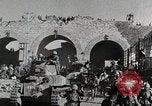
Rape of Nanking during 2nd Sino-Japanese war
Massacres in Nanking during second Sino-Japanese war. Japanese army troops and Type 89 I-Go tanks enter city gates to occupy Nanking, China. they break into a building and take away a Chinese man on a rope tether. Chinese inhabitants confined by the city walls are unable to escape brutal treatment by Japanese soldiers who are seen dragging men, women and children to be shot. Many are herded into a pit where Japanese soldiers standing above, execute them with rifle fire, as others fill the pit with earth, burying any survivors alive. Two Chinese kneeling with arms tied behind them are summarily executed by soldiers with rifles. A Japanese officer follows with a pistol to assure their death. Bodies of dead Chinese civilians litter an alleyway. Many scenes of Chinese killed by Japanese. (Narrator states that Japanese troops murdered 40 thousand men, women and children.) Japanese Field Marshal Count Terauchi Hisaichi is seen stepping from a transport airplane, followed by Field Marshal Shunroku Hata. Count Terauchi looks pleased as he is greeted and exchanges salutes with other officers. Next, the scene reverts, again to the horrors of Chinese peoples' suffering in Nanking, at the hands of the Japanese soldiers. Views of injured and wounded Chinese civilians, at a hospital, in pictures taken by an American Missionary, and smuggled out of china. A woman holding her injured husband as he lies against a cushion in a street. A small child stands near them. Scene shifts to a smiling Field Marshal Shunroku Hata, greeting local commanders, while photographers record the event in background. Views revert to the destruction and human tragedy in Nanking. A picture of Chinese leader, Sun Yat Sen. Chiang Kai-Shek speaking at a podium, and other Chinese political leaders speaking to gathered people, throughout unoccupied China, encouraging them to unite and resist Japanese aggression. Chinese people parading with banners to encourage resistance. Chinese soldiers and political leaders collaborating to raise armies. Chiang Kai-Shek ascending to Political leadership, exhorting Chinese to unite and fight the Japanese. Numerous scenes of rallies calling for unity and resistance. Chinese military officers standing as Chiang Kai-Shek enters a planning session. He sits and then they do. Behind him on the wall is a map of China. Closeup of Chiang as he outlines a strategy to slowly yield territory to Japanese invaders, to buy time for developing and arming Chinese forces. One of his staff goes to a wall map and gestures as he speaks. Next, Chinese soldiers are seen setting dynamite charges and blowing up lines of communication (roads). Chinese people pour petrol on grain fields and set them ablaze. Factory buildings being blown up and similar destruction as China pursues a "scorched earth" policy to hinder the Japanese invaders. Millions of Chinese people on the move to Western parts of China. (Narrator calls this the greatest human migration ever recorded.)
CRITICALPAST.COM: About Us | Contact Us | FAQs - How to Order | License Agreement | My Account | My Lightboxes | Shopping Cart | Advanced Search | Featured Collections | Website Terms & Conditions | Privacy Policy ©2026 CriticalPast LLC.
License Agreement |
Terms & Conditions |
Privacy Policy
©2026 CriticalPast LLC.