


 Francais
 Deutsch
 Italiano
Refine Your Search
Phu Cat Air Base Vietnam 1969 stock footage and images
- Showing 10285 to 10290 of 13374 results more
more Hide
Hide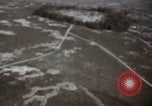
Aerial views of bomb-damaged buildings, military installations and marshaling yards in Wiesbaden, Germany during World War 2.
Bomb damage in Wiesbaden, Germany during World War II. Aerial views from a U.S. Army Air Force aircraft making a low pass show bomb damaged military installations and marshaling yards. Aerial views of bomb-damage in a concentration camp. A large town square is seen from the air, with numerous refugees moving about . Bomb-damaged buildings in the town. A U.S. Army L5 Stinson aircraft parked on an airfield.
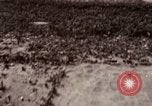
Aerial views of bomb-damaged buildings and marshaling yards in Worms, Germany during World War II.
Bomb damage in Worms, Germany during World War II. Aerial views from a U.S. Army Air Force aircraft making a low pass shows refugees in a prison camp. Bomb damaged marshaling yards and bombed-out buildings in Worms. Aerial view of a pontoon bridge with U.S. military vehicles moving across it. Several views of destroyed and bomb damaged bridges in Frankfurt am Main. A steam locomotive and train moves across one span, still intact. A formation of U.S. Army Air Force B-26 Marauder bombers in flight.
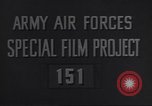
Wings For This Man - U.S. 332nd Fighter Group P-47s, flown by African American pilots, engage German bombers and Me109 fighters over Italy.
Part 1 of 4 of film "Wings for this Man", also known as "Army Air Forces special film project 151" (narrated by Ronald Reagan) about the Tuskegee Airmen, the first unit of African American pilots in the U.S. Army Air Corps. They comprised the 332nd Fighter Group (nicknamed the Red Tails, because of distinctive red painted tails of their aircraft). They are see engaging a Luftwaffe formation of bombers and fighter escorts over Italy during World War 2. P-47 Thunderbolt fighters, of the 322nd Fighter Group, take off from an airfield and head out on morning patrol. They engage a formation of Heinkel He 111 bombers escorted by Me109 fighters. Gun camera footage is seen of the P-47s firing at German Me109s. Several are shot down. German pilot is seen parachuting from one. Afterwards, pilots of 332nd Fighter Group share some of their combat experiences. Views of the kinds of places and circumstances in civilian life from which pilots of the 332nd were drawn. Views of transition from civilian life to the military, including changing into uniforms and boarding a troop train in the snow. View from side of black locomotive and train moving at high speed with smoke pouring out. Montage of locomotive train images.
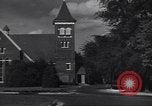
African American cadets train to become U.S. Army pilots (Tuskegee Airmen), at Tuskegee Army Airfield, Alabama during World War 2
Opening segment of "Army Air Forces special film project 151" known as "Wings for This Man". African American airmen being trained at Tuskegee Army Air Field, Alabama during World War II. Panoramic views of Tuskegee Institute in Alabama. Monument to Booker T. Washington at Tuskegee Institute. Construction of airstrip near Tuskegee Institute. Planes , barracks, and building after construction of airfield nearby. African American pilots, Tuskegee Airmen, board P-40 airplanes and take off during training flights. Various training classes cover topics such as navigation, engine basics, instruments and instrument flying. Trainee in a link trainer, and later in a BT-13 trainer airplane in flight (presumably under a hood). Trainees engage in calisthenics. BT-13 performs barrel roll. Aircraft seen in various scenes include: Lockheed P-38s; Vultee BT-13s; P-40s; and Stearman trainer. (Note: Narrator is Ronald Reagan)
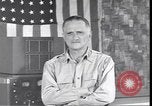
A U.S. officer on a South Pacific island gives his view on surrender of Japan and speaks about B-29 bombers.
A U.S. officer at a South Pacific island, gives his view on surrender of Japan in World War II soon after returning from a flight to Japan. The U.S. officer says that U.S. Army, Navy, Marines, and Far East Air Forces played an important role in driving back Japan from the Pacific Islands. The officer speaks about U.S. Army Air Forces B-29 Superfortress bombers carrying out strikes on Japan in the final days of war.
LCI (Landing Craft, Infantry) lays smoke screen to shield other ships of U.S. Task Force during Battle of Leyte.
Japanese air attacks on U.S. Task Force underway during Battle of Leyte in World War II. U.S. Task Force ships in Leyte Harbor. Flak bursts in air. LCI (Landing Craft, Infantry) lays smoke screen.
CRITICALPAST.COM: About Us | Contact Us | FAQs - How to Order | License Agreement | My Account | My Lightboxes | Shopping Cart | Advanced Search | Featured Collections | Website Terms & Conditions | Privacy Policy ©2026 CriticalPast LLC.
License Agreement |
Terms & Conditions |
Privacy Policy
©2026 CriticalPast LLC.