


 Francais
 Deutsch
 Italiano
Refine Your Search
Puerto Princesa Island Philippines 1945 stock footage and images
- Showing 3217 to 3222 of 9920 results more
more Hide
Hide
United States soldier finds and destroys a Japanese Shinyo suicide motorboat (WW2)
A Japanese suicide boat near the Kerama Islands (32 kilometers south-west of Okinawa Island), Japan during World War 2. A coast in the Kerama Islands. A Shinyo-class suicide motorboat is found covered with foliage as camouflage. A United States soldier throws a phosphorus grenade into the suicide boat. Suicide boat in flames. Scattered remains of a suicide boat after its destruction. Motor parts are scattered in the jungle. A soldier inspects remains of suicide boat.

American joint assault forces reclaim Guam from the Japanese.
On the joint force assault by the American Army, Navy, Marines and Air Force against the Japanese on the island of Saipan, Guam and Tinian in the Mariana islands. A map of the Mariana Island in the Pacific, occupied by the Japanese forces. Map of the Guadalcanal. U.S. troops advance in jungles, reach ashore in inflated boats and land on beachheads. Grim faced soldiers marching in the Marshall Islands. Map shows advancement of U.S. forces in Japanese occupied areas. Map shows location of the Marianas Island. U.S. troops aboard landing crafts reach ashore. Face of commander as he yells to comrades. Scenes of battle between the American and the Japanese forces. Landing ship tanks (LST) advance on beach head. Sounds of heavy artillery shelling. U.S. troops advance on beach under heavy enemy fire. Joint Assault Force attacks the island of Guam. Guam is finally reclaimed by the U.S. forces. The U.S. flag is planted on Guam. (World War II period).
P-47s of USAAF 318th Fighter Group encounter heavy antiaircraft fire while strafing Japanese targets on Tinian in World War II
Battle of the Pacific during World War 2, fought on the island of Tinian, Mariana Islands. P-47 Thunderbolt aircraft, of the 318th Fighter Group, drop the Napalm on the island. Smoke billowing up from Napalm incendiary bomb explosions on island. P-47 dive bombing enemy positions on island. Tracers being fired to and from P-47s. Smoke rising from explosions in jungle. P-47 strafing buildings near the shoreline. Heavy antiaircraft and ground fire from forces of Japan at the planes as they dive. P-47, number 42-75304 of the 333rd Fighter Squadron, is seen closeup.
Major General Hardigg's speech on fat and oil recycling efforts; view of Halloran Army Hospital kitchen, Staten Island, New York
United States Army Major General Hardigg speaks about the need for saving waste fats and oils for recycling and reuse in the war effort during World War 2. Kitchen of Halloran Army Hospital is shown with Chefs preparing chicken and other foods, and saving fats. Homemakers and housewives shown straining fats through strainers to reserve and save fats. A housewife speaks to another woman. A girl presents a can of reserved fats to a store clerk who weighs it and gives the girl back a ration receipt.
Colonel Paul Tibbets, Pilot of the Enola Gay, describes his mission dropping the atomic bomb on Hiroshima Japan.
Crew members of the B-29 Enola Gay are interviewed about their atomic bombing mission over Hiroshima Japan by the United States Army Air Force, during World War II. In this interview at North Field, Tinian Island in Marianas Islands, Public Relations Officer, Major John F. Moynahan (not seen) interviews Colonel Paul W. Tibbets, Jr., Pilot of the Enola Gay Among things Colonel Tibbets mentions, he recounts that he took a steep turn to avoid radiation from the explosion. When he saw the explosion he was surprised about its intensity. The cloud from explosion covered the whole city of Hiroshima.
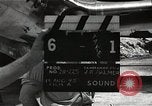
Major Thomas Ferebee, the bombardier aboard Enola Gay shares his experience of the Hiroshima atomic bombing mission
Setting: North Field, Tinian Island, Marianas Islands. Major Thomas Ferebee, the bombardier aboard Enola Gay (B-29 that bombed Hiroshima) is asked about his experiences, by Public Relations Officer John F. Moynahan (not seen). He recalls - His navigator aligned him correctly with the target. Hiroshima was clearly visible to him and so he was able to deliver the bomb. (World War II period).
CRITICALPAST.COM: About Us | Contact Us | FAQs - How to Order | License Agreement | My Account | My Lightboxes | Shopping Cart | Advanced Search | Featured Collections | Website Terms & Conditions | Privacy Policy ©2026 CriticalPast LLC.
License Agreement |
Terms & Conditions |
Privacy Policy
©2026 CriticalPast LLC.